The Ann Francis wreck: 21 years and 1,000 visits to Margam beach brought up around 870 coins
Lost when the Ann Francis was wrecked, 1583 · Found in 1996 See it on the timeline →
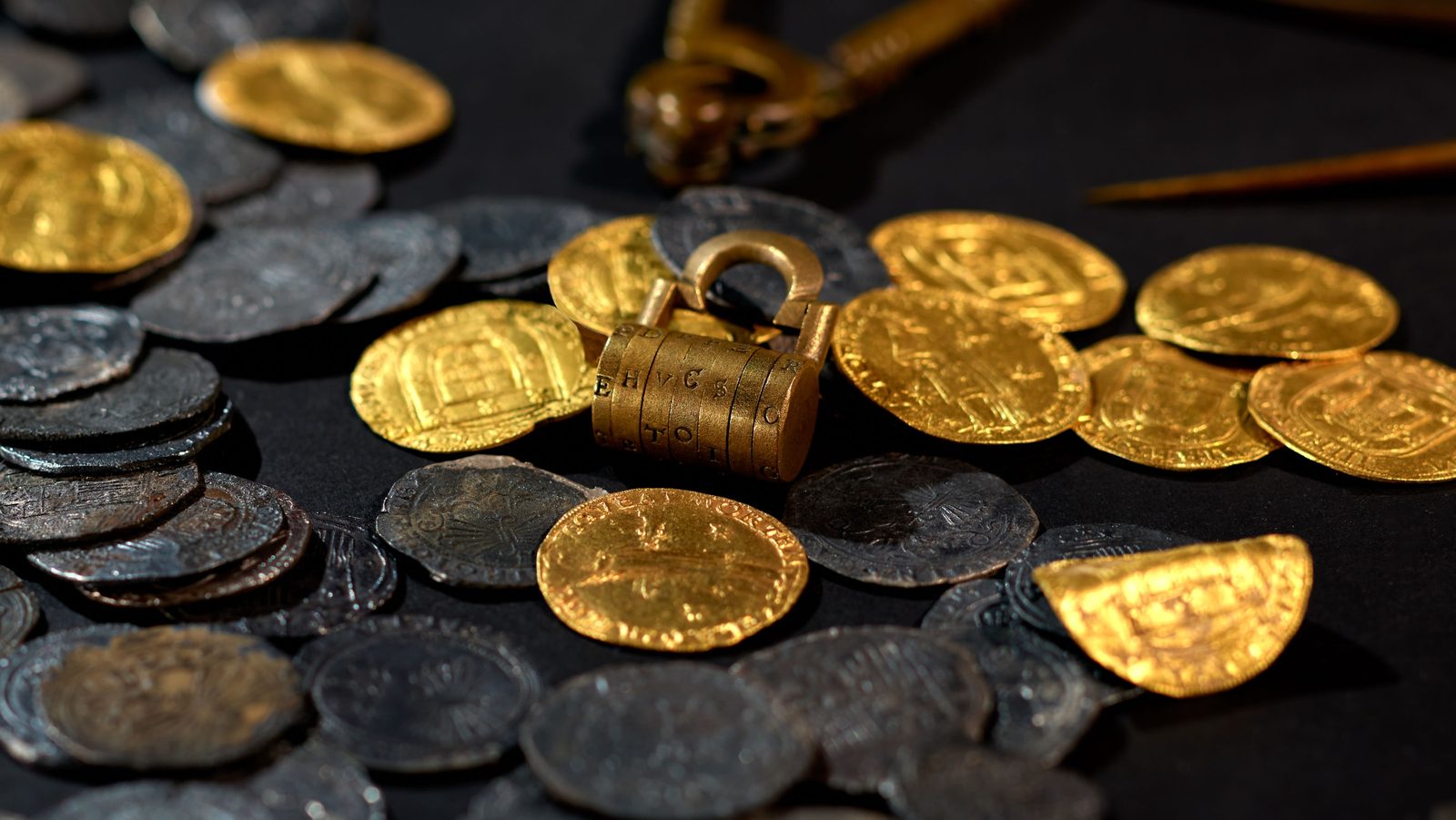
More photographs
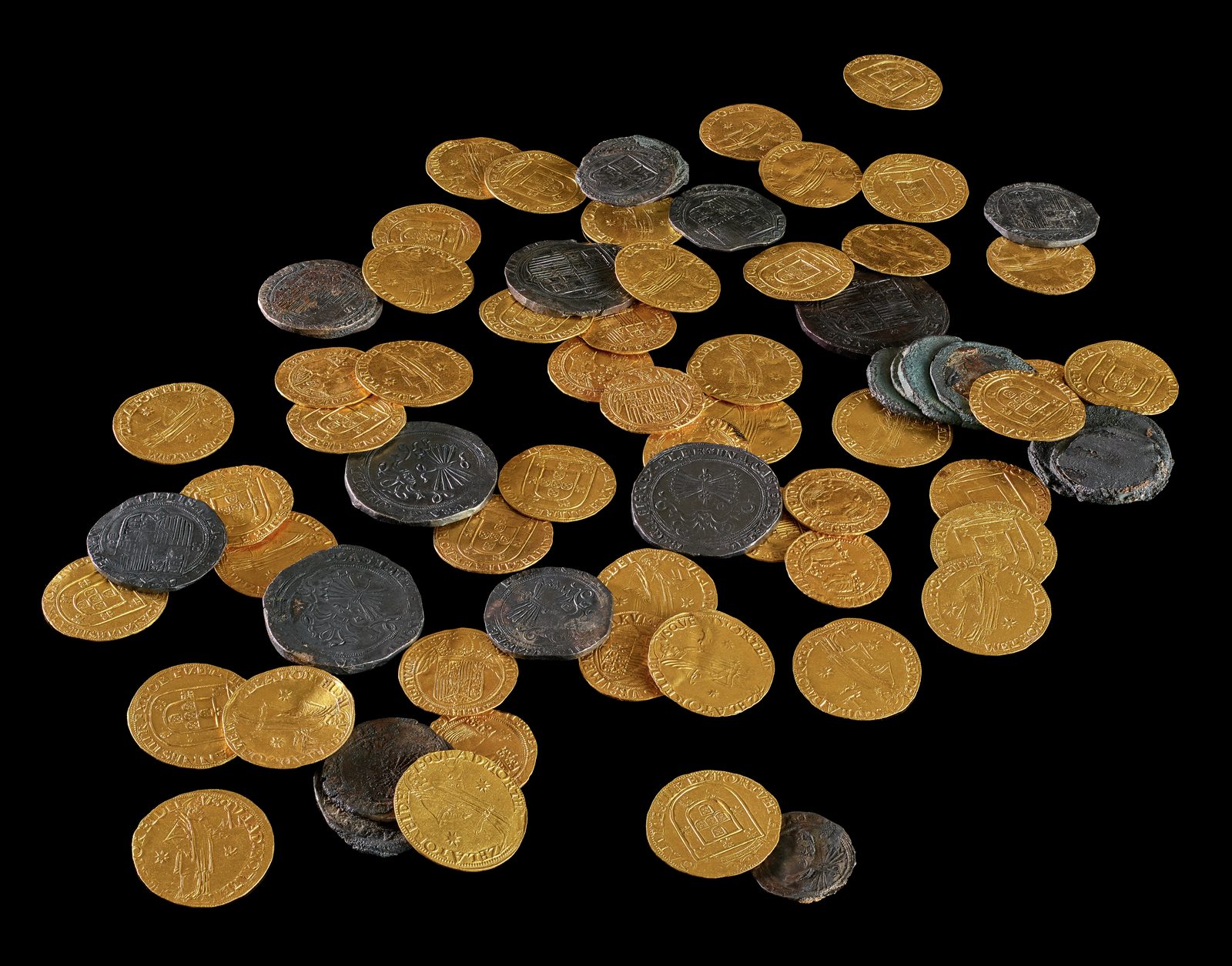 Gold and silver coins from the wreck, Amgueddfa Cymru - Museum Wales.
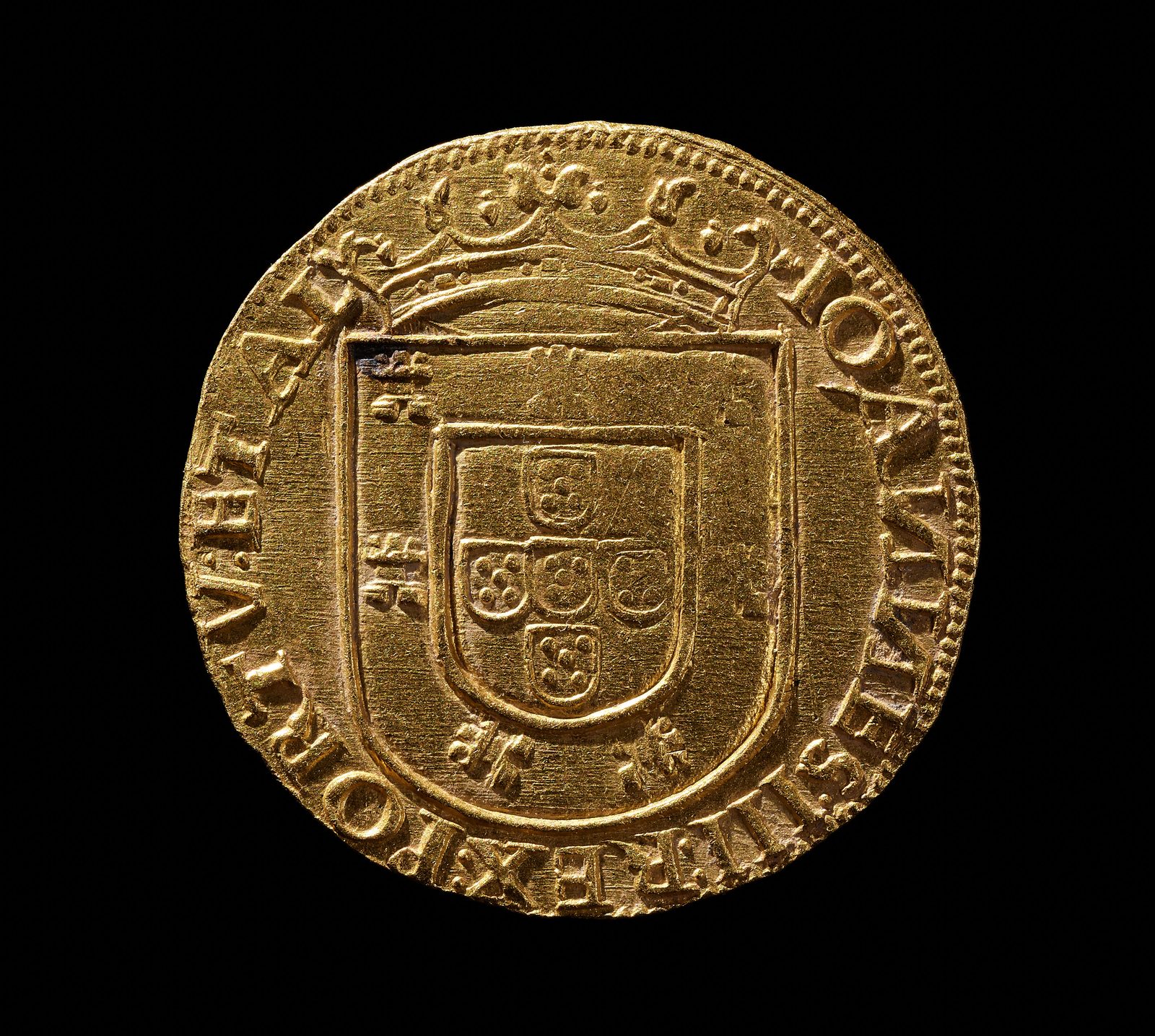 A Portuguese gold coin of King John III from the wreck, the king whose coin was Peter Hughes's first find, Amgueddfa Cymru - Museum Wales.
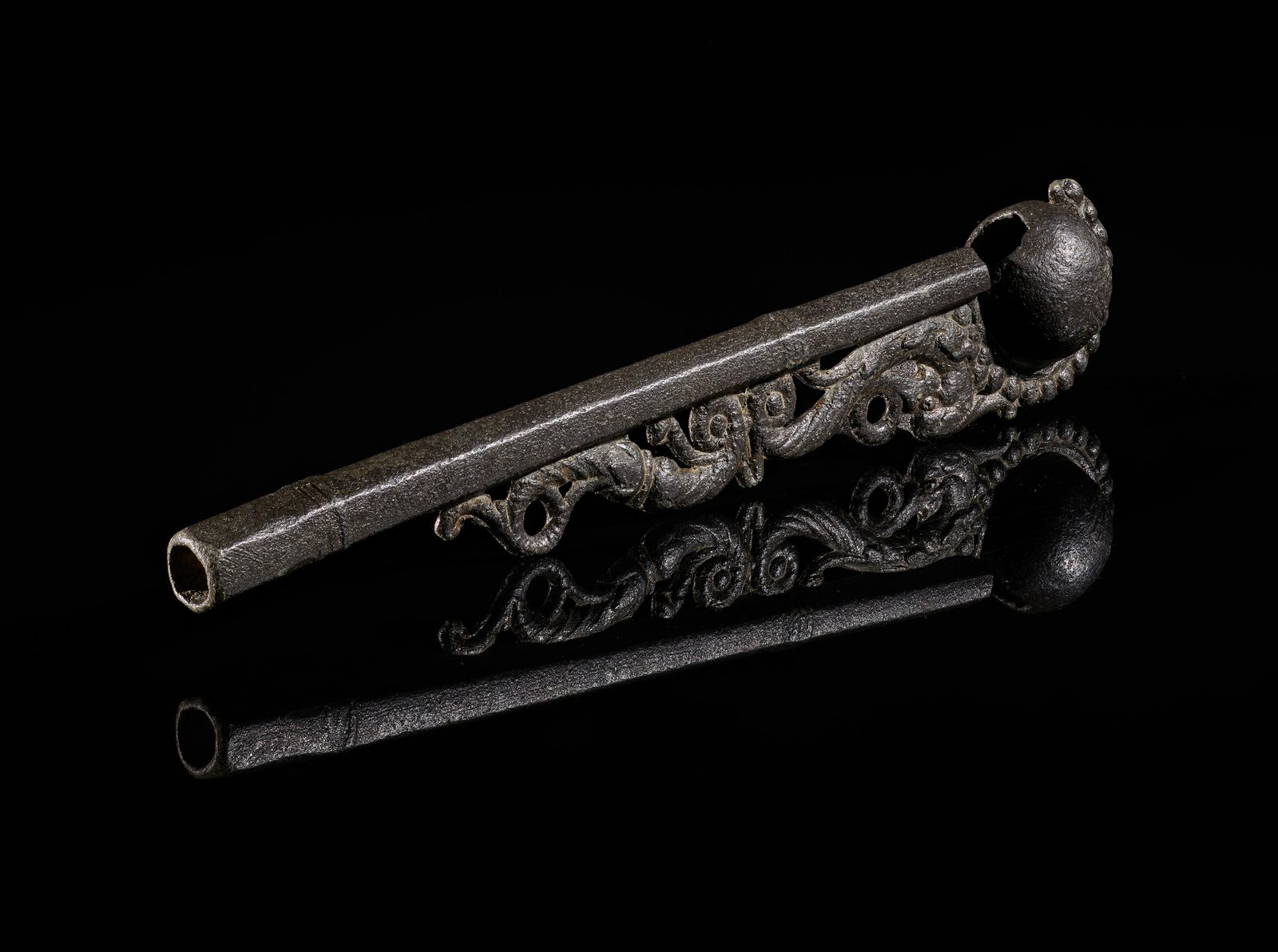 The boatswain's whistle, Amgueddfa Cymru - Museum Wales.
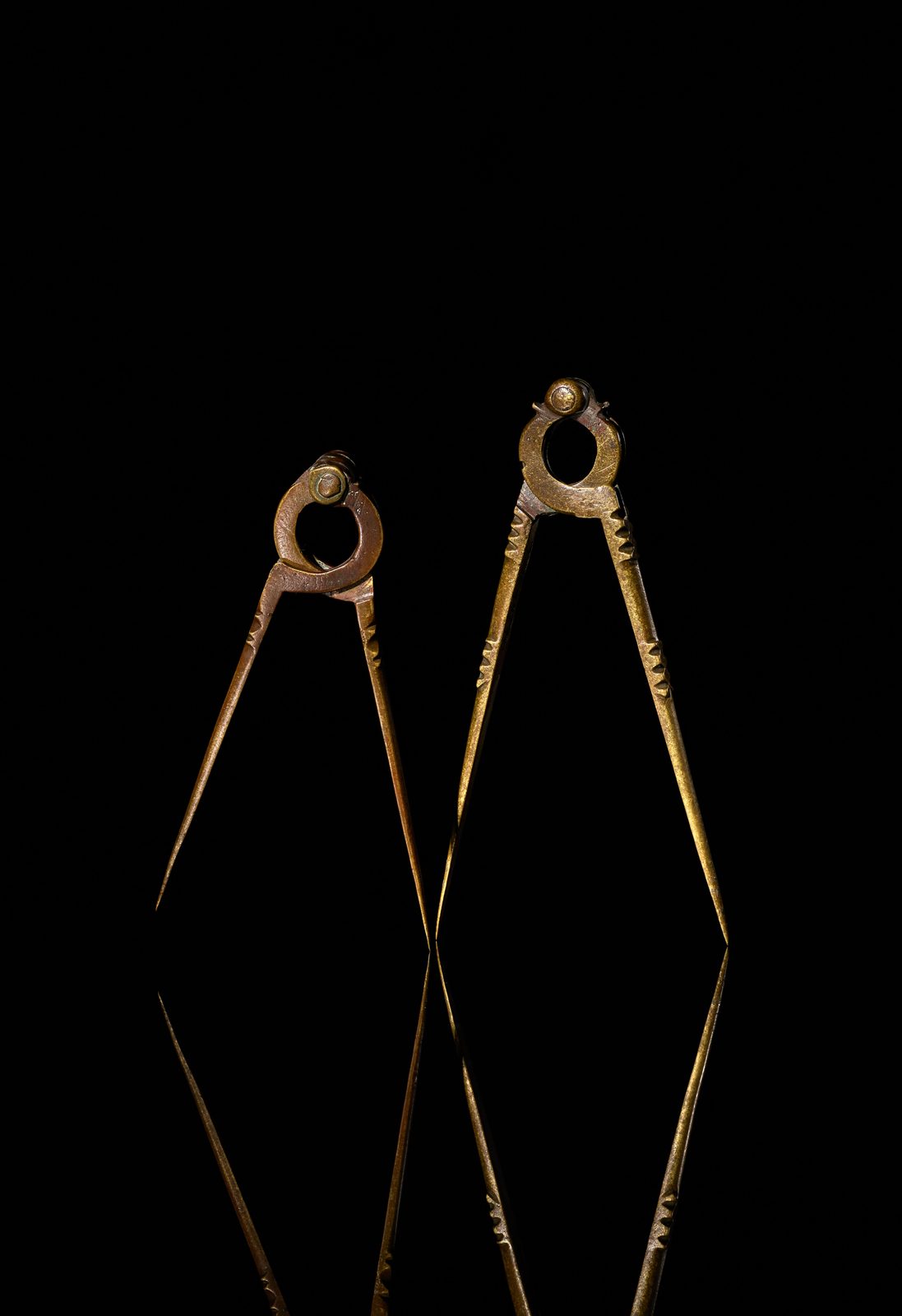 A pair of dividers from the wreck, Amgueddfa Cymru - Museum Wales.
Over 21 years and more than 1,000 visits to Margam beach, detectorist Peter Hughes recovered around 870 coins from a ship wrecked in 1583. The collection is now on show in Swansea.
In 1583 the Ann Francis carried a cargo of grain to Spain. On the way home, carrying the payment, she was caught in a violent storm on 28 December 1583 and wrecked off Margam, in what is now Neath Port Talbot.
More than four centuries later, metal detectorist Peter Hughes began finding her cargo. His first find, in 1996, was a Portuguese gold coin, a São Vicente struck between 1555 and 1557 under King John III. He at first took it for a token, until he turned it over and saw the shield of Portugal.
Over the next 21 years, Mr Hughes went back to Margam beach more than 1,000 times, searching whenever storms stripped away the sand that covered the wreck site. Most visits found nothing. In all, he recovered around 870 gold and silver coins, including gold coins of Ferdinand and Isabella of Spain, along with personal belongings, cooking, eating and drinking utensils, a boatswain's whistle and a brass combination lock from one of the ship's chests. Mr Hughes found the lock in 1999 and spent about 20 years trying to open it. In November 2026, experts from Amgueddfa Cymru and Cardiff University revealed that they had cracked it with micro CT scanning. Its four rings of six letters allow 1,296 combinations, and the code spells ANCE.
It is thought that only about a quarter of the money on board has been found. Mr Hughes contacted Amgueddfa Cymru, the national museum of Wales, and the collection has now gone on public display for the first time at the National Waterfront Museum in Swansea, in a free exhibition, Tides of Treasure, which runs until 26 June 2027. The museum says there are contemporary records of the wreck too, telling of sailors, looters, local lords, a smuggler and a woman accused of witchcraft.
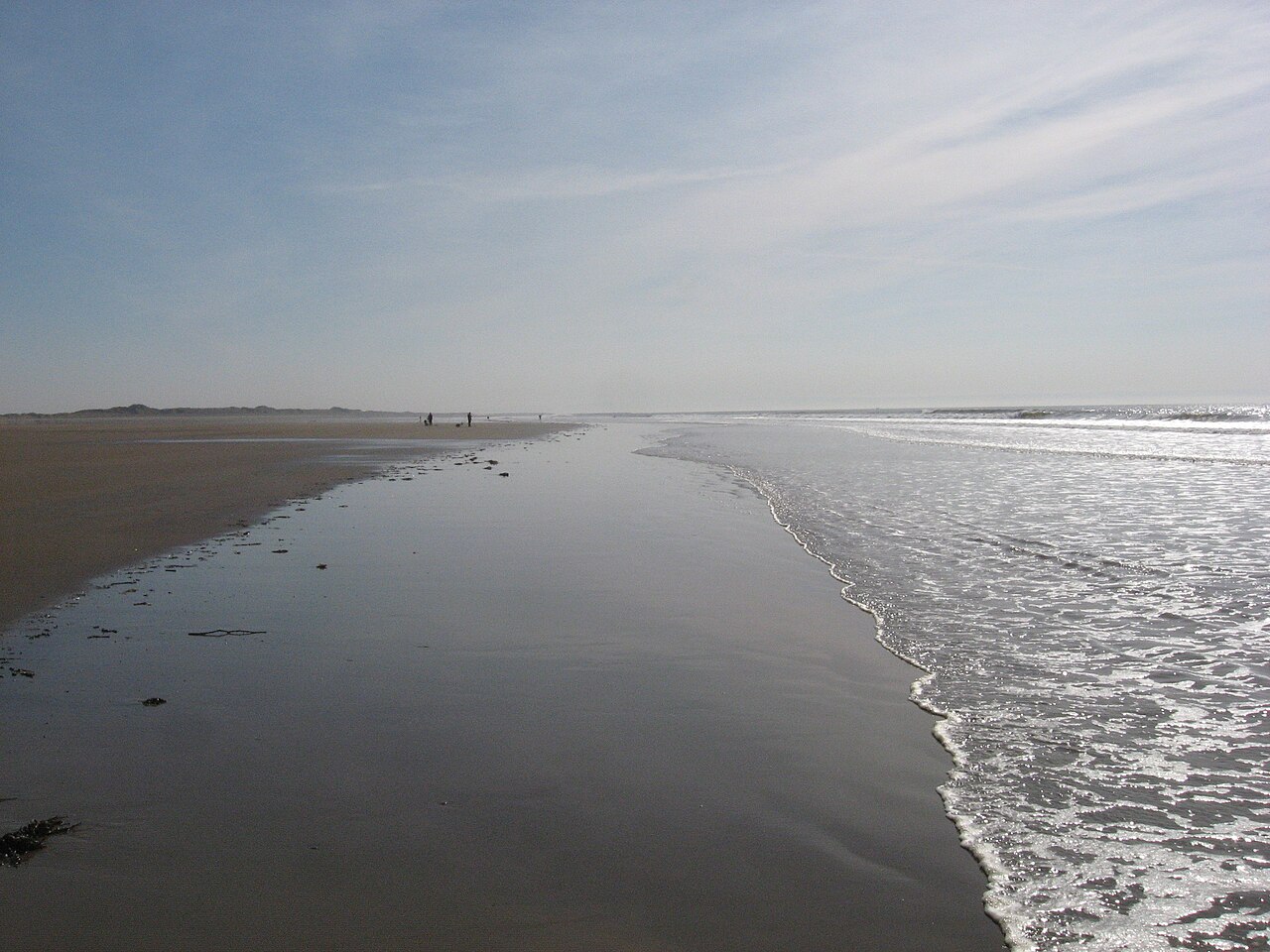
The stretch of beach is now a protected site, to preserve whatever remains of the ship, so it is no longer legal to search there.
Reported by BBC News (5 July and 3 November 2026), with details from Amgueddfa Cymru - Museum Wales. Written for Global Finds from those reports. Photos: (1) gold and silver coins from the Ann Francis, with the brass combination lock, Amgueddfa Cymru - Museum Wales. (2) gold and silver coins from the wreck, Amgueddfa Cymru - Museum Wales. (3) a Portuguese gold coin of King John III from the wreck, the king whose coin was Peter Hughes's first find, Amgueddfa Cymru - Museum Wales. (4) the boatswain's whistle, Amgueddfa Cymru - Museum Wales. (5) a pair of dividers from the wreck, Amgueddfa Cymru - Museum Wales.
Related guide: Beach detecting: the rules, the tides and the salt
Linked finds
Source: BBC