The Coppergate Helmet: an Anglo-Saxon helmet found by a digger in York
Famous find Made in the second half of the 8th century AD · Found in 1982 See it on the timeline →
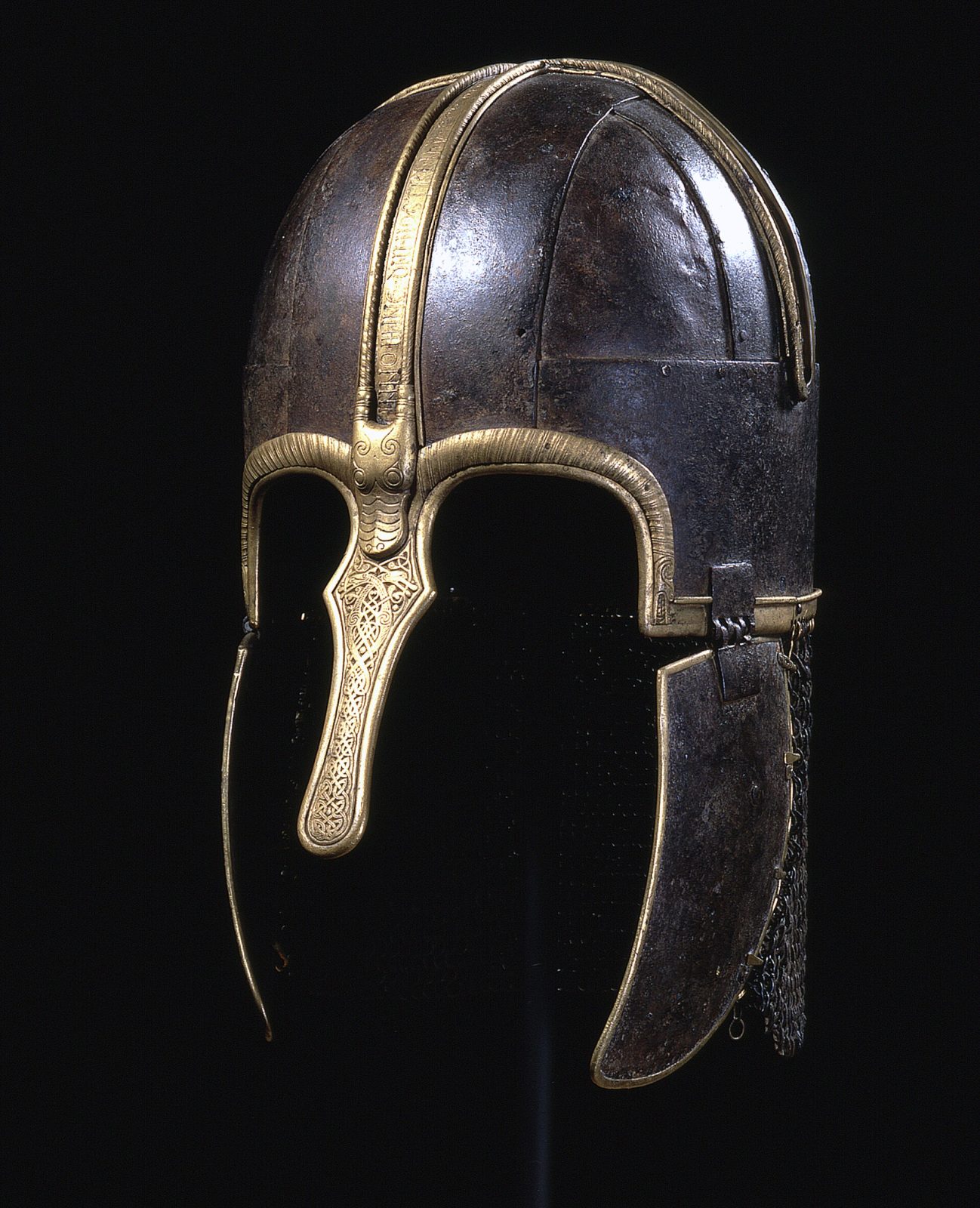
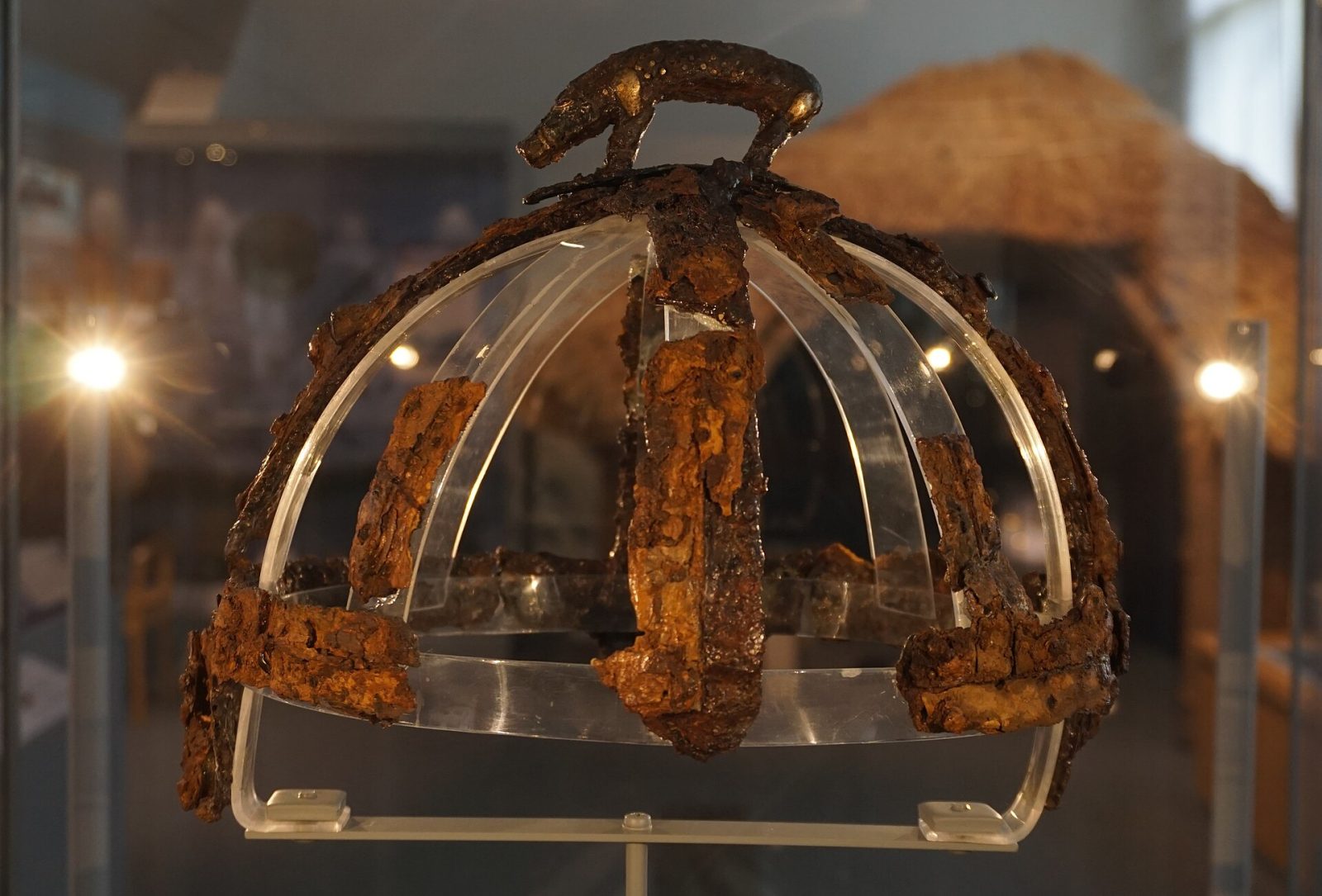
In May 1982 a mechanical digger working on a building site in the centre of York struck an 8th-century Anglo-Saxon helmet at the bottom of an old well. It is the best preserved Anglo-Saxon helmet ever found.
On 12 May 1982, a mechanical digger was clearing ground at Coppergate in the centre of York, where the Jorvik Viking Centre and a shopping centre were being built. York Archaeological Trust had excavated the site from 1976 to 1981 and was still keeping watch. That afternoon the digger's bucket struck metal at the bottom of a wood-lined pit, probably an old well. The Yorkshire Museum names the digger driver as Andy Shaw.
It was an iron helmet with brass decoration: a cap of iron plates riveted together, two hinged cheek guards, a nose guard and a curtain of mail to protect the neck. Two brass crests cross over the top, ending in animal heads, and two interlaced beasts decorate the nose guard. The crests carry a Latin prayer that ends with the name Oshere, probably the helmet's owner, and a word for Christ. The Yorkshire Museum dates it to the second half of the 8th century, in the Anglian kingdom of Northumbria.
The helmet had been placed upside down in the pit, with its mail and one loose cheek guard tucked inside, which suggests it was deliberately hidden. Nineteenth-century factory foundations had come within a few centimetres of it.
The digger did damage it: rivets were sheared off and part of the inscribed band was crushed. Archaeologists lifted it that evening, and it was kept overnight in a university strong room. After scanning and careful study, it was restored at the British Museum in 1983 and 1984, with modern brass pieces replacing the missing parts, made so they can be told apart from the original.
It is the best preserved of the handful of Anglo-Saxon helmets ever found, and it is on display at the Yorkshire Museum in York.
Written for Global Finds from the Yorkshire Museum, York Archaeological Trust, the journal Antiquity and other published accounts. Photo: the Coppergate Helmet, York Museums Trust, Wikimedia Commons, CC BY-SA 4.0.
Approximate location53.96, -1.08View on map
Source: Yorkshire Museum