The Mästermyr Chest: a Viking craftsman's tool kit ploughed up on Gotland
Famous find About AD 1000 · Found in 1936 See it on the timeline →
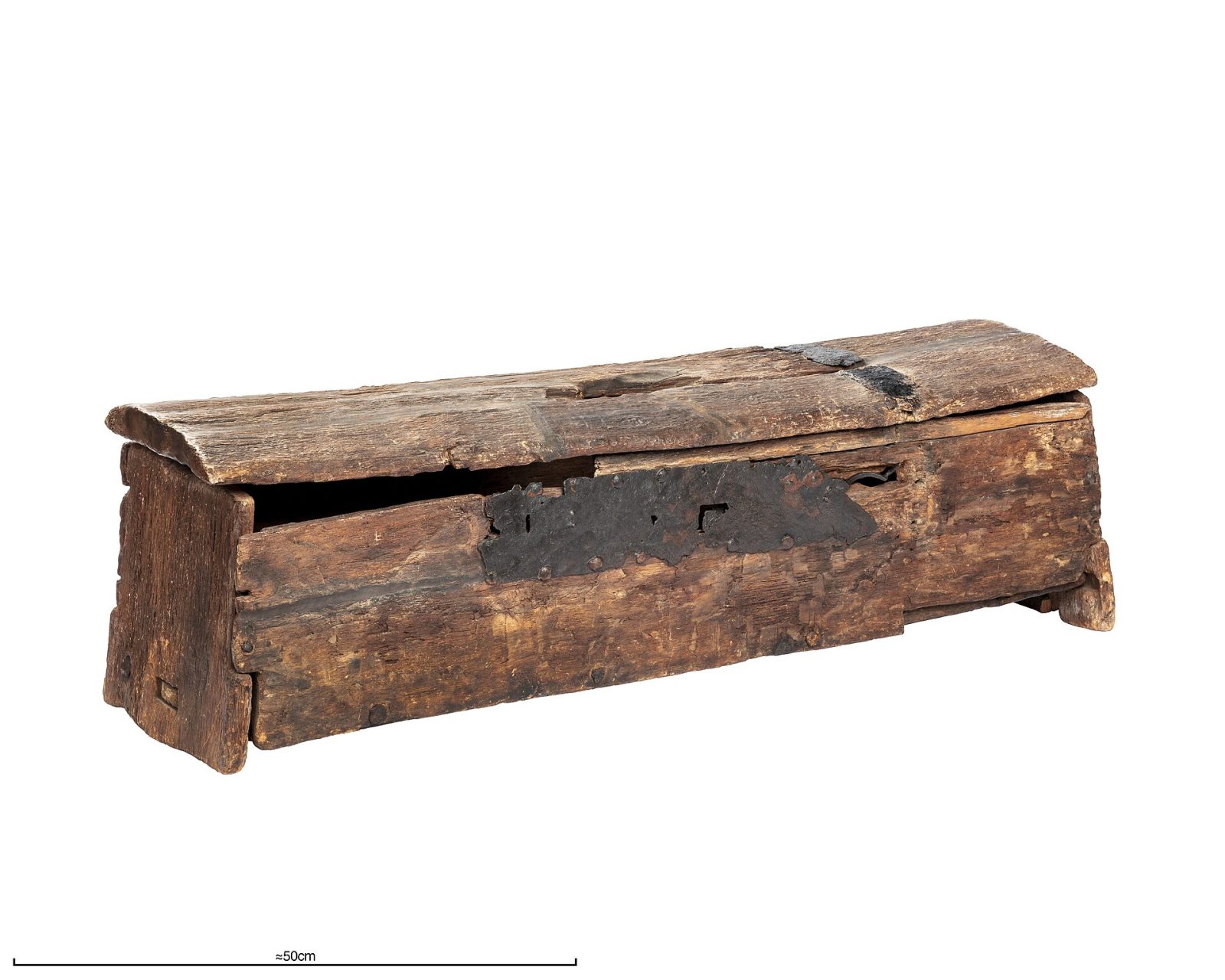
In October 1936 a farmer ploughing a drained bog on Gotland for the first time struck an oak chest wrapped in a chain. Inside was a Viking-age smith's and carpenter's tool kit of more than two hundred objects, the largest find of its kind from Europe.
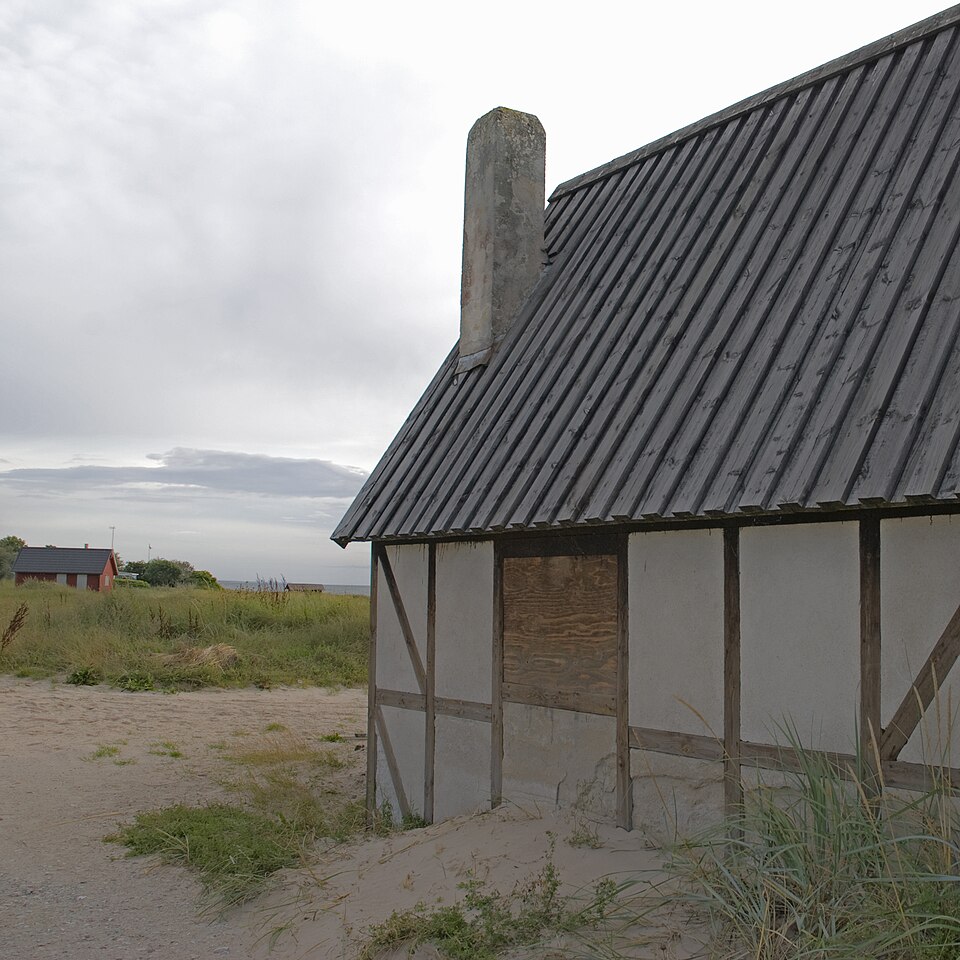
In October 1936, Hugo Kraft was ploughing a field at Mästermyr, near Hemse in the south of the Swedish island of Gotland. The land had been a lake in the Viking Age, and a mire after that; it had only been drained early in the 20th century, and this was the first time it had been ploughed. His plough struck an oak chest, about 90 centimetres long, with an iron lock and a chain wrapped around it.
The chest held more than 200 objects, about 150 of them tools: sledgehammers and hammers, tongs, anvils, files, axes and adzes, a saw, augers, drawknives, a steelyard for weighing, padlocks and pieces of scrap and half-finished work. Some still had their wooden handles. Beside the chest lay three bronze cauldrons, bells and an iron fire basket. It was the tool kit of a craftsman who worked both in metal and in wood, perhaps travelling from farm to farm, and it is the largest and most complete set of tools of its period ever found in Europe.
How it came to be in the lake is unknown. It may have been lost when a boat capsized, or hidden on purpose by someone who never came back for it.
The chest is usually dated to around AD 1000, the end of the Viking Age, though recent research comparing its tools with toolmarks in the timbers of a Gotland stave church built in the early 12th century suggests that it may belong to the later part of that range. Because the tools are so complete, craftsmen and researchers have used them to reconstruct Viking smithing and woodworking, and modern copies of the tools have been made and used.
The Mästermyr chest and its tools are in the Swedish History Museum in Stockholm.
Written for Global Finds from J. Almevik and others' study of the Mästermyr tools in FormAkademisk (2021), Lex.dk and G. Arwidsson and G. Berg's catalogue The Mästermyr Find (1983). Photo: the Mästermyr tool chest in the Swedish History Museum, Jens Mohr, Wikimedia Commons, CC BY 4.0.
Approximate location57.23, 18.25View on map