The Spillings Hoard: the largest Viking silver hoard in the world
Famous find Buried after 870, in the late 9th century · Found in 1999 See it on the timeline →
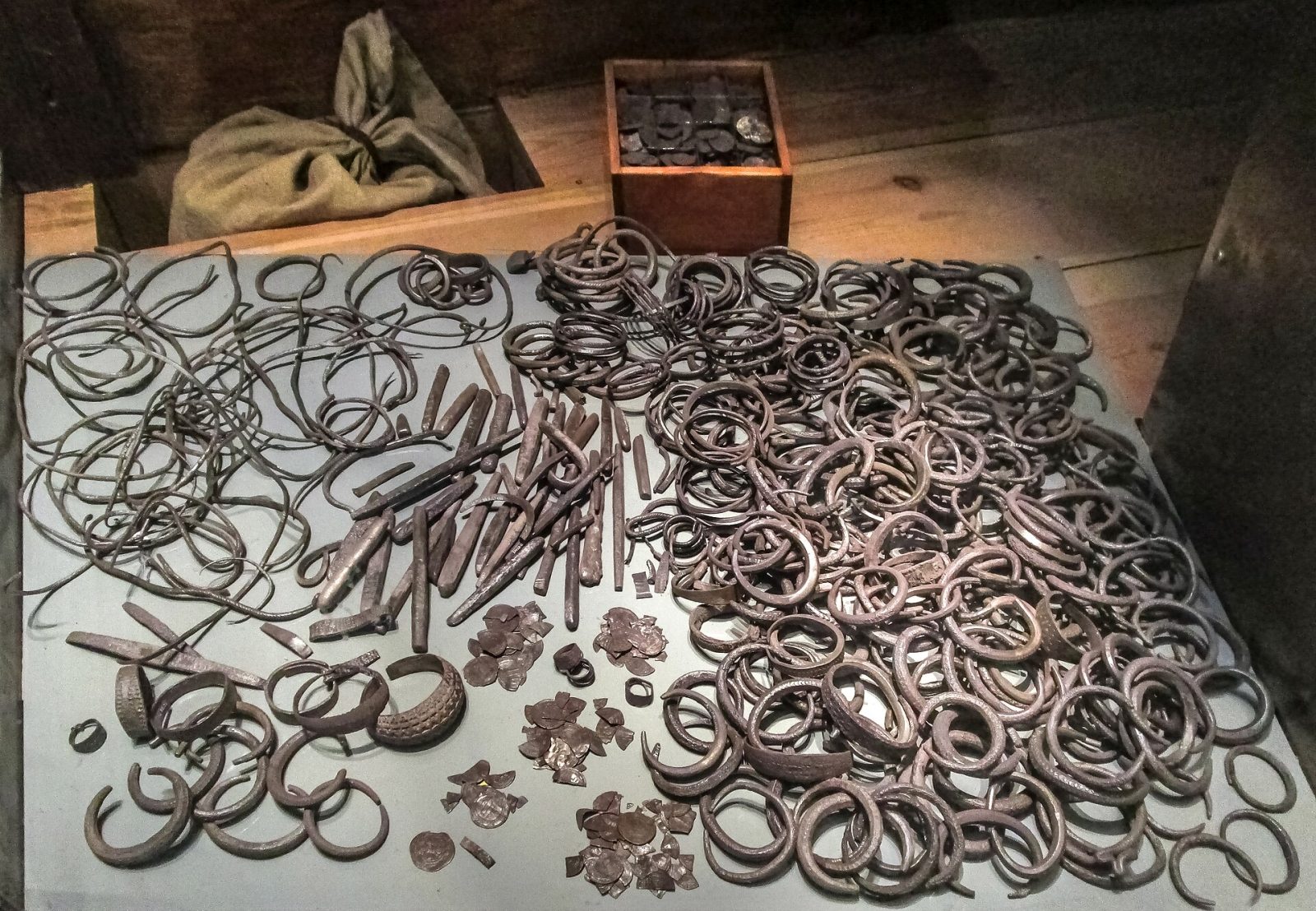
In 1999 archaeologists on a Gotland farm found 67 kilograms of Viking silver, more than 14,000 coins and nearly 500 arm-rings, hidden beneath the floor of a storehouse. It is the largest Viking silver hoard ever found.
In the autumn of 1998, the owner of Spillings farm, in Othem parish in the north of Gotland, found some silver coins on his land and reported them. On 16 July 1999, the archaeologist Jonas Ström and the coin specialist Kenneth Jonsson were at the farm with a television crew making a programme about the looting of ancient sites. When the cameras had gone, they searched with a metal detector and found the hoard.
Beneath the floor of a building lay two deposits of silver, weighing about 27 and 40 kilograms, and a third of bronze weighing more than 20 kilograms. The silver included 14,295 coins, almost all Islamic dirhams struck in the lands of the Caliphate, along with 486 arm-rings and bracelets, 25 finger-rings, about 80 ingots and a quantity of hacksilver. It had been packed in wooden containers, one of which still had its iron lock. The building had no hearth, so it was probably a storehouse.
The youngest coin was struck in AD 870 or 871, so the silver was buried some time after that, in the late 9th century. Why nobody came back for it is unknown.
Under Swedish law the state acquired the hoard, and a finder's reward was paid. Excavations at the farm continued until 2007. The hoard is on display in the treasury of Gotlands Museum in Visby.
Spillings is the largest Viking silver hoard ever found, more than one and a half times the weight of Cuerdale, Britain's largest. It shows how Gotland, an island in the middle of the Baltic, sat at the centre of trade routes that reached as far as the Islamic world.
Written for Global Finds from Gotlands Museum, the Swedish History Museum and other published accounts. Photo: silver from the Spillings Hoard, W.carter, photograph by Ann-Sophie Qvarnström, Wikimedia Commons, CC BY-SA 4.0.
Approximate location57.72, 18.78View on map
Source: Gotlands Museum