The Mold Gold Cape: a Bronze Age masterpiece from a Welsh burial mound
Famous find Made about 1900 to 1600 BC · Found in 1833 See it on the timeline →
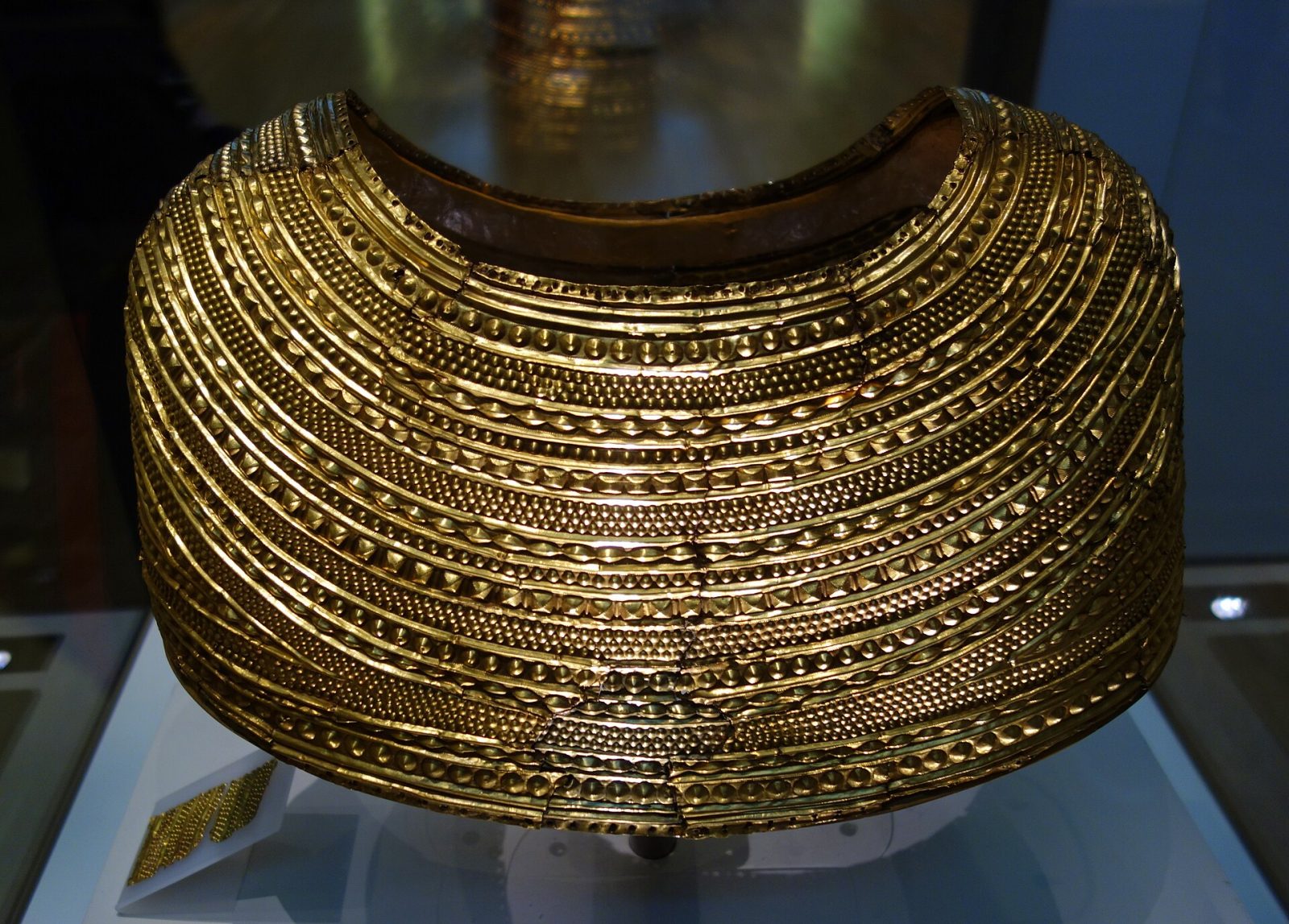
In 1833 workmen taking stone from a burial mound at Mold in Flintshire found a cape of beaten sheet gold, made around 1900 to 1600 BC. Nothing like it has been found anywhere else in the world.
In 1833, workmen were taking stone from a burial mound in a field known as Bryn yr Ellyllon, the hill of the fairies, at Mold in Flintshire, when they uncovered a stone-lined grave. In it were the remains of a skeleton and, around it, a crushed sheet of gold, with strips of bronze and a large number of amber beads.
The gold was a cape, made to sit over the shoulders and upper arms. It was beaten out from a single ingot of gold, a remarkable feat of skill, and decorated with rows of ribs and bosses that copy strings of beads and folds of cloth. It is about 46 centimetres long and weighs 560 grams. The British Museum dates it to the Early Bronze Age, between about 1900 and 1600 BC.
Nothing else like it is known. It would have stopped its wearer raising their arms, so it was probably worn for ceremonies rather than every day, and it is small enough that the wearer may have been slight, perhaps even a teenager.
The cape was broken up when it was found, and its pieces were scattered. The British Museum acquired the main part in 1836 and gathered further fragments over many years, the last in 1972; some are in the Grosvenor Museum in Chester. The cape is on display in the British Museum, and was one of its choices for A History of the World in 100 Objects. It returned to Wales on loan in 2013, to Cardiff and Wrexham, and there have been repeated calls for it to come home for good.
Written for Global Finds from the British Museum and other published accounts. Photo: the Mold Cape in the British Museum, Daderot, Wikimedia Commons, CC0.
Approximate location53.17, -3.14View on map
Source: British Museum