Llyn Cerrig Bach: Iron Age offerings found while building an RAF airfield
Famous find Offered about 300 BC to AD 100 · Found in 1942 See it on the timeline →
While RAF Valley on Anglesey was being built in the Second World War, workmen digging peat found an old iron chain and used it to pull a lorry out of the mud. It was a 2,000-year-old slave chain from an Iron Age offering site.
In 1942 and 1943, workmen building the RAF airfield at Valley on Anglesey were digging peat from a bog beside a small lake, Llyn Cerrig Bach, and spreading it over the sandy ground. William Owen Roberts, the head groundsman, noticed an old iron chain in the peat. When a lorry got stuck in the mud, the chain was used to pull it out, and it did the job.
A drawing of the chain was sent to the National Museum of Wales in Cardiff, and Sir Cyril Fox recognised it as about 2,000 years old: a gang chain with neck-rings, for leading captives or slaves. He travelled to Anglesey, and as the digging went on more and more objects came out of the peat, around 180 in all.
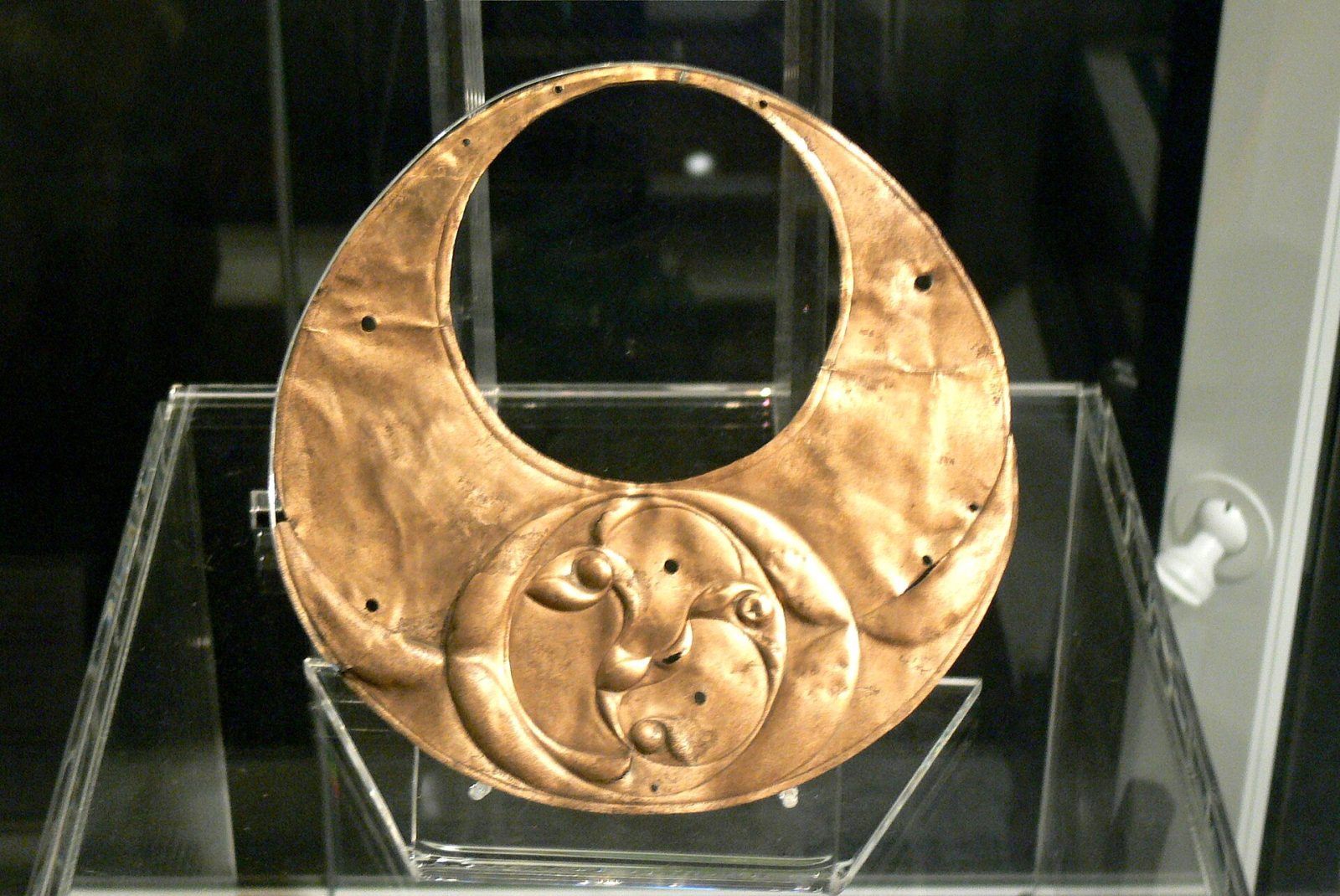
They include swords and spearheads, parts of shields, harness and fittings from many chariots, part of a bronze trumpet, pieces of cauldrons, blacksmith's tongs, iron currency bars and a crescent-shaped bronze plaque decorated with a three-armed design. There are two gang chains, one with five neck-rings and one with four. Animal bones were found too. The objects were placed in the water over a long period, from about 300 BC to around AD 100, as offerings.
Fox linked the site to the druids and to the Roman attack on Anglesey in AD 60, described by the historian Tacitus. The connection is tempting but cannot be proved, though nothing in the hoard seems to be much later than the time of the Roman conquest of the island.
The finds are held by Amgueddfa Cymru – Museum Wales and displayed at St Fagans National Museum of History near Cardiff, where the four-ring chain is on show. Oriel Môn in Llangefni has some finds and replicas. In 2024 an excavation under the airfield by the Ministry of Defence, working with military veterans, found more Iron Age metalwork, which was declared Treasure.
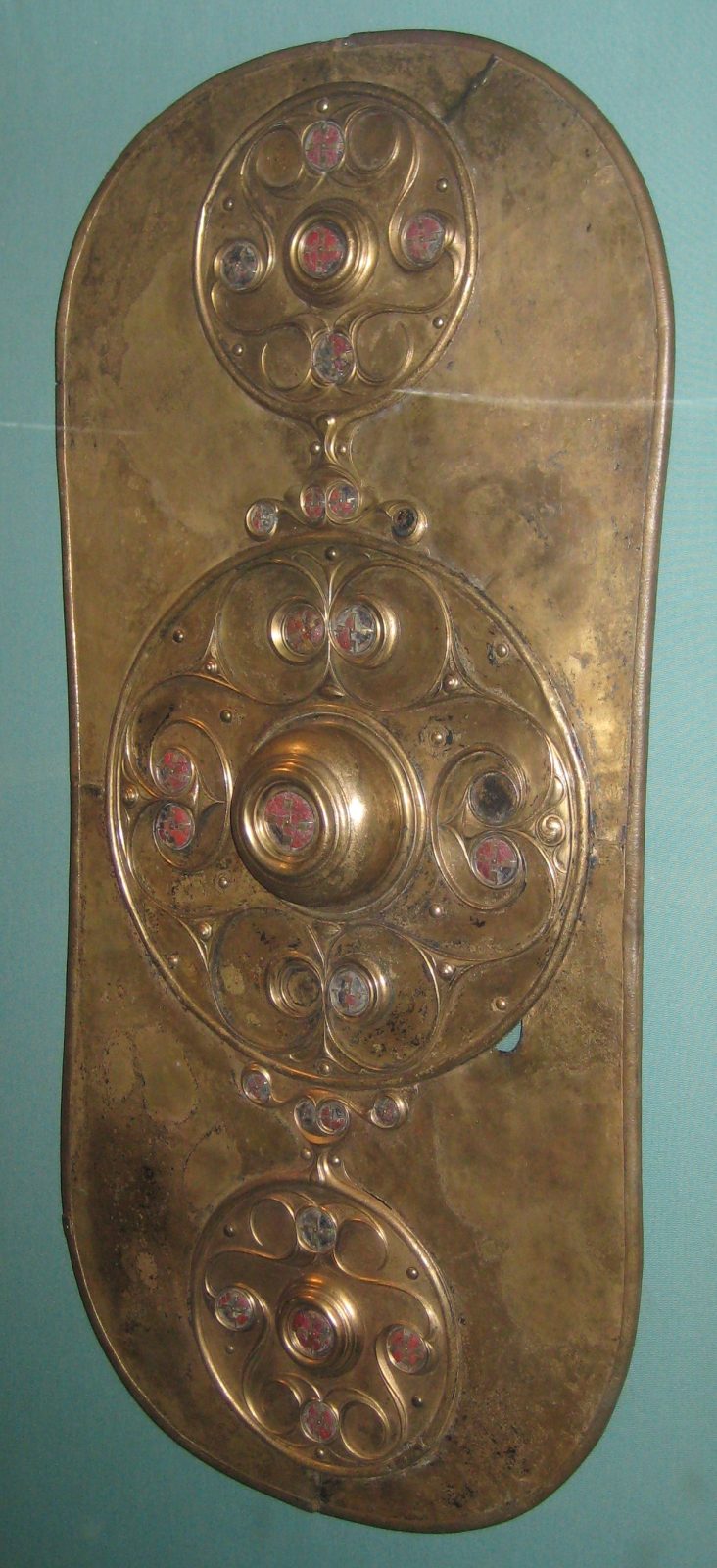
Written for Global Finds from the Royal Commission on the Ancient and Historical Monuments of Wales, Amgueddfa Cymru – Museum Wales and other published accounts. Photo: the crescent-shaped bronze plaque from Llyn Cerrig Bach, photographed in the National Museum Cardiff, Wolfgang Sauber, Wikimedia Commons, CC BY-SA 3.0.
Approximate location53.26, -4.54View on map
Source: Coflein (RCAHMW)