The Kamień Pomorski Ducat: 'miracles do happen' - a Dutch gold coin found on the site of a medieval friary in Poland
Famous find Struck in 1777 · Found in 2024 See it on the timeline →
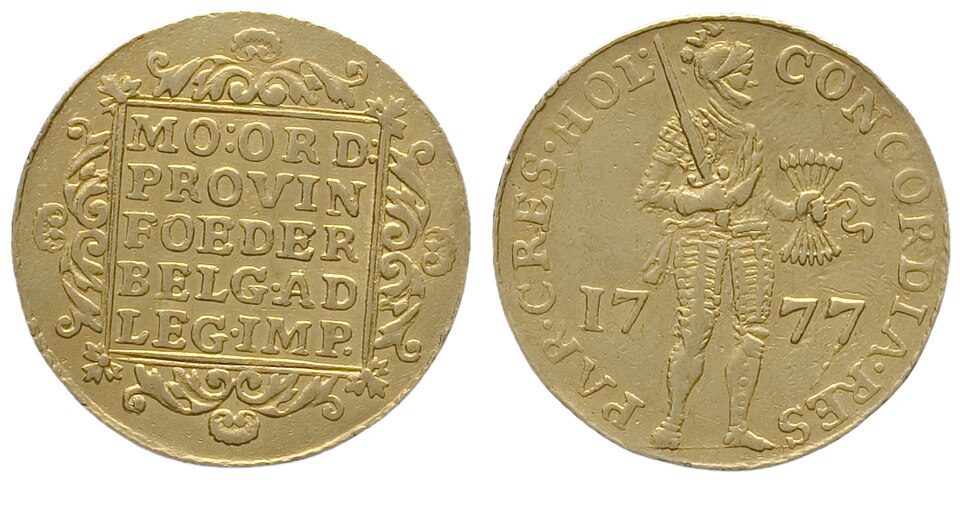
In February 2024 Maciej Ruzik, searching with a local heritage association in Kamień Pomorski on Poland's Baltic coast, found a gold ducat of the Dutch Republic dated 1777, on the site of a medieval Dominican friary. The town museum announced it with the words 'Miracles do happen'.
In early February 2024, Maciej Ruzik, a member of the St Cordula Association, a local heritage group, was searching with a metal detector during one of the association's surveys on Okrzei Street in Kamień Pomorski, a small town in West Pomerania on Poland's Baltic coast. The street lies on the site of a Dominican friary that stood there until the 16th century, which the local museum describes as the oldest on the southern Baltic coast. His detector found a small gold coin. The Museum of the History of the Kamień Land announced the find on social media with the words "Miracles do happen", and Ruzik told reporters that a day later he still had shivers.
The coin is a gold ducat of the Dutch Republic, the United Provinces of the Netherlands, dated 1777. It is 21.5 millimetres across and only half a millimetre thick. On one side stands an armoured knight holding a raised sword and a bundle of arrows, a symbol of the united provinces, with the motto CONCORDIA RES PARVAE CRESCUNT, "through harmony small things grow". On the other side is a tablet of Latin naming it a coin of the federated provinces, made to the imperial standard. Dutch ducats were made of almost pure gold, and they were trusted across northern and eastern Europe, so they travelled widely as trade coins. Which of the Dutch provinces struck this one has not been reported.
How the ducat came to Kamień Pomorski is unknown, and the museum said so; it is about two centuries younger than the friary on whose site it was found. The design was so trusted in the region that the mint in Warsaw later struck copies of it, and during the November Uprising of 1830 to 1831, Polish insurgents issued ducats of this same Dutch design with a tiny Polish eagle added beside the knight's head.
The ducat went to the Museum of the History of the Kamień Land, which planned to ask for a Ministry of Culture award for the finder through the regional heritage conservator in Szczecin.
Written for Global Finds from National Geographic Polska (2024) and Numismatic News (2024). Photo: a Dutch gold ducat of 1777 of the same type, not the Kamień Pomorski coin, Amsterdam Museum, Wikimedia Commons, public domain.