The Środa Treasure: a medieval queen's crown found by a digger in a Polish town
Famous find Hidden in the mid 14th century · Found in 1988 See it on the timeline →
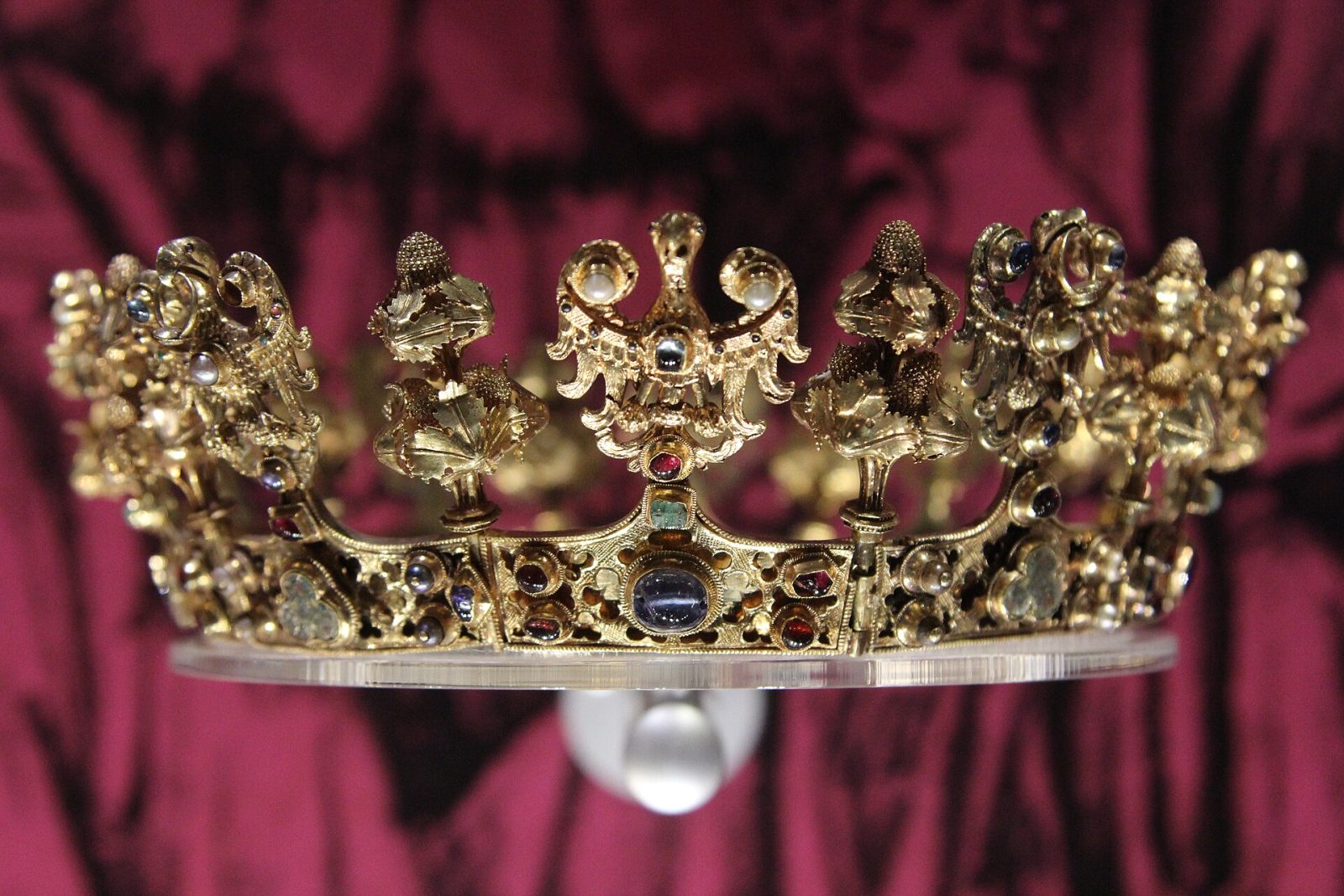
In 1985 and again in 1988, building work at the same address in Środa Śląska in south-west Poland broke open two caches of medieval treasure: thousands of silver coins, gold florins and a jewelled gold crown that may have belonged to the wife of Emperor Charles IV.
In June 1985, a digger working on a new telephone exchange in Środa Śląska, a small town in Lower Silesia west of Wrocław, broke open a jar packed with silver coins: more than 3,000 groschen, most of them struck in Prague and Meissen in the 14th century.
Three years later, on 24 May 1988, workers demolishing an old Gothic townhouse at the same address made a far bigger discovery. This time there were nearly 4,000 more silver coins, 39 gold florins and a hoard of medieval jewellery. Before the authorities had control of the site, a good deal went missing. Workers are said to have paid for beer with the coins, children brought pieces in for rewards, and coins reportedly changed hands for West German marks. A police operation carried out more than 50 searches to get the treasure back, and the hunt went on for years: a gold eagle from the crown turned up in Olsztyn in 2005.
The jewellery is the heart of the treasure. Its finest piece is a gold woman's crown of the early 14th century, possibly made in Paris, built from hinged plates that alternate eagles with enamelled trefoils and studded with sapphires, garnets, spinels, emeralds and pearls. With it were a large round clasp set with a carved chalcedony cameo, pairs of gold pendants, rings and other pieces. Altogether the two finds held around 7,500 silver coins and about 40 gold ones.
How did a crown end up in a merchant's house in a small Silesian town? The National Museum in Wrocław suggests its last owner may have been Blanche of Valois, the first wife of the Holy Roman Emperor Charles IV, who died in 1348. The usual explanation is that Charles pawned it, with other valuables, to a Jewish banker in Środa named Moses, to raise money. No document records the loan, so this remains a theory, but it fits the evidence well. Jewish communities in the region suffered violent persecution in the middle of the 14th century, and the treasure seems to have been hidden then and never reclaimed.
The treasure belongs to the National Museum in Wrocław. It was first shown to the public in 1996 and is displayed for most of the year at the Regional Museum in Środa Śląska and for part of the year in Wrocław.
Written for Global Finds from the National Museum in Wrocław's pages on the treasure, National Geographic Polska and the City of Wrocław. Photo: the gold crown from the Środa Treasure, Fallaner, Wikimedia Commons, CC BY-SA 4.0.
Approximate location51.16, 16.59View on map
Source: National Museum in Wrocław