The Ryedale Hoard: a Roman emperor's head that slipped through the Treasure Act
Famous find Later 2nd century AD · Found in 2020 See it on the timeline →
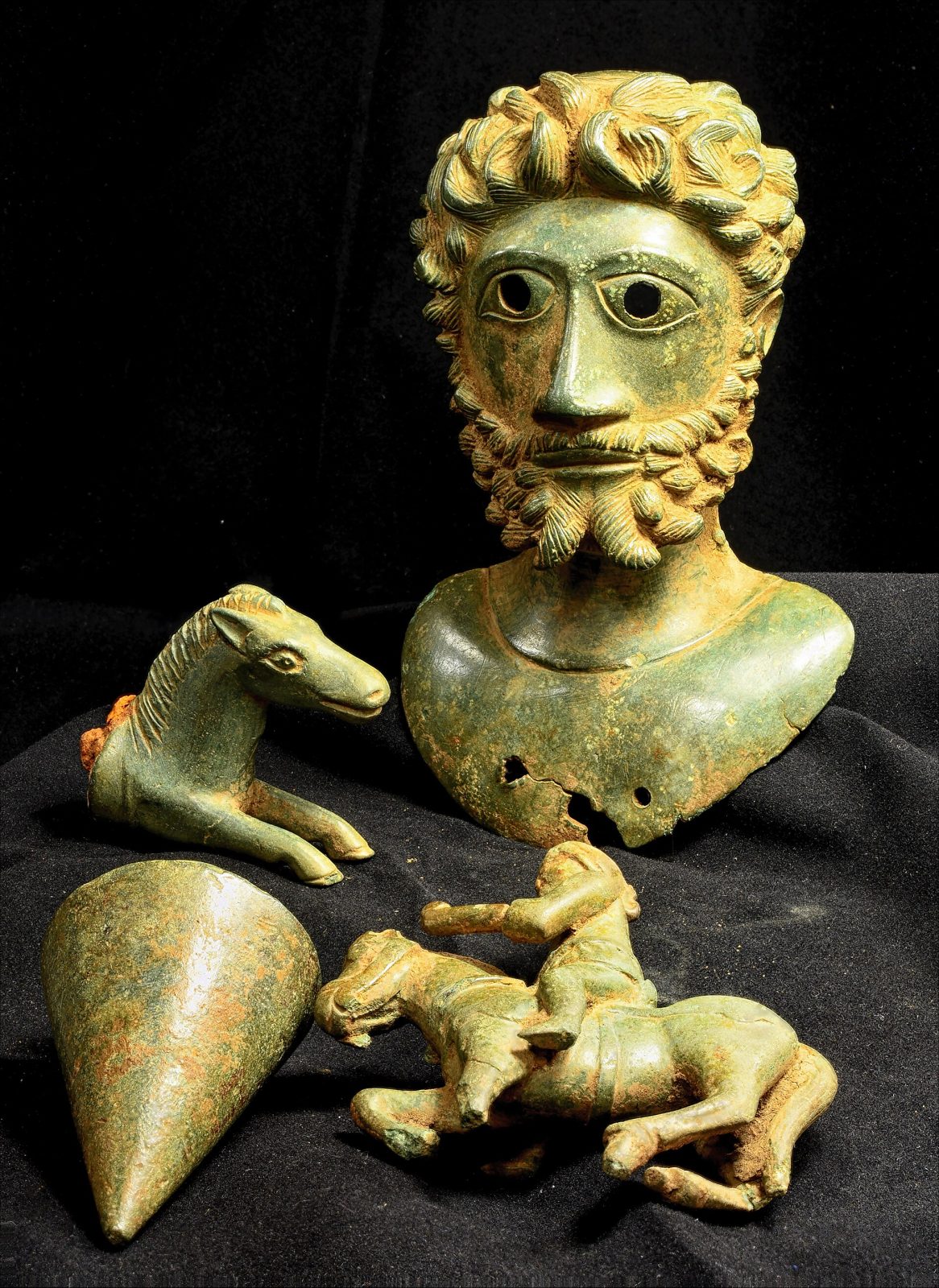
In May 2020 two detectorists in North Yorkshire found a bronze bust of the emperor Marcus Aurelius, a figure of Mars on horseback and two other Roman objects. Because they were not gold or silver, they were not Treasure and went to auction, before a donor helped the Yorkshire Museum buy them.
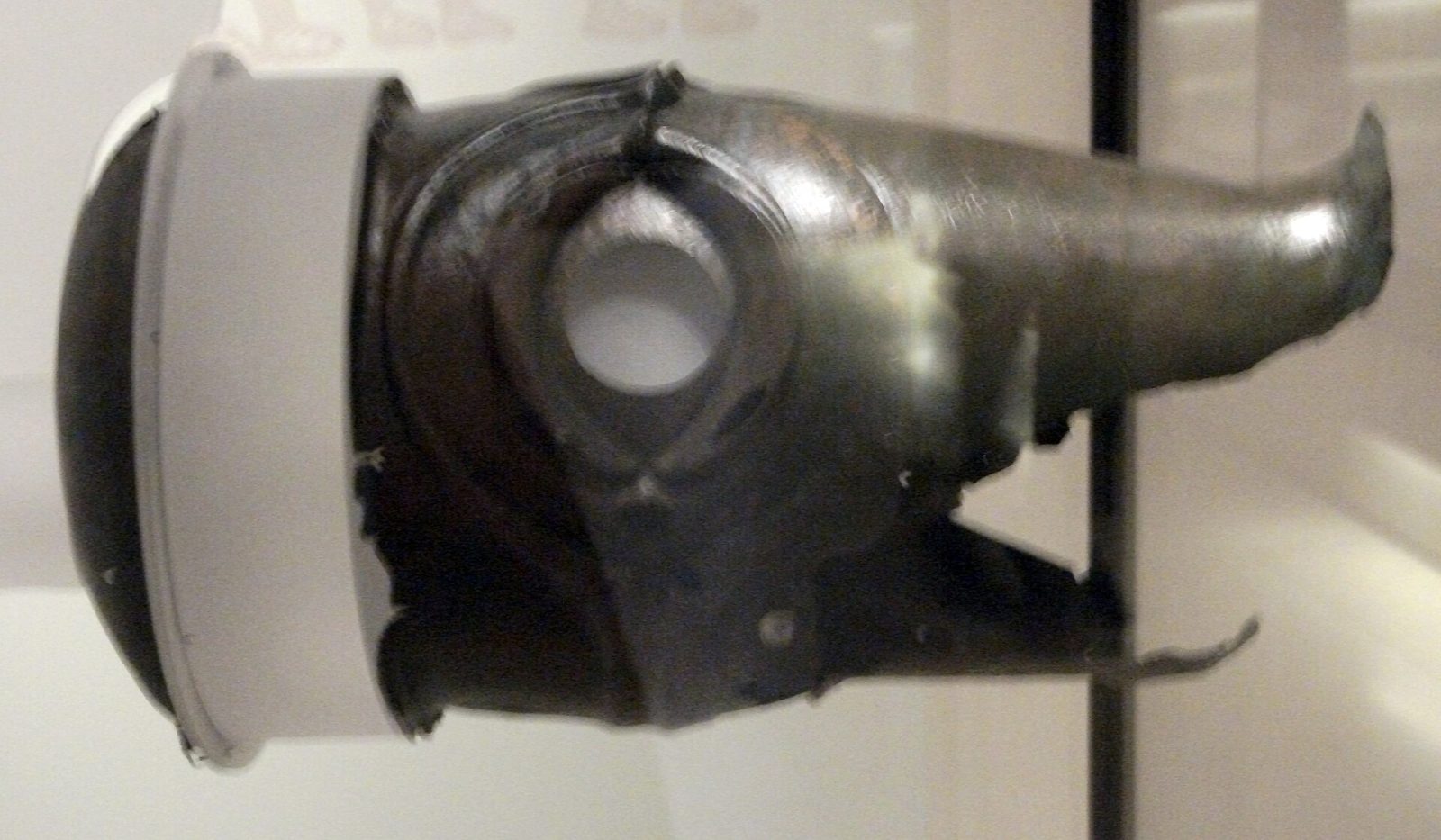
In May 2020, the metal detectorists James Spark and Mark Didlick were searching a field near Ampleforth, in Ryedale, North Yorkshire, when they found a group of Roman bronzes that had been buried together. There were four objects. The most striking is a bronze bust of the emperor Marcus Aurelius, 13 centimetres tall, made to sit on top of a sceptre or a priest's staff. With it were a figure of a horseman, identified as the war god Mars, a knife handle shaped like a horse's head, and a large, heavy plumb bob of the kind Roman surveyors and builders used. The bust lay about a foot from the horse and rider, and the knife handle was found the next day.
The Yorkshire Museum dates the group to the later 2nd century AD and believes it was buried deliberately, as an offering to the gods. The emperor's head is the key. A bust like this would have been carried in religious ceremonies, and finding one in the countryside is rare evidence for the worship of the emperor, the Imperial Cult, away from the towns and forts. The figure of Mars is of a type never found this far north before, and the plumb bob may hint that the offering was connected with some engineering or building work.
The finders recorded the objects with the Portable Antiquities Scheme. But because they are made of bronze, not gold or silver, they did not count as Treasure under the law of the time, so no museum had first claim on them. They were sold at auction by Hansons on 20 May 2021, fetching a hammer price of £185,000, more than double the top estimate, to the London dealer David Aaron, who showed them at the Frieze Masters art fair in London that October.
York Museums Trust then bought the hoard from the dealer, mainly with a donation from the American collector Richard Beleson, together with the Art Fund and other donors. The Ryedale Hoard joined the Roman collection of the Yorkshire Museum in York, where it went on display when the museum reopened in 2022.
Written for Global Finds from York Museums Trust's announcement of the acquisition (October 2021), the Yorkshire Museum's collection pages and reports of the auction. Photo: the Ryedale hoard as recorded by the Portable Antiquities Scheme, Amy Downes, Wikimedia Commons, CC BY 2.0.
Approximate location54.20, -1.11View on map
Source: York Museums Trust