The Rogozen Treasure: 165 Thracian silver vessels from a Bulgarian garden
Famous find Made in the late 6th to mid 4th century BC · Found in 1985 See it on the timeline →
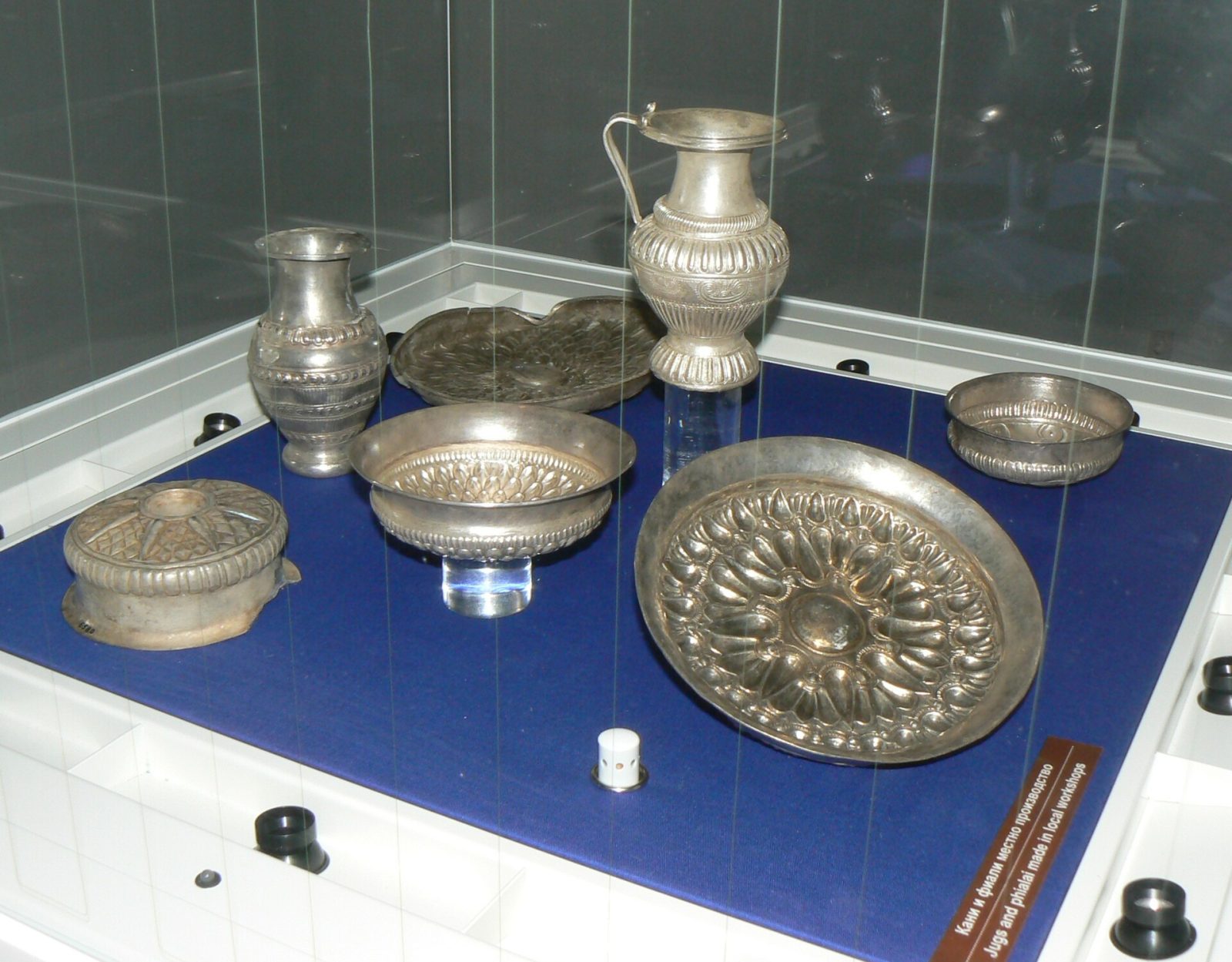
In 1985 a tractor driver digging to water his vegetable garden in north-west Bulgaria found 65 silver vessels, and archaeologists then found 100 more a few metres away. Many are inscribed with the names of Thracian kings.
In autumn 1985 Ivan Dimitrov, a tractor driver in the village of Rogozen in north-west Bulgaria, was digging a trench to water the vegetable garden behind his house when he struck metal. In the ground were 65 silver vessels. He told nobody for months, reportedly afraid that archaeologists would dig up his crops. In early January 1986 he finally took the find to the village mayor.
Archaeologists from the museum in Vratsa, Bogdan Nikolov, Spas Mashov and Plamen Ivanov, began work on 6 January 1986. Only four or five metres from the first find they uncovered a second cache of 100 more vessels. Together the 165 pieces of silver, many of them gilded, weigh more than 20 kilograms: 108 shallow drinking bowls called phialai, 54 jugs and three goblets. In Bulgaria it was hailed as the find of the century, and it remains the largest Thracian treasure ever found.
The Rogozen vessels are a written record as well as a treasure. Several carry short Greek inscriptions naming Kotys I, king of the Odrysian Thracians from about 383 to 359 BC, together with places where the vessels were made or presented, such as Beos and Apros. One names Kotys's son Kersebleptes. One even records its maker, a silversmith called Disloias, which is very rare. The decoration is just as rich: one famous phiale shows the hero Heracles with Auge, and jugs show a goddess riding a fantastic beast and a lion bringing down a deer.
The vessels were made over a long period, from the late 6th century to the 4th century BC. Most scholars think the hoard was a royal or noble drinking service built up over generations and buried in the 4th century BC, perhaps as Philip II of Macedon conquered Thrace, though some recent research argues it was buried later still.
The treasure is in the Regional History Museum in Vratsa, which has a room devoted to it; a group of vessels is on long-term loan to the National History Museum in Sofia.
Written for Global Finds from Bulgarian National Radio's feature on the treasure's 40th anniversary (2025), the Vratsa Regional History Museum and published studies of the inscriptions. Photo: vessels from the Rogozen treasure in the Vratsa museum, Vassia Atanassova (Spiritia), Wikimedia Commons, CC BY-SA 3.0.
Approximate location43.52, 23.70View on map
Source: Bulgarian National Radio