The Mooghaun Hoard: Europe's biggest Bronze Age gold find, sold off by the railway navvies
Famous find Buried about 800 to 700 BC · Found in 1854 See it on the timeline →
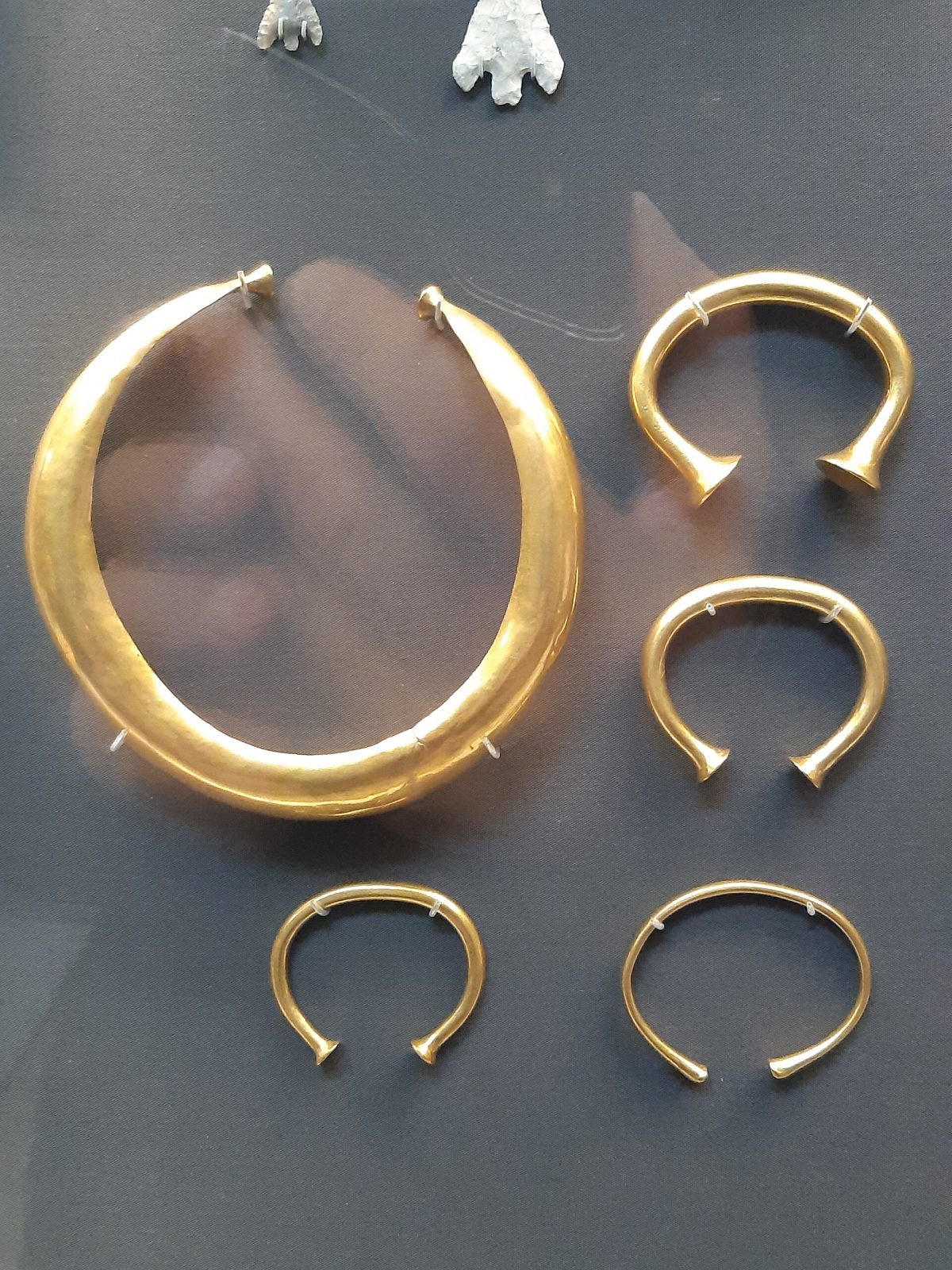
In March 1854 navvies building the Limerick to Ennis railway in County Clare moved a stone and found a chamber full of gold: about 150 Bronze Age bracelets and collars. Most of it was sold to dealers and melted down; only 29 pieces survive.
In March 1854, a gang of navvies was working on the new railway between Limerick and Ennis, near Newmarket-on-Fergus in County Clare. Their ganger told them to straighten a ditch beside Mooghaun Lough. When they shifted a large stone, they found a small, roughly built chamber, covered with a flagstone and full of gold.
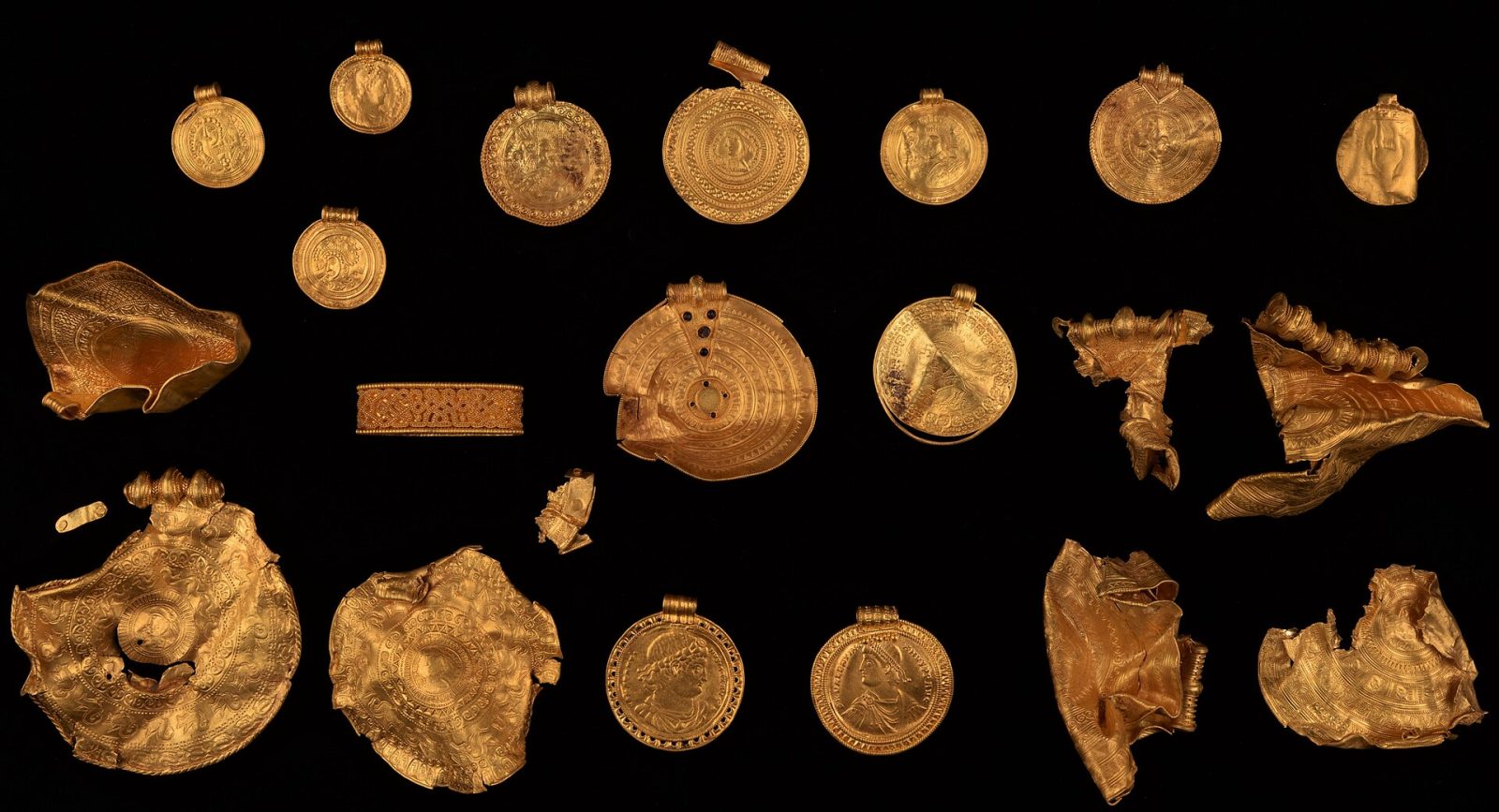
It was the largest hoard of Bronze Age gold ever found in western or northern Europe. The National Museum of Ireland puts it at more than 150 objects weighing over five kilograms. Most were bracelets, about 138 of them, many plain and almost identical, together with at least six gold collars, probably two neck rings and a few small gold ingots. It was buried in the Late Bronze Age, around 800 BC, a time when Ireland was one of the richest gold-working regions in Europe.
What happened next was a disaster for archaeology. The workmen shared out the gold, and much of it was sold to travelling dealers and jewellers and melted down for its metal. By the time antiquarians understood what had been found, almost all of it had gone. Only 29 original pieces are known to survive today, divided between the National Museum of Ireland in Dublin and the British Museum in London. The National Museum also displays copies of lost pieces, made in the 19th century from records of what had been found, which give an idea of how large the hoard once was.
The findspot lies below Mooghaun hillfort, one of the largest prehistoric forts in Ireland, with three great stone ramparts enclosing about 12 hectares. Excavations there in the 1990s showed that the fort was occupied in the Late Bronze Age, and archaeologists think the hoard and the fort are connected: a vast store of gold, perhaps a ritual offering, buried by a powerful community that controlled this part of the Shannon estuary.
The surviving gold is on display in the National Museum of Ireland, Archaeology, on Kildare Street in Dublin, and in the British Museum.
Written for Global Finds from the National Museum of Ireland's pages on Late Bronze Age gold and the Irish Times series A History of Ireland in 100 Objects, with George Eogan's Hoards of the Irish Later Bronze Age (1983). Photo: gold from the Mooghaun hoard in the British Museum, Jononmac46, Wikimedia Commons, CC BY-SA 4.0.
Approximate location52.79, -8.87View on map
Source: National Museum of Ireland