The Kindrochit Brooch: Boy Scouts digging a royal castle's prison found a love token its maker couldn't read
Famous find Made in the late 15th century · Found in 1925 See it on the timeline →
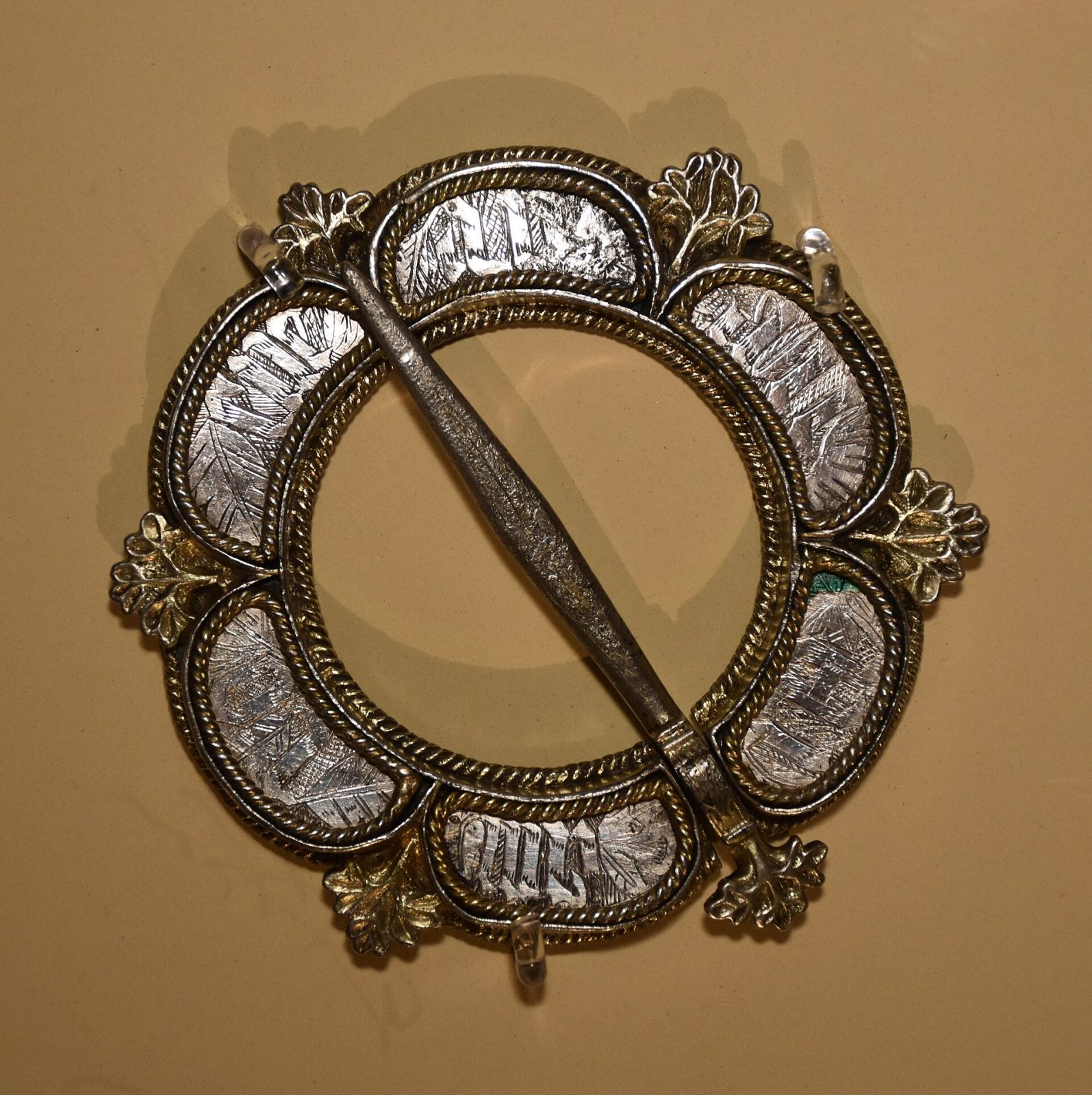
In 1925 Boy Scouts clearing the ruins of Kindrochit Castle at Braemar in Aberdeenshire dug up a late medieval silver-gilt brooch from the old prison. Its inscription seems to be an old French love formula, copied by a Scottish maker who did not understand it.
In 1925, a party of Boy Scouts was helping to clear and excavate the ruins of Kindrochit Castle at Braemar, in the Highlands of Aberdeenshire, under the direction of the archaeologist W. Douglas Simpson. Kindrochit had been a royal hunting seat of King Robert II in the late 14th century, and in 1390 Malcolm Drummond was licensed to build a new tower there. Digging in the part of the castle that had held the prison, about 18 inches down, the Scouts found a silver brooch.
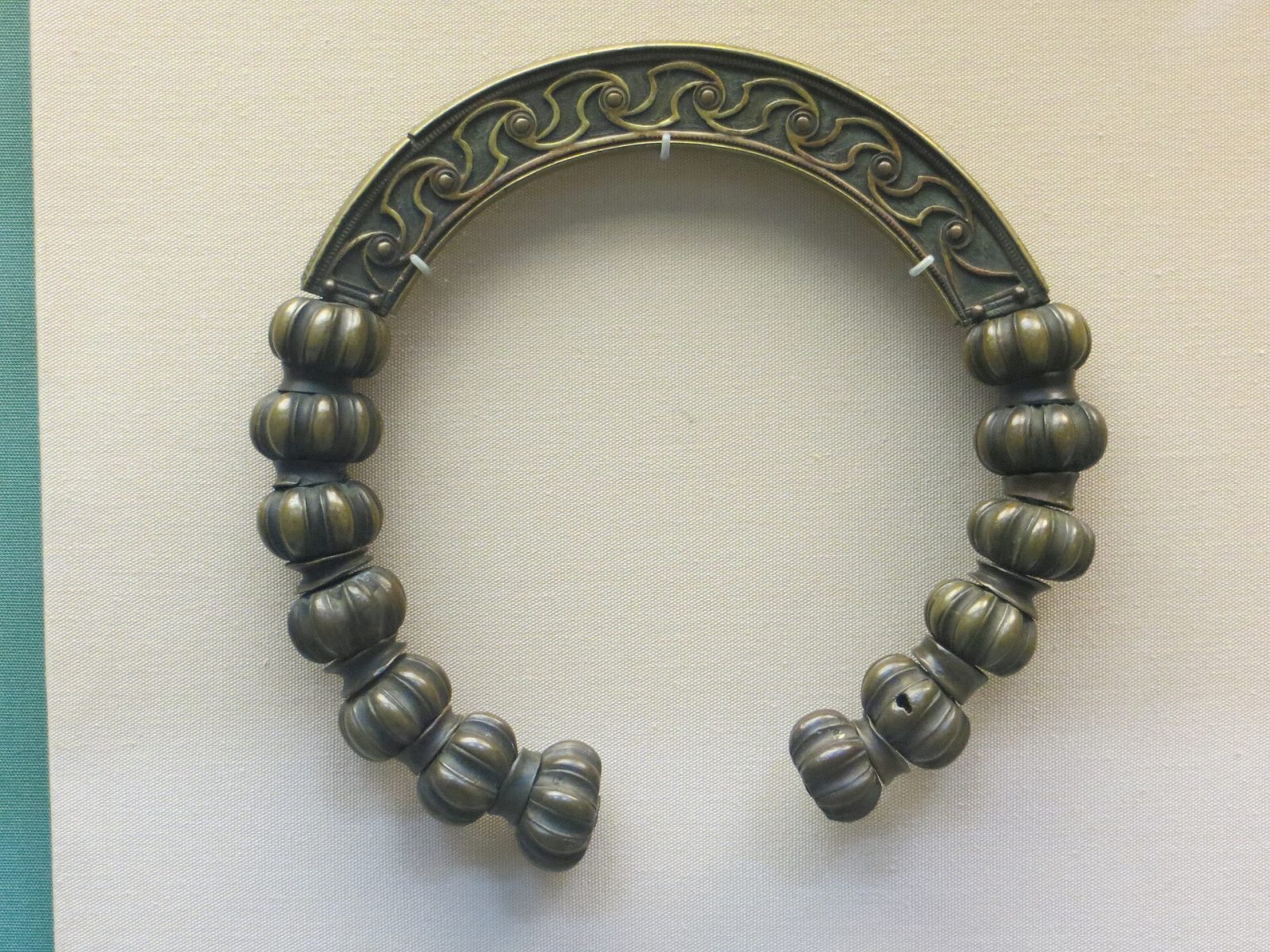
It is a ring brooch of silver-gilt, made in the late 15th century, with a long pin. The ring is divided into six engraved silver panels, each with letters in black-letter script on a cross-hatched background, separated by gilt cable borders and cast leaf-shaped knobs. It was once enamelled, and the gilding is now worn, especially on the pin.
The inscription has puzzled everyone who has studied it. In 1927 W. Mackay Mackenzie read it as an attempt at an old French phrase, "Je suis en lieu d'ami", "I am here in place of a friend", a formula used on love tokens. He thought the Scottish craftsman who made it had copied the words from an older piece without understanding either the script or the language, which is why the letters contain mistakes. The National Museums Scotland catalogue transcribes the letters differently, and the meaning is still open to debate. The same French love formula is known on a medieval gold ring in the British Museum.
How a love token came to be lying in a castle prison is anyone's guess. It may simply have been lost when that part of the building was in other use, or after the castle fell into ruin.
The brooch is in the collections of National Museums Scotland, and it has been on show at the National Museum of Scotland in Edinburgh, where visitors photographed it in 2023.
Written for Global Finds from W. Mackay Mackenzie in the Proceedings of the Society of Antiquaries of Scotland 61 (1927), the Aberdeenshire Historic Environment Record and National Museums Scotland. Photo: the Kindrochit Brooch in the National Museum of Scotland, Kognos, Wikimedia Commons, CC BY 4.0.