The Ballyspellan Brooch: a Kilkenny farmer's find, scratched with its owners' names in ogham, copied for Queen Victoria
Famous find Made about AD 900 · Found in 1806 See it on the timeline →
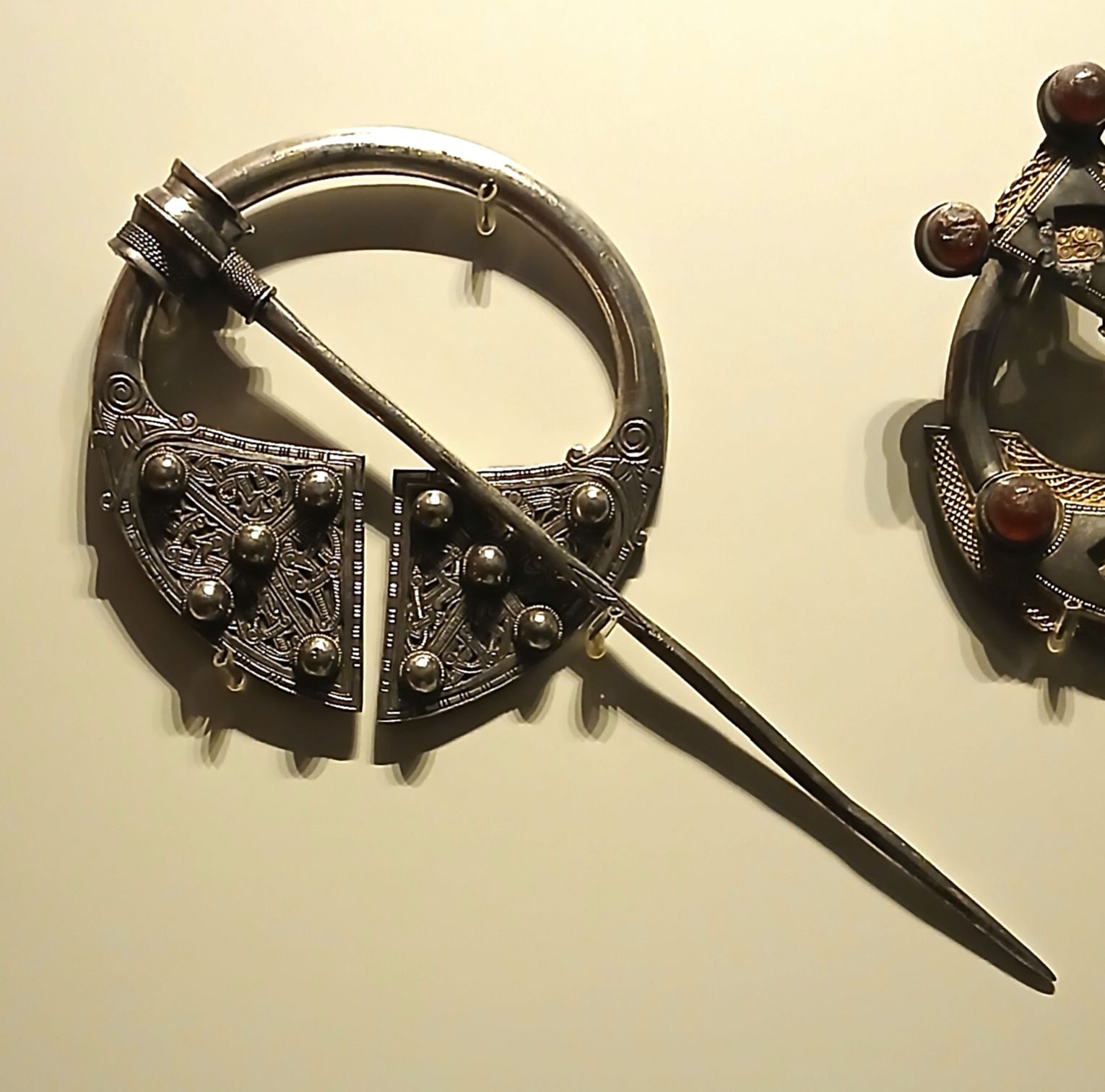
In 1806 a farmer digging on a hill at Ballyspellan, County Kilkenny, found a great silver brooch of about AD 900. On its back, its owners had scratched their names in ogham. It is the only ogham-inscribed brooch known, and a copy made for Queen Victoria started a fashion.
In 1806, a farmer digging on a hill in the townland of Ballyspellan, near Johnstown in the north of County Kilkenny, turned up a large silver brooch. Nobody recorded his name or the exact date, and later popular accounts that add details have not been confirmed. The brooch passed into the collection of the Royal Irish Academy and from there to the National Museum of Ireland.
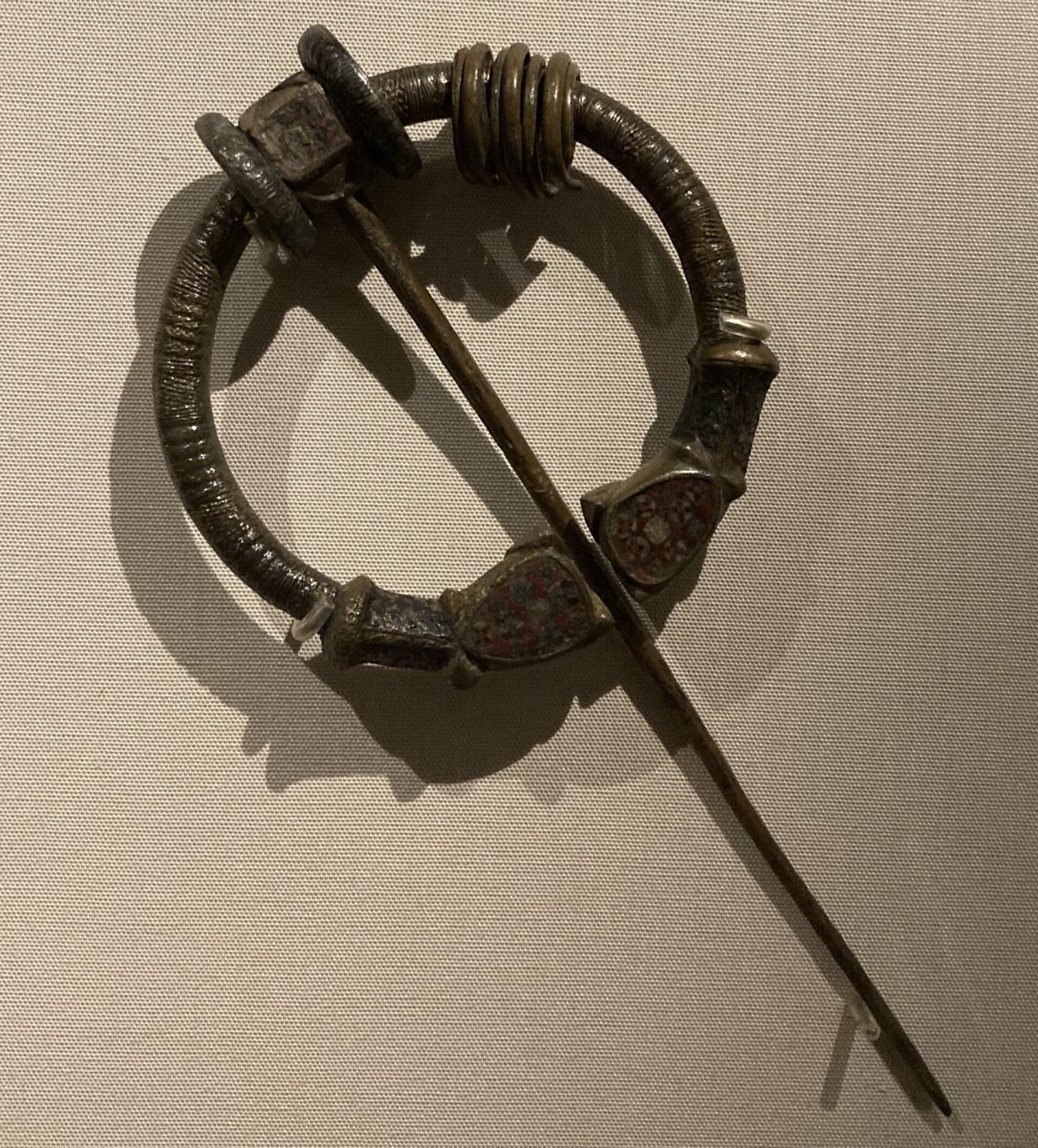
It is a bossed penannular brooch, the kind with a ring that is not quite closed, worn on the shoulder to fasten a cloak. The pin alone is 25.2 centimetres long. The terminals are filled with openwork plates of interlaced animals, four domed bosses sit on the ring and the terminals, and animal heads bite at the points where the ring meets the terminals. It was made around AD 900, when silver was plentiful in Ireland thanks to the Viking trade, although some specialists have argued for a later date.
What makes it unique is on the back. Scratched into the metal, apparently by at least three different hands, are Irish personal names written in ogham, the alphabet of lines and notches used in early Ireland. The scholar R. A. S. Macalister read them as names including Cellach, Maelmaire and Maeluadaig, and suggested they were successive owners marking the brooch as theirs. It is the only brooch known with an ogham inscription, and in 2024 the University of Glasgow's ogham project drew attention to an unusual feather-like mark in its lettering.
The brooch had a second life in Victorian Britain. When Queen Victoria visited Ireland in 1849, a replica of the Ballyspellan brooch, sold by the Dublin jewellers West & Son, was bought by Prince Albert as a gift for her. Sources differ on whether she received it in November or at Christmas that year. Copies of ancient Irish brooches became fashionable soon afterwards, and Celtic-style brooches have been popular ever since.
The original is in the National Museum of Ireland on Kildare Street in Dublin, where visitors photographed it on display in 2025.
Written for Global Finds from the National Museum of Ireland, the University of Glasgow OG(H)AM project (2024) and Dublin Castle. Photo: the Ballyspellan Brooch in the National Museum of Ireland, A.-K. D., Wikimedia Commons, CC BY-SA 4.0.