The Ring of Queen Aregund: a gold signet ring under Saint-Denis that put a name to a Merovingian queen
Famous find Buried in the second half of the 6th century · Found in 1959 See it on the timeline →
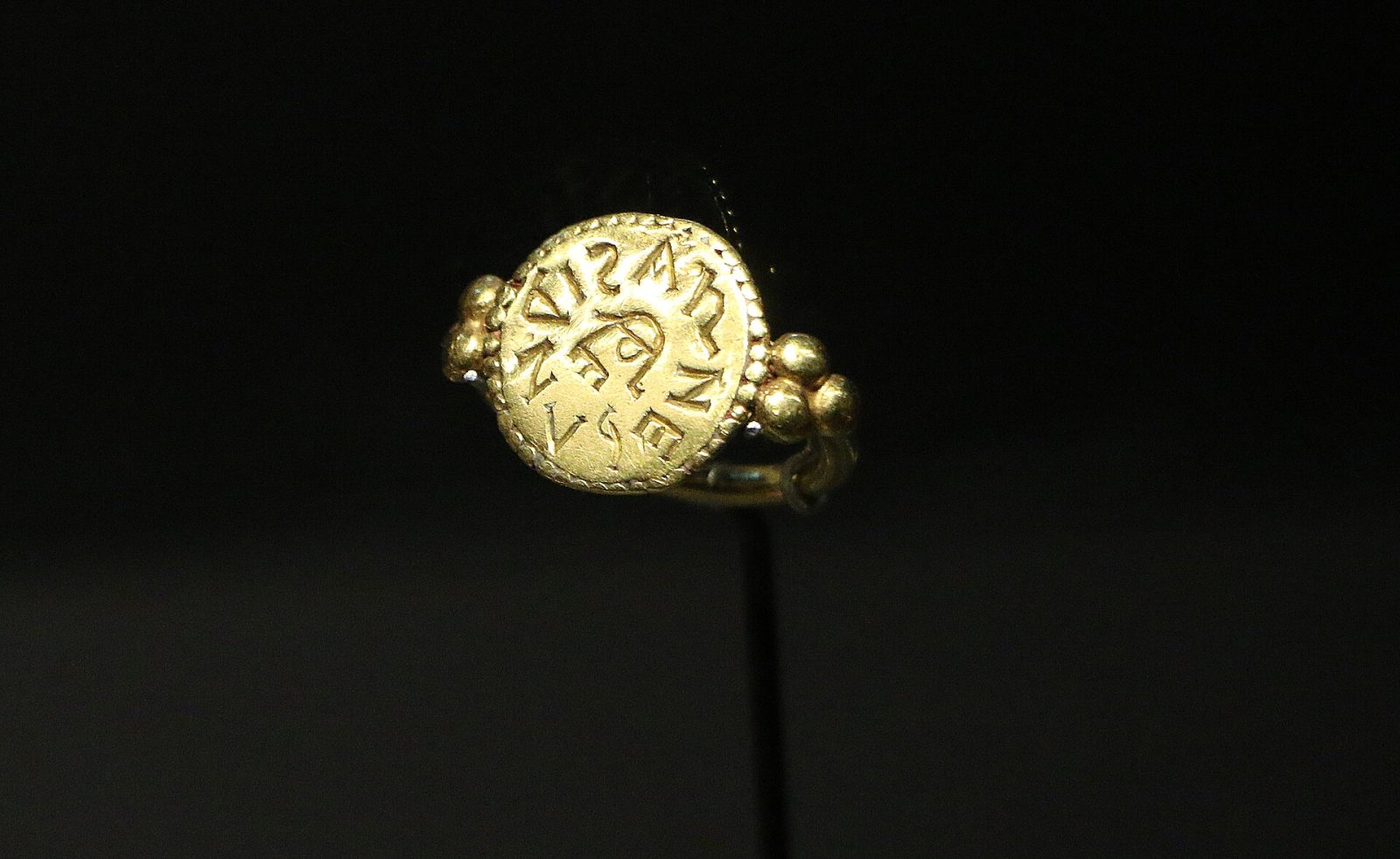
In 1959 archaeologist Michel Fleury opened a sarcophagus beneath the Basilica of Saint-Denis near Paris and found a richly dressed woman wearing a gold ring inscribed ARNEGUNDIS and REGINE. It identified her as Aregund, a 6th-century Frankish queen.
In 1959, the archaeologist Michel Fleury was excavating beneath the Basilica of Saint-Denis, north of Paris, the burial place of the kings of France, when he opened a stone sarcophagus, number 49. Inside lay a woman buried in great finery. Rather than dig the grave on the spot, the team lifted its contents in a single block on sheets of aluminium and took them to a laboratory in Nancy, where the specialist Albert France-Lanord excavated them in detail.
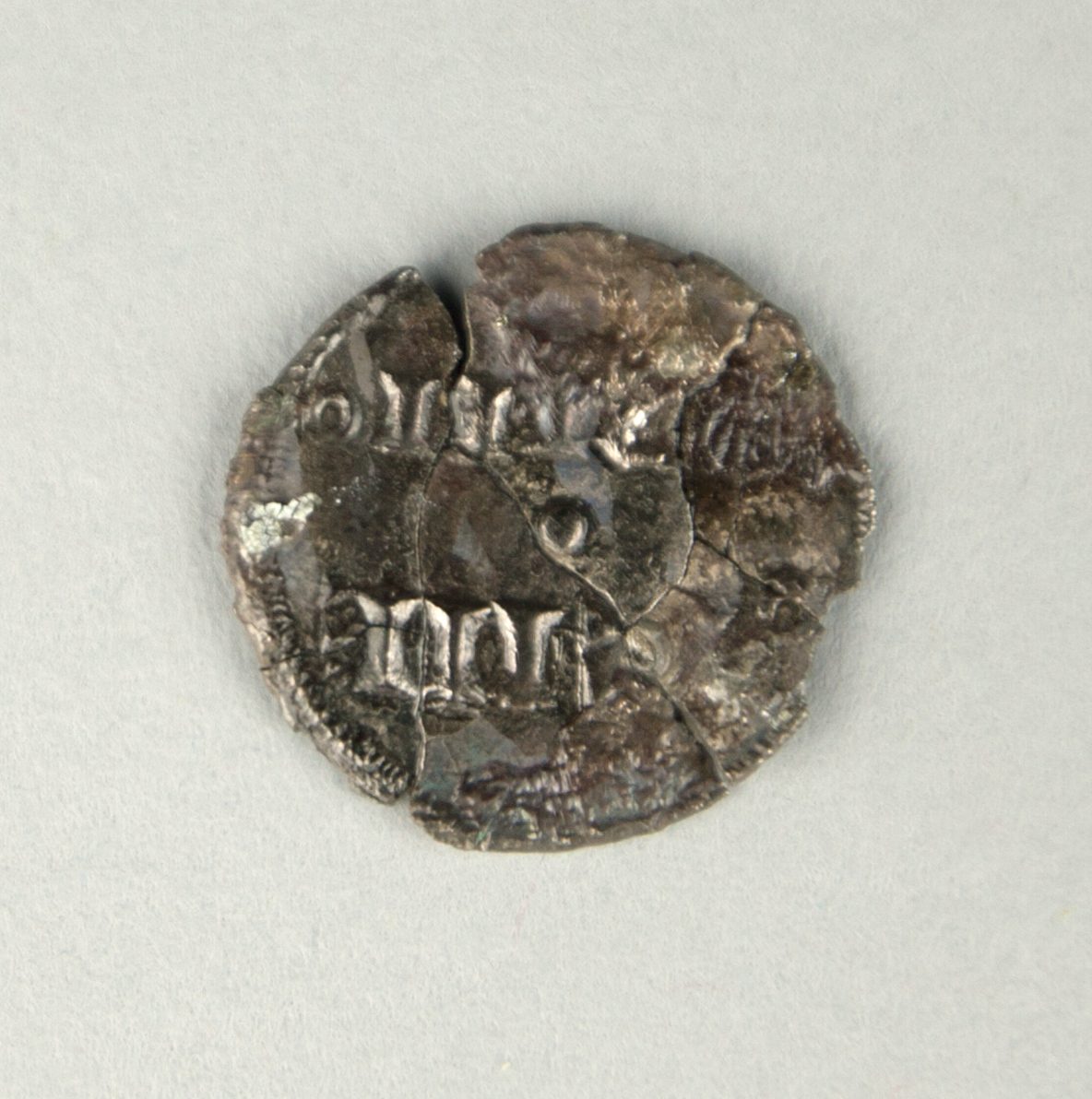
On her thumb was a gold signet ring. Around the edge of its round bezel is the name ARNEGUNDIS, and in the centre a monogram read as REGINE, "of the queen". It identified her as Aregund, or Arnegunde, one of the wives of the Frankish king Clothar I and the mother of King Chilperic I, a queen mentioned by the historian Gregory of Tours. With her were two gold disc brooches set with garnets, a large belt buckle, pins, earrings, and the remains of her clothes: a skirt of purple silk, a red-brown silk tunic with gold braid, and red leather shoes. Study of her bones showed she was about 1.55 metres tall and had suffered from polio as a child, which left her right leg weakened.
Not everything about her is agreed. Fleury dated her burial to around 565 to 570, but later study of her clothing and jewellery has pushed it later in the 6th century, and her age at death is also disputed. One scholar has argued that the lettering on the ring reads the right way round rather than in reverse, so it may not have been a working seal. The story had an odd postscript: her bones went missing for decades and were rediscovered in 2003 in a cupboard in the Paris building where Fleury had kept an office.
The ring and the other grave goods are in the Musée d'Archéologie nationale at Saint-Germain-en-Laye, near Paris, and they were lent to the Musée de Cluny for its Merovingian exhibition in 2016 and 2017.
Written for Global Finds from the French Ministry of Culture's Saint-Denis archaeology site and the Musée d'Archéologie nationale. Photo: the ring of Queen Aregund at the Musée de Cluny exhibition, Cangadoba, Wikimedia Commons, CC BY-SA 4.0.