The Wijnaldum Brooch: found by a farmhand, kept by a barn's skulls, and pieced together by detectorists over 40 years
Famous find Made in the late 6th or early 7th century · Found in 1953 See it on the timeline →
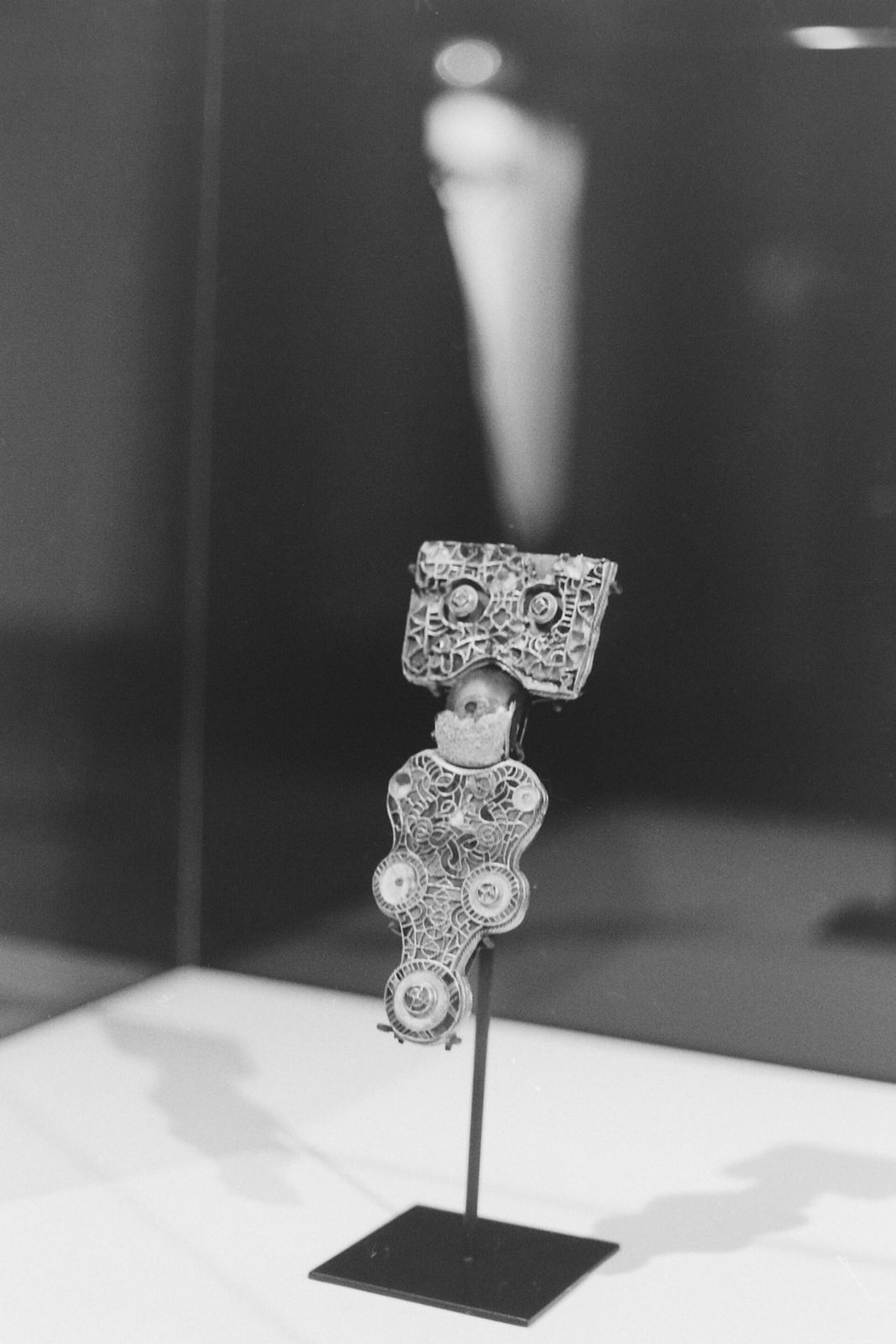
In 1953 a farmhand digging a drainage trench on a terp mound at Wijnaldum in Friesland turned up part of a great gold and garnet brooch. Detectorists and excavators found more fragments over the next forty years. It is the largest early medieval inlaid jewel found in the Netherlands.
In 1953, a farmhand on Jan Bergmans' farm at Wijnaldum, near Harlingen in the Dutch province of Friesland, was digging drainage trenches by hand on the Tjitsma terp, one of the artificial mounds that people in Frisia built to keep their homes above the sea. He turned up a piece of gold set with red stones. His name has not been recorded. The piece sat in the farm's barn for some years, next to two skulls that were used to scare the milk-hand, and later on a windowsill. A local doctor eventually arranged for it to go to the Fries Museum in Leeuwarden, and the museum had it examined at the British Museum, where the Sutton Hoo expert Rupert Bruce-Mitford said it was a long time since he had seen anything so exciting.
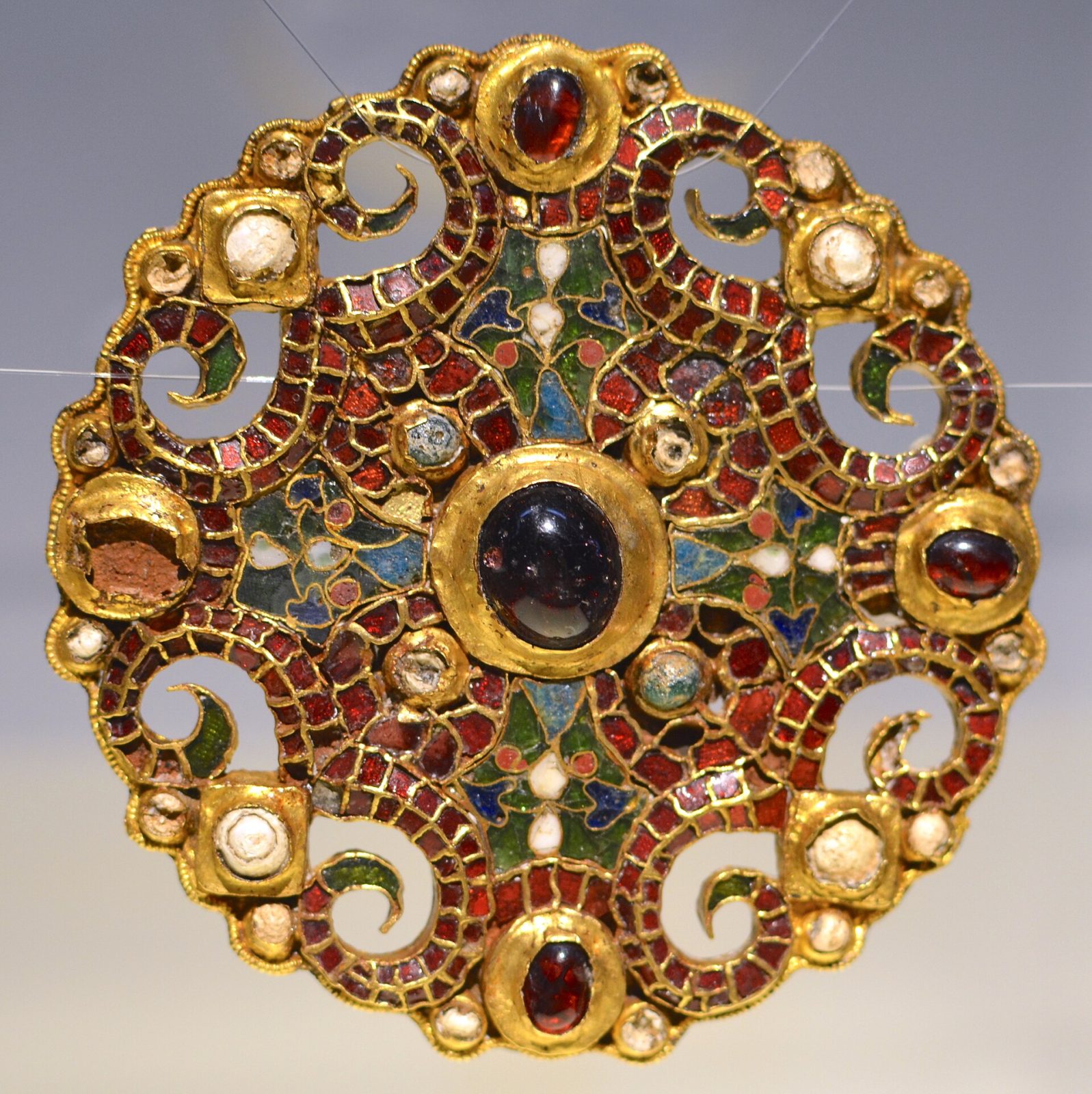
It was the foot of a great brooch, a disc-on-bow fibula about 17 centimetres long, made of gold on a silver base and covered with more than 300 garnets set in gold cells, with a design of a man between two beasts. Its style is close to the jewellery from Sutton Hoo, and in 2012 analysis at the Louvre suggested the garnets probably came from Rajasthan in India. It was made in the late 6th or early 7th century. The Fries Museum calls it the largest early medieval inlaid jewel found in the Netherlands.
The rest of the story belongs to detectorists. In the 1980s, amateur metal detectorists found more fragments on the terp, and a Leeuwarden amateur, Jan Zijlstra, collected and matched them. That led to an excavation by the universities of Groningen and Amsterdam from 1991 to 1993, which found gold sheet from the back. At the same time the Bergmans family handed over a piece they had kept as a souvenir since the 1950s. On 1 June 1992 a metal detector found a ploughed-up piece of the head, and another fragment turned up in 2009. The central disc itself has never been found.
The brooch is in the Fries Museum in Leeuwarden. After new conservation work in 2026 it became a centrepiece of the museum's exhibition on the Frisian king Redbad.
Written for Global Finds from the Fries Museum, J. Schoneveld in De Vrije Fries (1993), J. M. Bos and J. Zijlstra in Paleo-aktueel (1991) and Medievalists.net (2026). Photo: the Wijnaldum brooch on display in Wijnaldum in 2026, Roepers, Wikimedia Commons, CC BY 4.0.
Source: Fries Museum