The Lahun Pectoral: a princess's gold jewel the tomb robbers missed, hidden in a niche of dried mud
Famous find Made in the reign of Senwosret II, about 1887 to 1878 BC · Found in 1914 See it on the timeline →
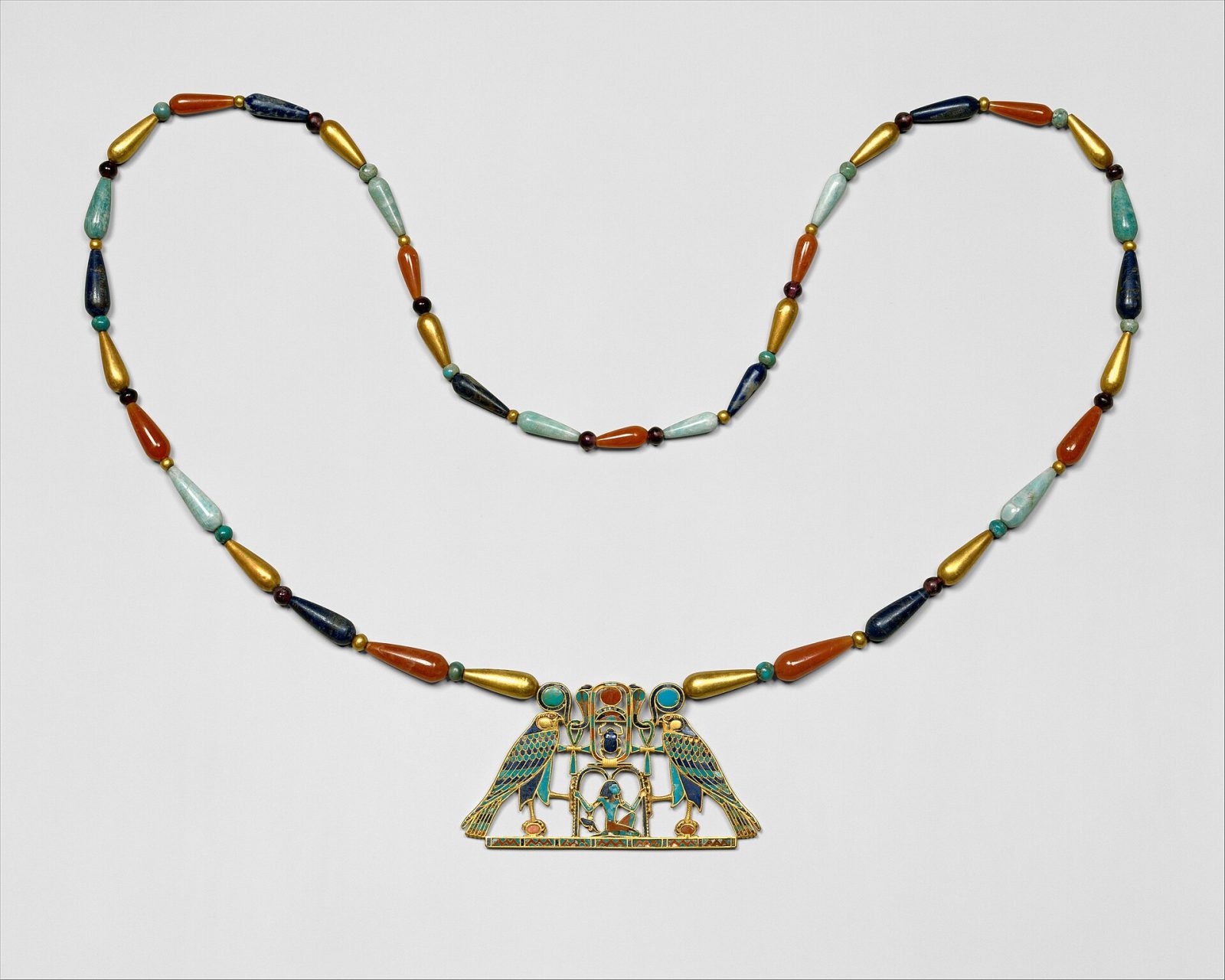
In February 1914 Flinders Petrie's team, clearing a looted tomb beside the pyramid of Senwosret II at Lahun in Egypt, found a recess of dried mud full of gold. Among the princess Sithathoryunet's jewels was a gold pectoral inlaid with 372 cut stones.
In February 1914, the archaeologist Flinders Petrie's team was excavating around the pyramid of King Senwosret II at Lahun, at the entrance to the Faiyum in Egypt. A group of shaft tombs on the pyramid's south side had all been robbed in antiquity. In Tomb 8, the robbers had smashed a hole in the lid of the stone sarcophagus just big enough for a boy to climb in, and taken everything. By the afternoon of 10 February the tomb had been cleared, except for a small side recess packed with hard, dried mud that looked like the least promising spot of all.
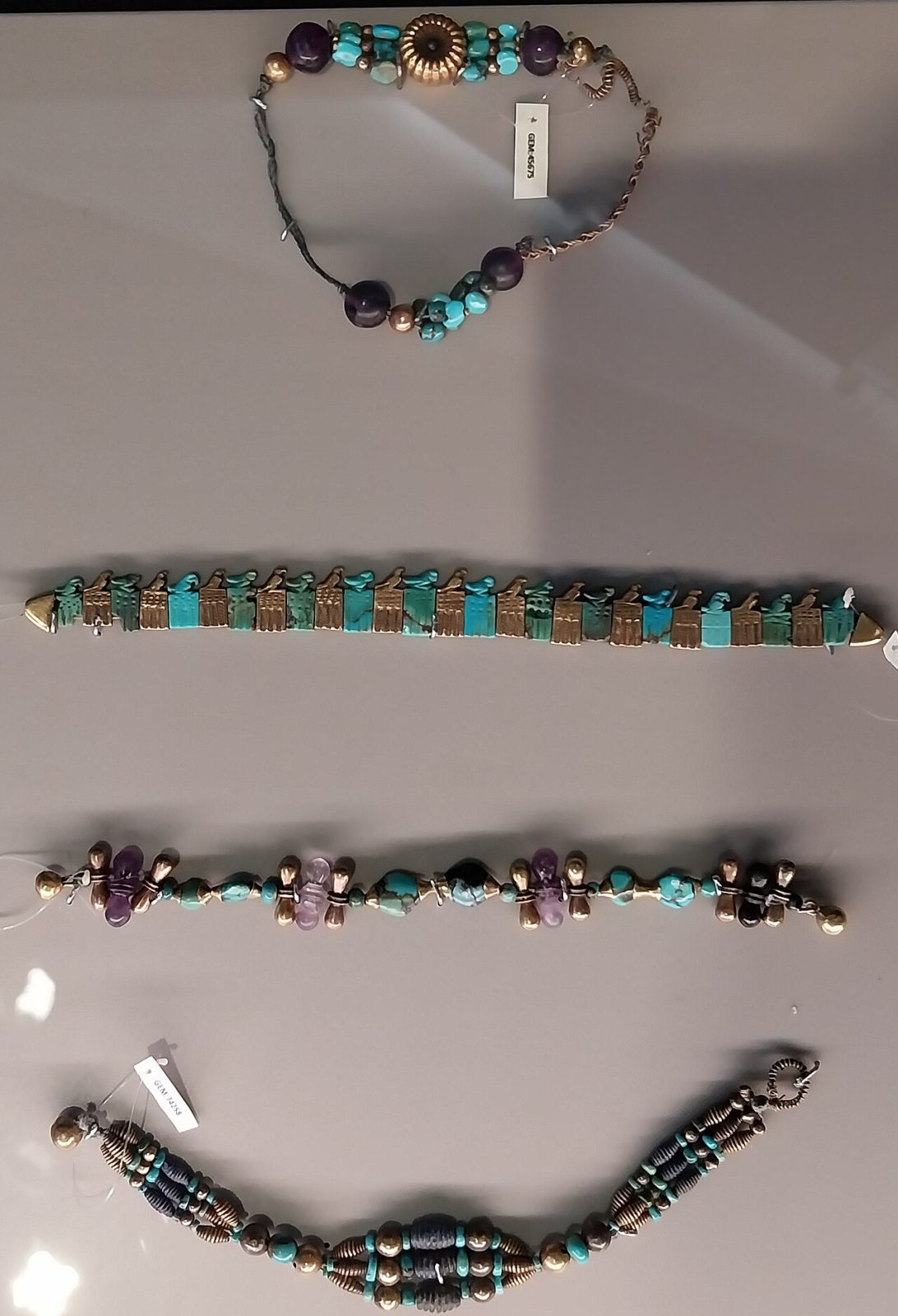
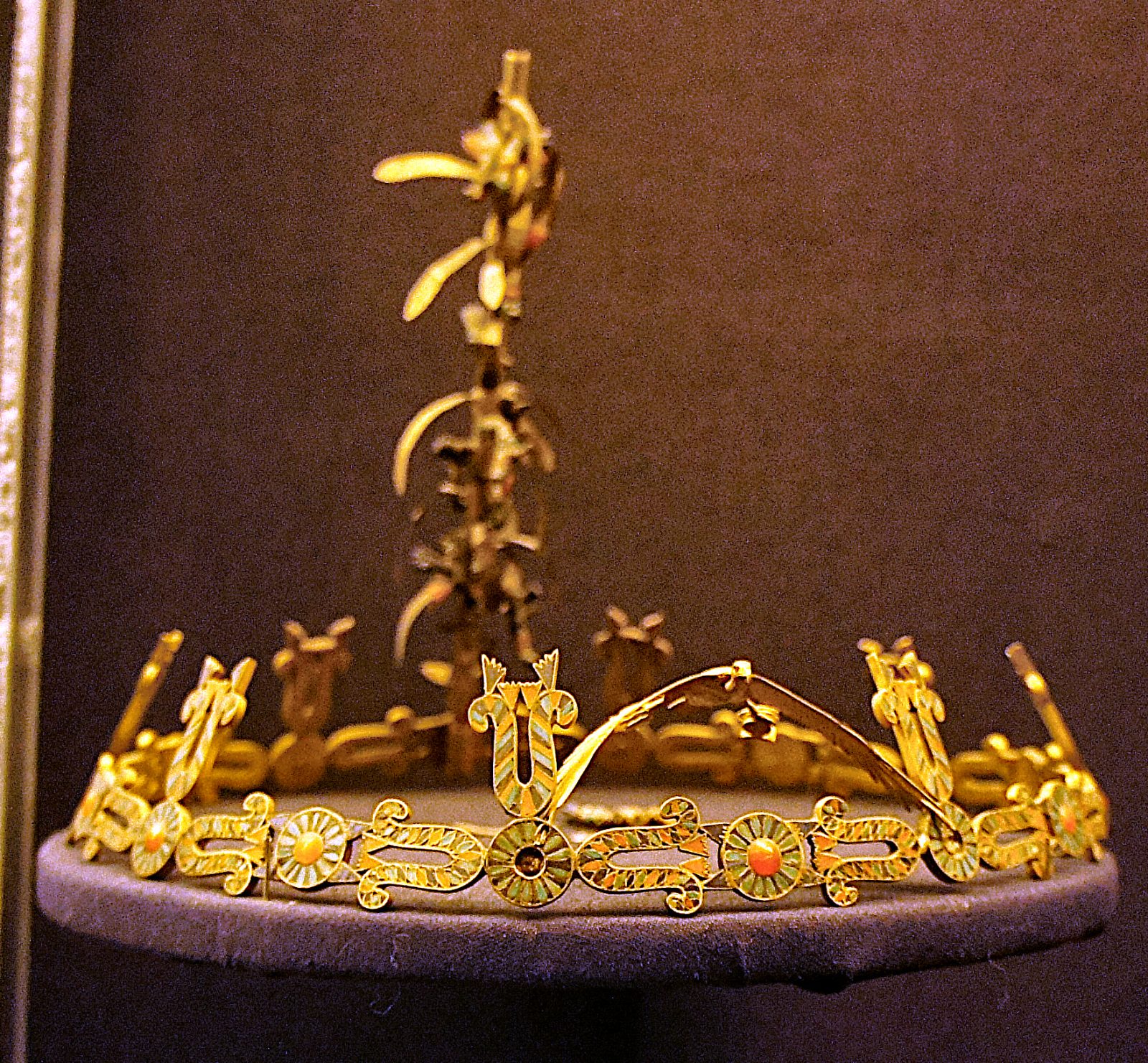
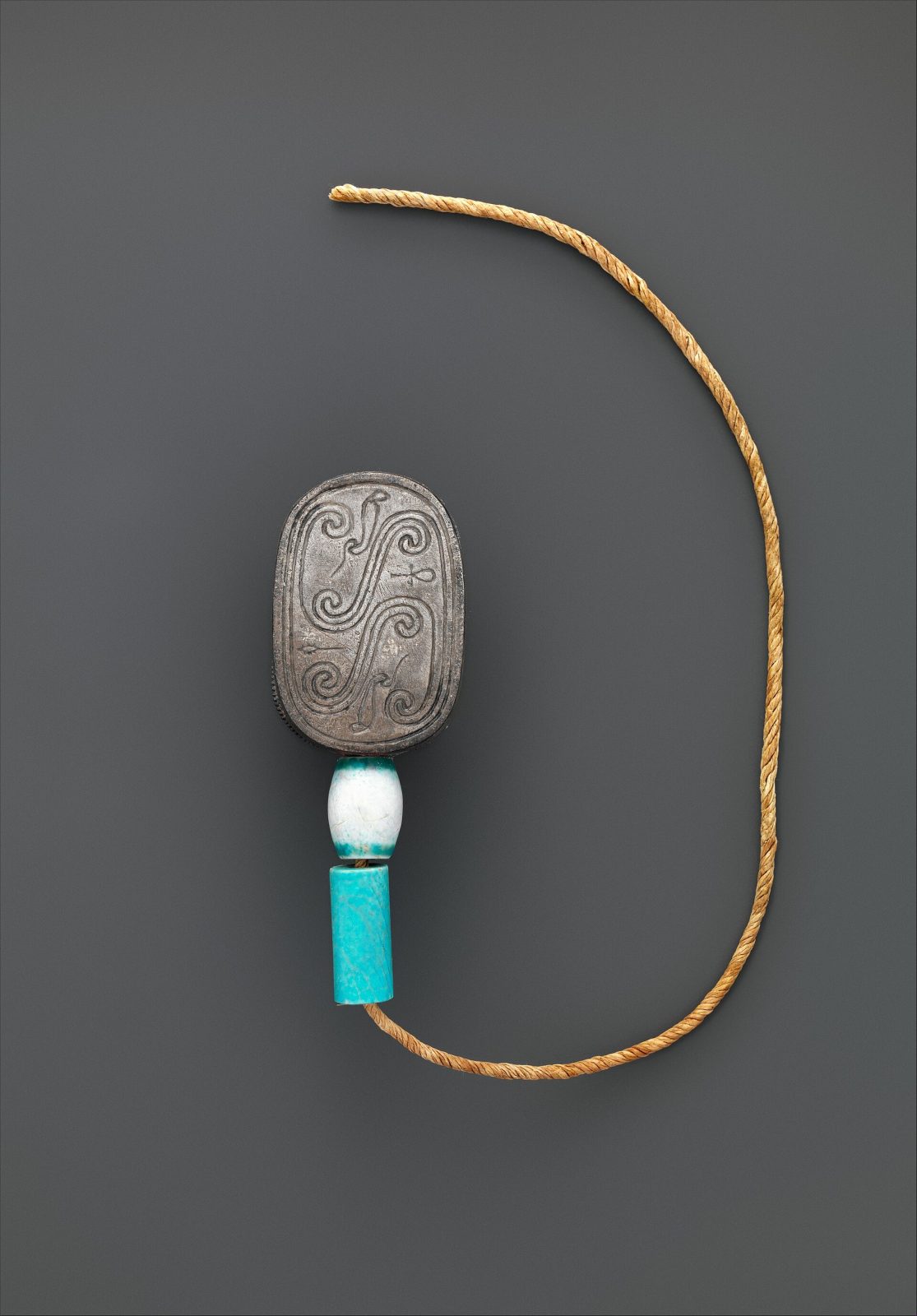
At about half past four, an experienced workman saw tiny gold tube beads after a few strokes of his pick. He sent the other workers away and called for help. Petrie's assistant Guy Brunton spent the night in the tomb guarding it, and over the next week or so he worked through the mud, lifting out a royal treasure that included a gold diadem, a silver mirror, an inlaid scarab, two inlaid pectorals and thousands of gold and stone beads. Weeks of washing the excavated mud at the camp recovered more than 10,000 beads. The tomb belonged to a princess, Sithathoryunet, who lived during the reigns of Senwosret II and his grandson Amenemhat III.
The finest piece is a pectoral, a chest ornament, only 8.2 by 4.5 centimetres, made of gold and inlaid with 372 cut stones: turquoise, lapis lazuli and carnelian, with garnets for the eyes of two falcons. The falcons flank the name of Senwosret II, above a kneeling god holding palm ribs, the sign for "millions of years". Cobras hang the hieroglyph for life from sun discs. The whole design wishes the king eternal life. Brunton called it perhaps the finest known example of Egyptian inlay with cut stones.
Under the rules of the time, the finds were divided. The Egyptian Museum in Cairo kept the diadem and some other pieces, and the Metropolitan Museum of Art in New York bought the rest in 1916. Because of the First World War, the jewellery stayed in England until 1919. The pectoral and its necklace are in the Met's Egyptian galleries.
Written for Global Finds from G. Brunton, Lahun I: The Treasure (1920), A. Lythgoe in the Metropolitan Museum of Art Bulletin (1919) and the Metropolitan Museum of Art. Photo: the pectoral and necklace of Sithathoryunet, Metropolitan Museum of Art, Wikimedia Commons, CC0.