The Waldalgesheim Torc: a farmer digging a store for his beets broke into the grave of a Celtic princess
Famous find Made about 330 to 320 BC · Found in 1869 See it on the timeline →
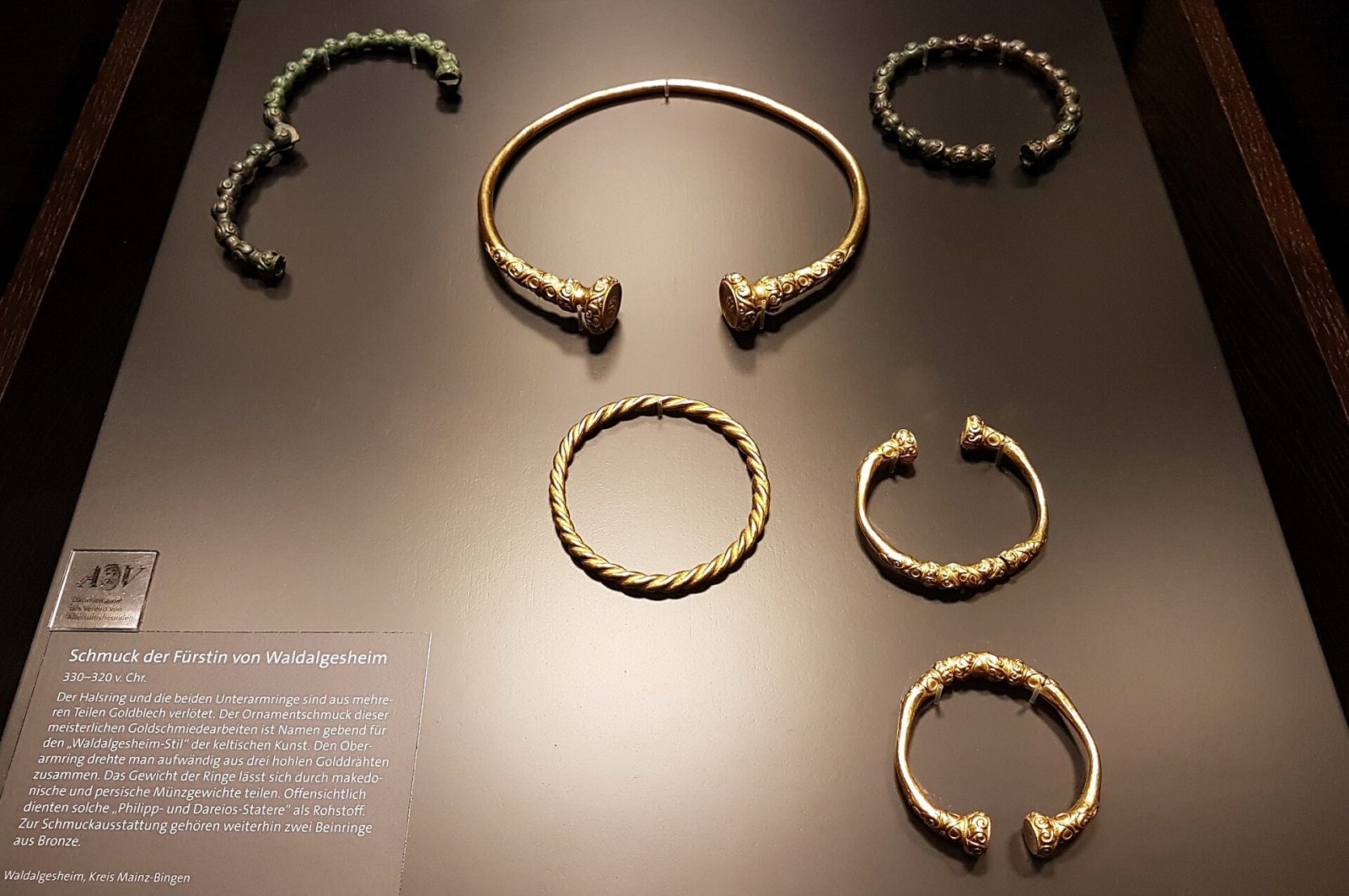
On 18 October 1869 the farmer Peter Heckert, digging a pit to store beets at Waldalgesheim in the Rhineland, struck a Celtic chariot burial. Among more than 30 objects was a gold torc whose style gave its name to a whole phase of Celtic art.
On 18 October 1869, Peter Heckert, a farmer at Waldalgesheim near Bingen in the Rhineland, was digging a pit to store his sugar beet for the winter when he struck metal. At first he thought little of what he had found, until a passer-by suggested it might be important. An antiques dealer in Bingen bought the first pieces, and Heckert went on digging, eventually recovering more than thirty objects. They were acquired by the local society of antiquaries and published in 1870. No archaeologist ever excavated the site properly, and its exact location was forgotten until it was partly rediscovered from the air in 1997.
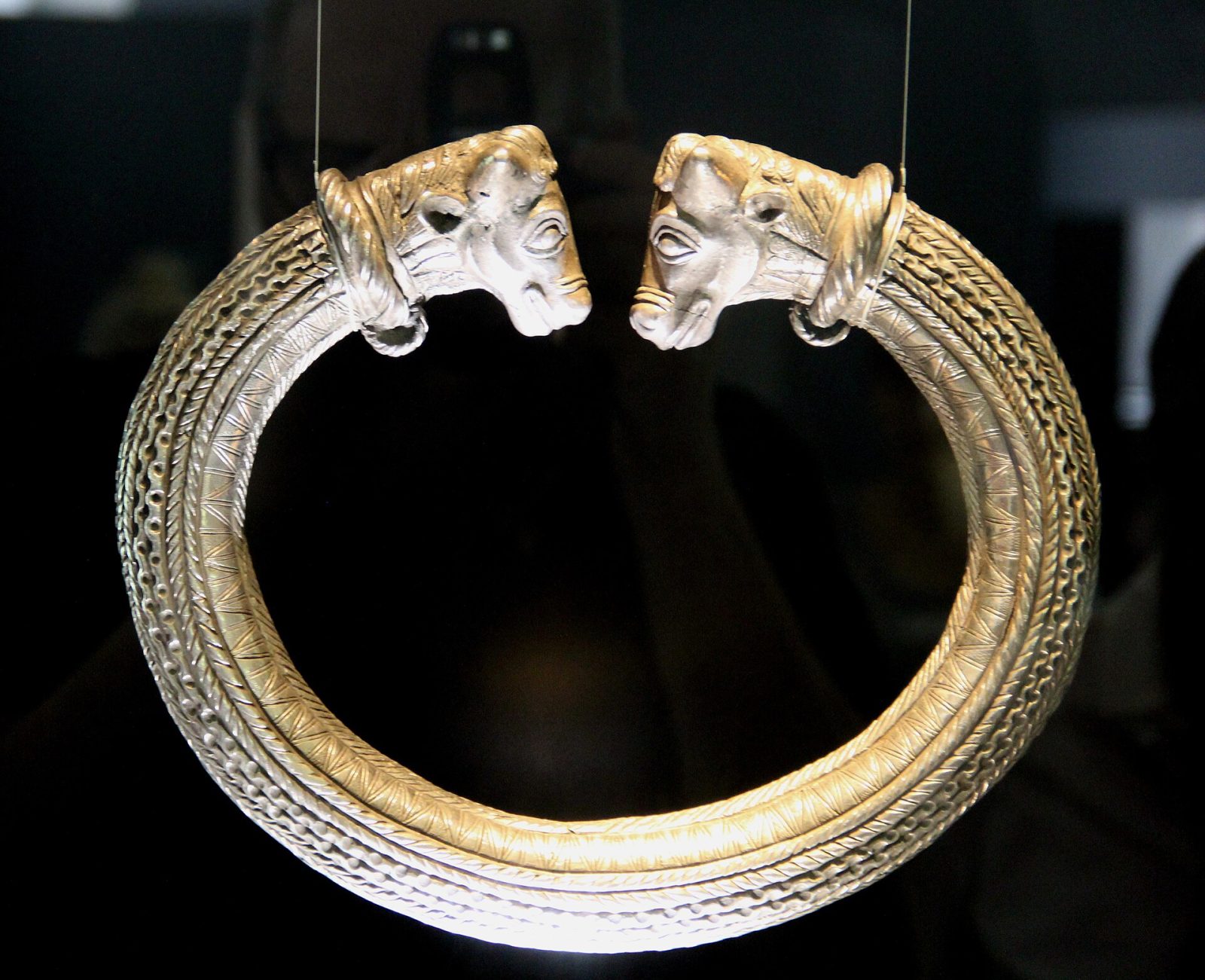
The grave was that of a Celtic noble, probably a woman, since there were no weapons, buried with a two-wheeled chariot, a bronze jug and a bronze bucket made in southern Italy. Her jewellery included a gold neck-ring, or torc, about 21 centimetres across and weighing about 204 grams, and three gold arm-rings. The torc is made of several pieces of sheet gold soldered together, and its ends are covered with flowing tendrils and small human faces in relief. According to the museum, the weights of the gold rings seem to be based on Macedonian and Persian coin weights, which has led to the suggestion that they were made from melted-down gold staters of Philip of Macedon and of the Persian kings.
The burial dates from around 330 to 320 BC, the time of Alexander the Great. Its decoration, with its swirling plant forms and faces, became so well known that archaeologists named a whole phase of early Celtic art the Waldalgesheim style after it.
The torc and the other gold rings are displayed in the LVR-LandesMuseum in Bonn, in its gallery of the Celts in the Rhineland, and replicas are shown in Waldalgesheim's town hall.
Written for Global Finds from the University of Texas Iron Age Celts project, the Harvard Celtic Objects collection and published accounts of the find. Photo: the Waldalgesheim gold jewellery in the LVR-LandesMuseum Bonn, with the torc at the top, Kleon3, Wikimedia Commons, CC BY-SA 4.0.