The Ballinderry Brooch: Ireland's finest early brooch, found under the floor of a lake dwelling
Famous find Made about AD 600 See it on the timeline →
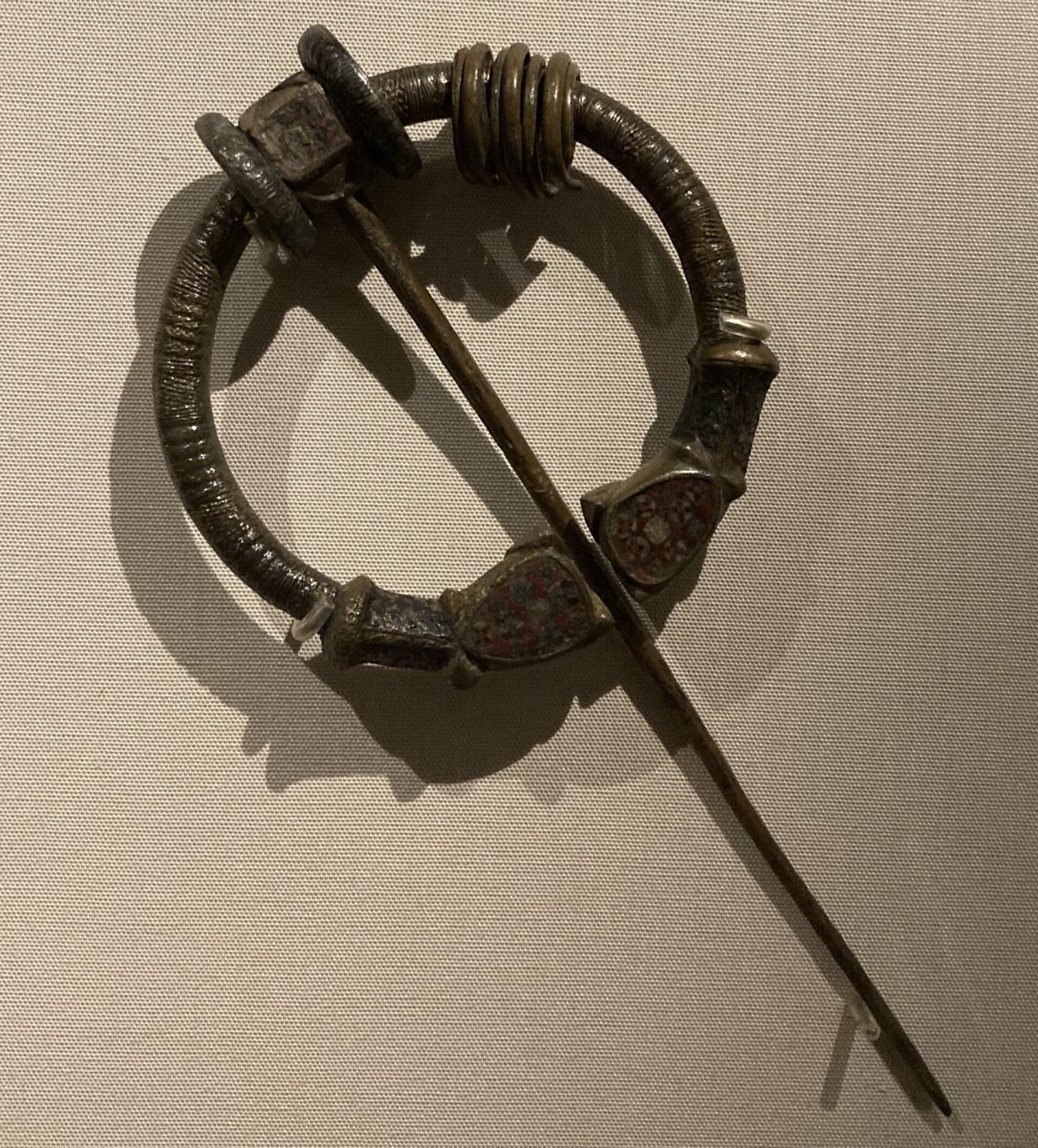
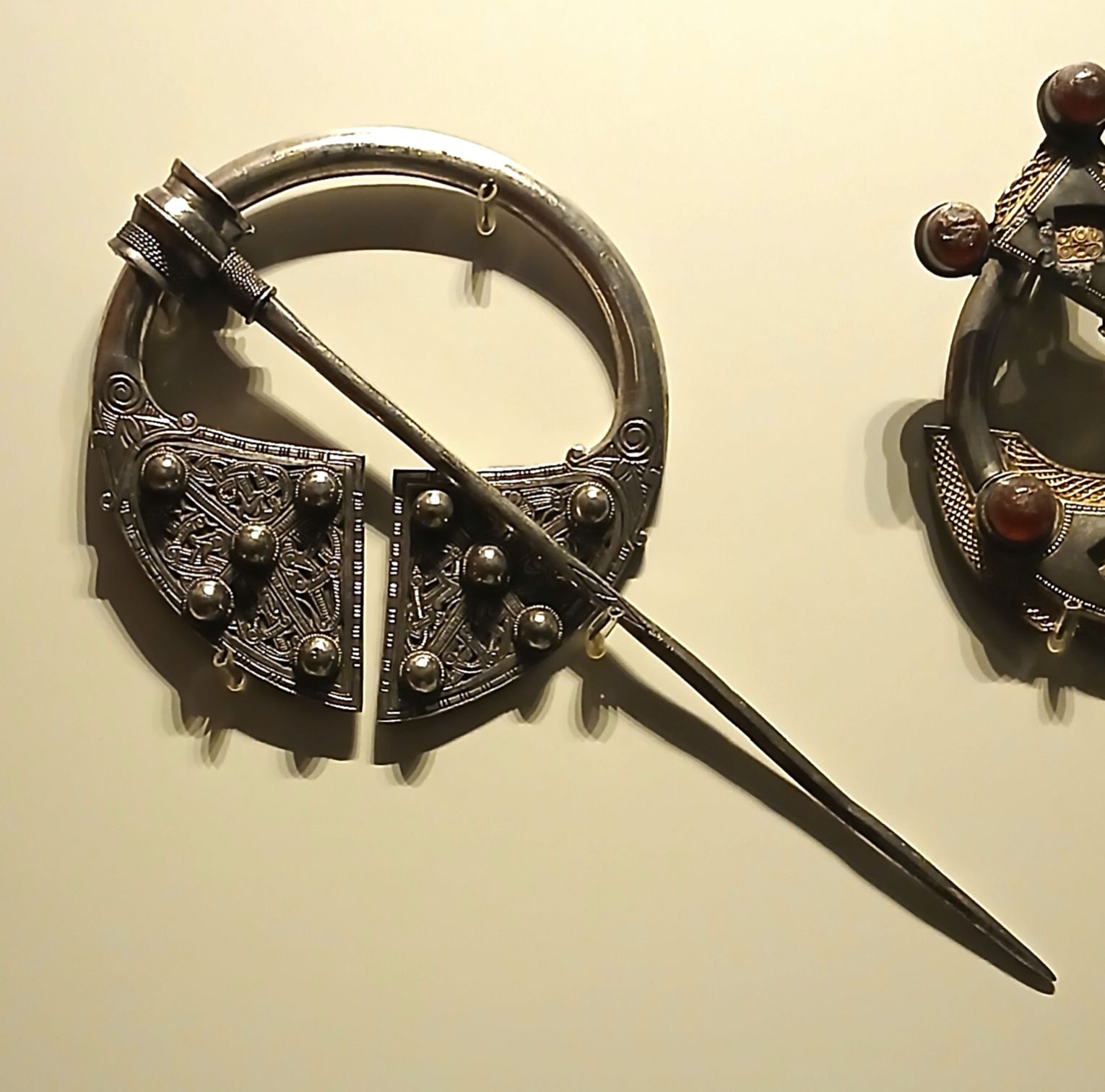
In the 1930s a Harvard expedition excavating a crannog, an artificial island dwelling, on Ballinderry Lough in County Offaly found a bronze brooch beneath a timber floor. Made around AD 600, it is the most elaborate brooch of its kind ever found in Ireland.
In the 1930s, archaeologists of the Harvard Archaeological Expedition to Ireland excavated a crannog on the south side of Ballinderry Lough in County Offaly. Crannogs are artificial islands, built up from timber, brushwood and stone in lakes and marshes, on which people lived for safety for thousands of years. This one, known as Ballinderry Crannog No. 2, had been built in the Late Bronze Age, and had already been ransacked by treasure hunters in the mid-19th century. Beneath one of its timber floors, the excavators found a brooch, along with several similar objects; it may have been pushed down between the timbers to hide it. The excavation was published by Hugh O'Neill Hencken in 1942, though its records are incomplete.
The Ballinderry Brooch is a penannular brooch, meaning that its ring has a gap, through which the long pin could be pushed before the brooch was turned to lock it in place on a cloak. Its ring is 8.6 centimetres across and its pin 18.3 centimetres long. Its two ends are shaped like stylised animal heads, and both the ends and the ring carry panels of red enamel inlaid with tiny platelets of millefiori glass, arranged in cross shapes. It was made around AD 600, and the Irish Times described it in its series A History of Ireland in 100 Objects as the most elaborate example of this kind of brooch ever found in Ireland.
The archaeologist Conor Newman has argued that its decoration carries Christian meaning: the coiled form may represent a two-headed snake, read in early Christian thought as a symbol of resurrection, and its patterns echo those on small flasks of holy oil sold to pilgrims at the Church of the Holy Sepulchre in Jerusalem. He describes it as a brooch that was pagan in its original form but carried this complex symbolism of the risen Christ. Its maker was a craftsman of international standing, and the brooch has been compared with the decoration of the great hanging bowl from the Sutton Hoo ship burial in Suffolk.
The Ballinderry Brooch is displayed in the National Museum of Ireland on Kildare Street in Dublin.
Written for Global Finds from The Irish Times, "A History of Ireland in 100 Objects", the National Museum of Ireland and the Offaly History blog. Photo: the Ballinderry Brooch in the National Museum of Ireland, Ceoil, Wikimedia Commons, CC BY-SA 4.0.
Source: The Irish Times, A History of Ireland in 100 Objects