The Kirby Muxloe Brooch: a gold heart engraved 'honour and joy', found by the moat of a castle left unfinished by an execution
Famous find Made in the 15th century · Found in 2016 See it on the timeline →
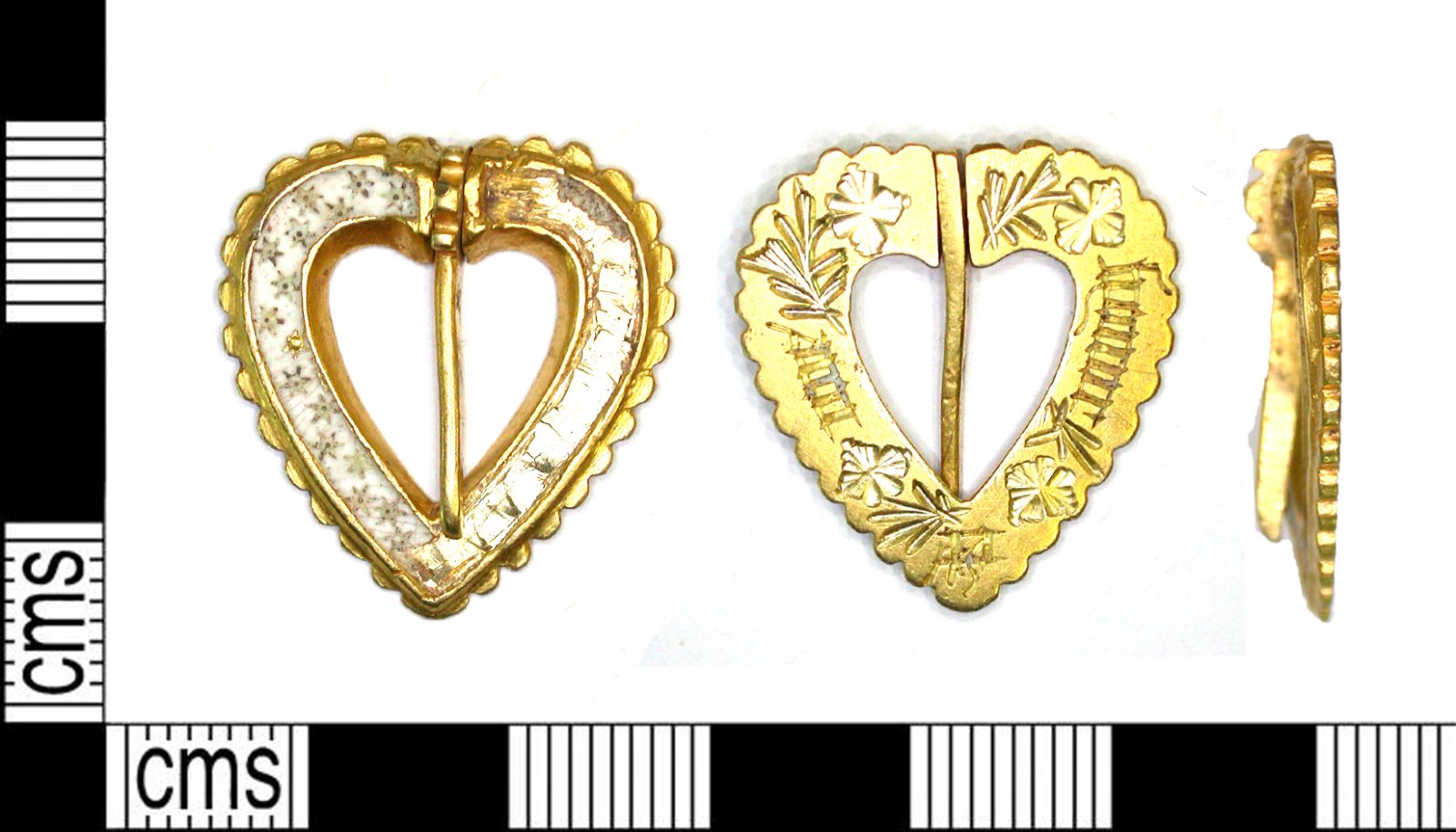
In 2016 a metal detectorist searching a field by the moat of Kirby Muxloe Castle in Leicestershire found a gold and enamel heart-shaped brooch, engraved on its hidden back 'honor et ioie', honour and joy. The castle's builder, Lord Hastings, was executed by Richard III in 1483.
In 2016, a metal detectorist searching a farmer's field beside the moat of Kirby Muxloe Castle, west of Leicester, found a tiny gold brooch in the shape of a heart. The finder's name has not been published. It was recorded with the Portable Antiquities Scheme.
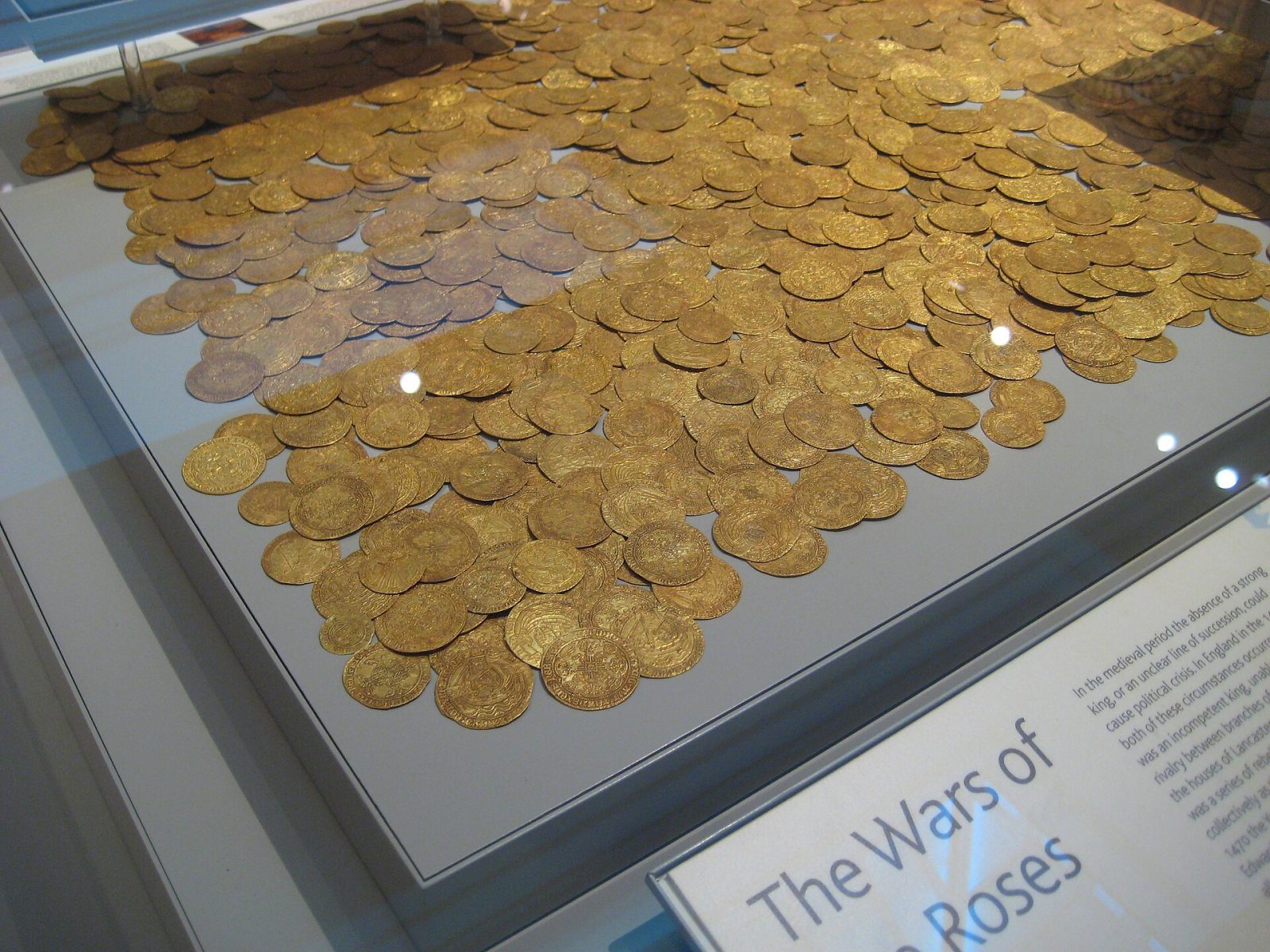
The brooch is just 23 millimetres high and weighs 5.31 grams. Its front border is white enamel scattered with tiny gold stars, with a scalloped outer edge, and it has a hinged gold pin. On the back, which would have been hidden against the wearer's clothes, are engraved four-petalled flowers and an inscription in black-letter script: honor et ioie, "honour and joy". The same motto is known on medieval rings, and a similar heart brooch was part of the Fishpool Hoard, buried in Nottinghamshire during the Wars of the Roses. Brooches like this were often given as tokens of love or friendship. It was made in the 15th century.
Its findspot gave it a romantic story. Kirby Muxloe Castle was begun in 1480 by William, Lord Hastings, the closest friend and chamberlain of King Edward IV. When Edward died in 1483, Hastings was arrested at a council meeting in the Tower of London on the orders of Richard, Duke of Gloucester, and beheaded the same day. Richard soon took the throne as Richard III, and the castle was never finished. When the brooch was sold, the press suggested it might have been a love gift from Hastings to his wife, Katherine Neville, sister of Warwick the Kingmaker. That is only a guess. Dozens of similar heart brooches have been found, including many from the Thames foreshore, and the motto was a popular one.
The brooch was declared Treasure, but no museum was able to acquire it, so it was returned to the finder and landowner to sell. Hansons Auctioneers offered it in August 2017 with a guide of £6,000 to £8,000, and it sold for about £20,000. It is in a private collection.
Written for Global Finds from the Portable Antiquities Scheme (LEIC-070179), the Kirby Muxloe History Group, the Richard III Society research blog (2017) and Paul Fraser Collectibles (2017). Photo: the Kirby Muxloe heart brooch, Wendy Scott, Leicestershire County Council, Portable Antiquities Scheme, Wikimedia Commons, CC BY 2.0.
Linked finds
Source: Kirby Muxloe History Group