The Diadem of Princess Khnumet: gold flowers for an Egyptian princess, found in an untouched tomb beside a pyramid
Famous find Made about 1900 BC, in the 12th Dynasty · Found in 1895 See it on the timeline →
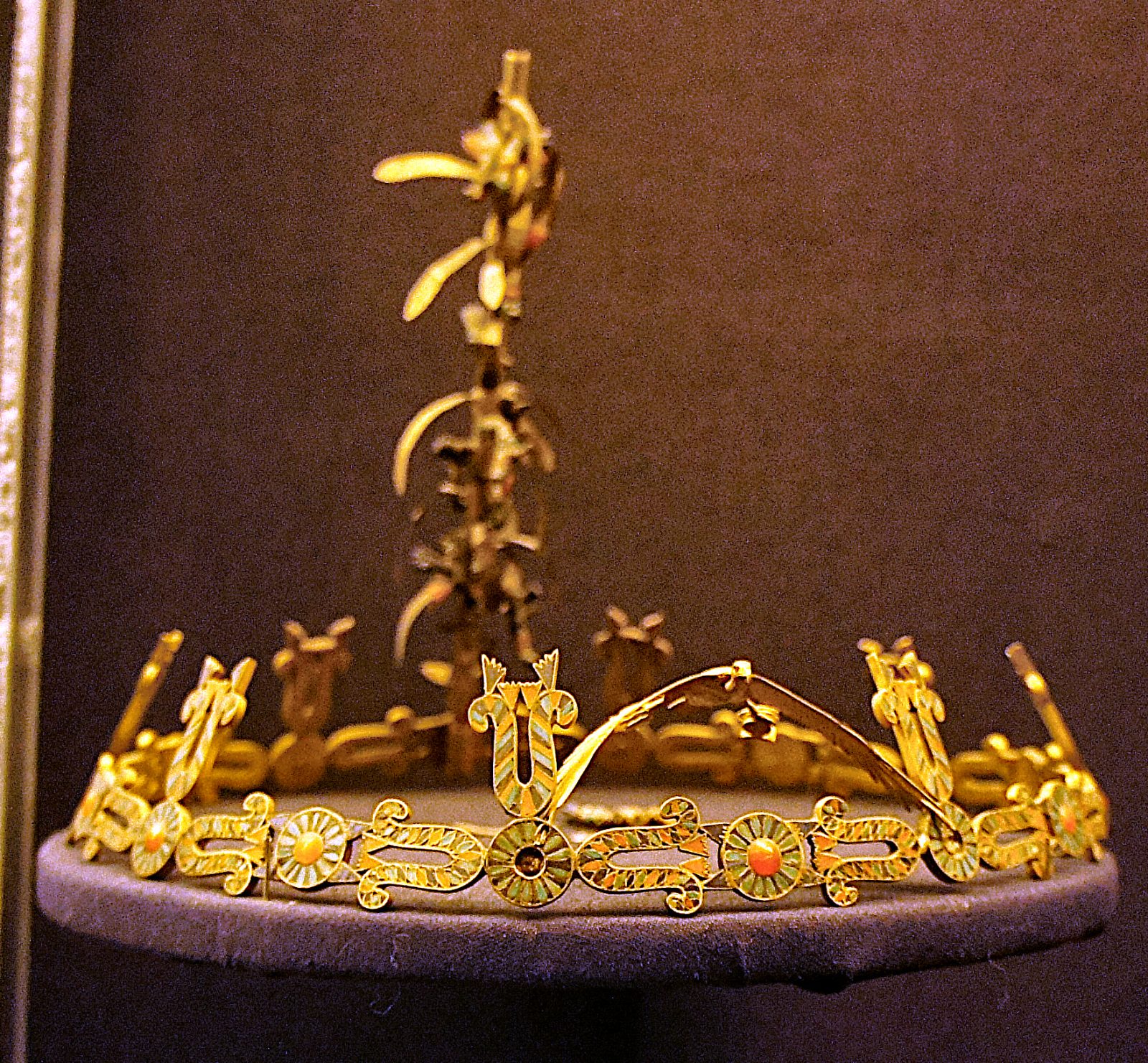
In the winter of 1894–95 the archaeologist Jacques de Morgan found the intact burial of Princess Khnumet beside the White Pyramid at Dahshur in Egypt. Beside her coffin lay a gold diadem of flowers and inlaid stones, made around 1900 BC.
In the winter of 1894 to 1895, Jacques de Morgan, the French director of Egypt's Antiquities Service, was excavating around the pyramids at Dahshur, south of Cairo. Within the enclosure of the White Pyramid of King Amenemhat II, he found an underground gallery holding the burials of two princesses, Ita and Khnumet, lying side by side. The neighbouring tombs had been robbed in antiquity, but these two had not. As one modern writer put it, de Morgan had struck lucky again: the burials were intact.
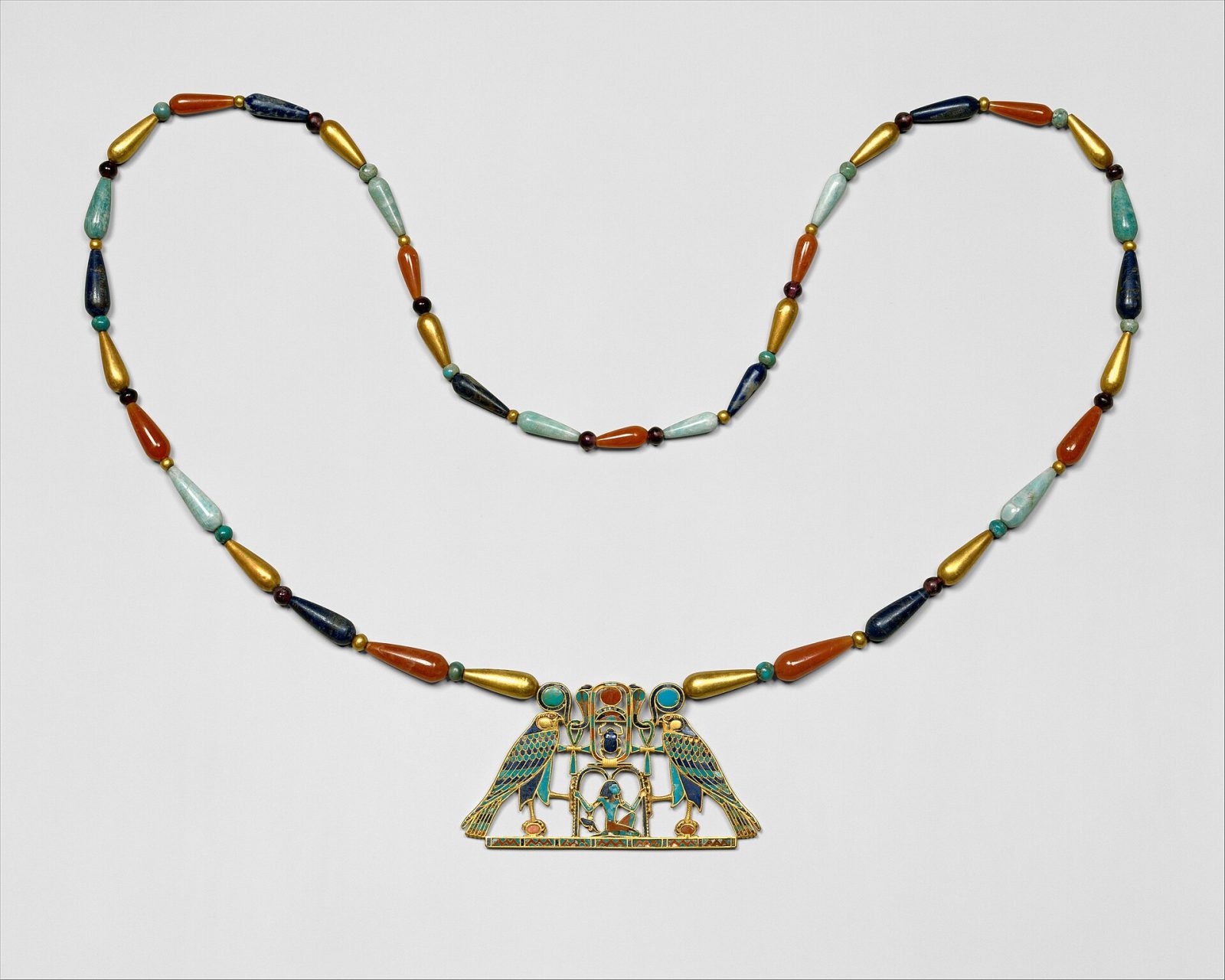
Khnumet was a royal princess of the 12th Dynasty, in the Middle Kingdom, around 1900 BC; she was probably a daughter of Amenemhat II. A gold collar with falcon-head ends still lay on her body, and in a small chamber beside her sarcophagus were two diadems and parts of a gold necklace.
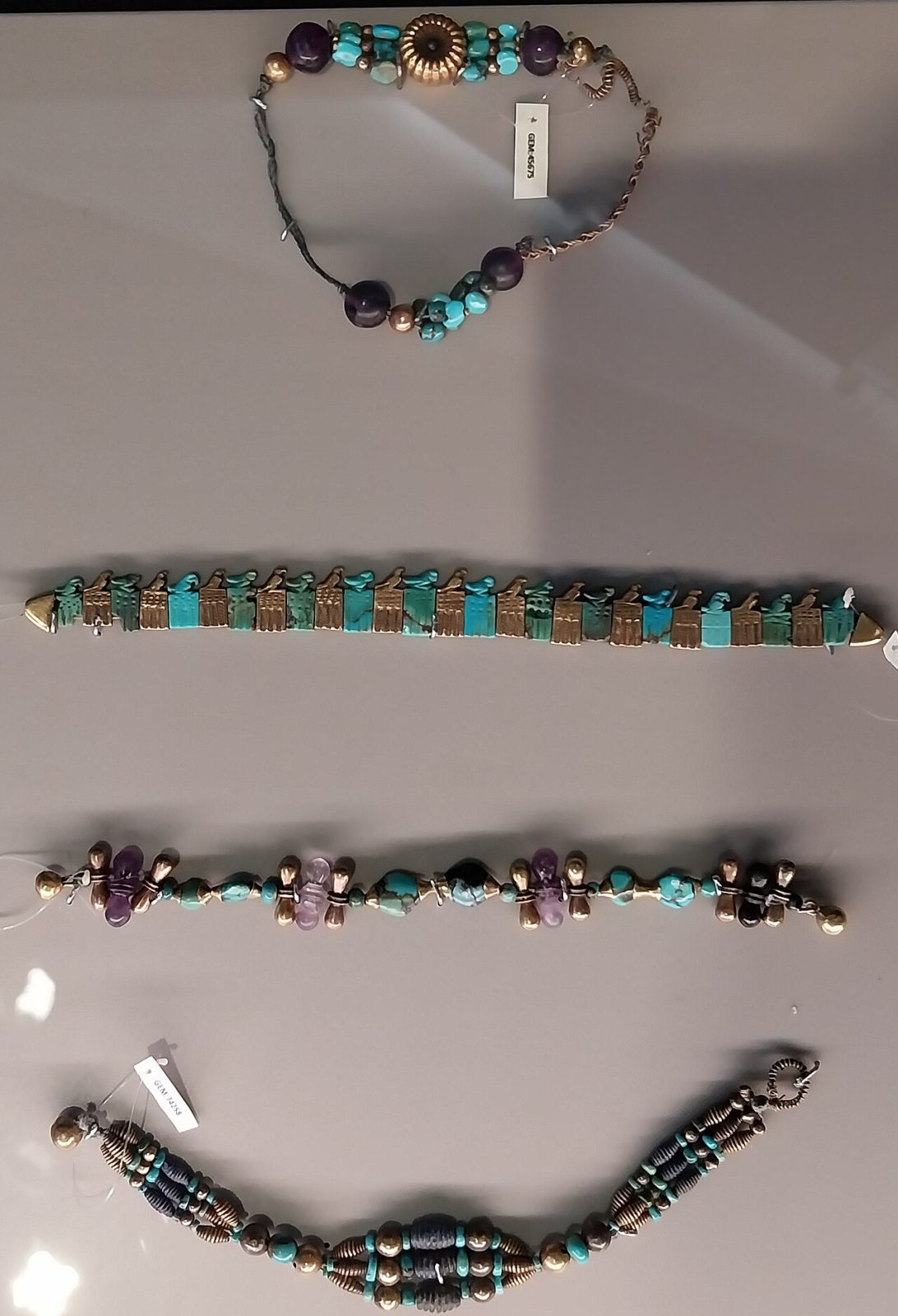
The more famous of the two diadems is a band of gold made up of a repeated pattern of a rosette between two flowers, inlaid with carnelian, lapis lazuli and turquoise, with sprays of flowering rushes rising from it. At the front stands a little tree of gold tubes with gold leaves and tiny flowers, and at the back is a vulture of sheet gold with outspread wings, the symbol of the goddess Nekhbet. The second diadem is a delicate garland of gold wire set with about two hundred tiny inlaid flowers. Some of the beads in her necklaces may even have been made in Crete or elsewhere in the Aegean, a sign of how far Egypt's contacts reached.
The princesses' skeletons were later forgotten in a basement room of the Egyptian Museum until 2020. A study published in 2026 found that Khnumet had died aged about 35 to 45 and stood about one and a half metres tall.
The diadem is in the Egyptian Museum in Cairo, one of the great masterpieces of Middle Kingdom jewellery.
Written for Global Finds from J. Heath, "Jacques de Morgan at Dahshur", The Past (2026), Frontiers in Environmental Archaeology (2026) and the Egyptian Museum, Cairo. Photo: the diadem of Princess Khnumet in the Egyptian Museum, Cairo, Zeinab Mohamed, Wikimedia Commons, CC BY-SA 2.0.
Linked finds
Source: The Past (2026)