The Sandpit Denarius: an eight-year-old found a Roman coin in his school sandpit in a city the Romans never ruled
Famous find Struck in the reign of Marcus Aurelius, AD 161 to 180 · Found in 2022 See it on the timeline →
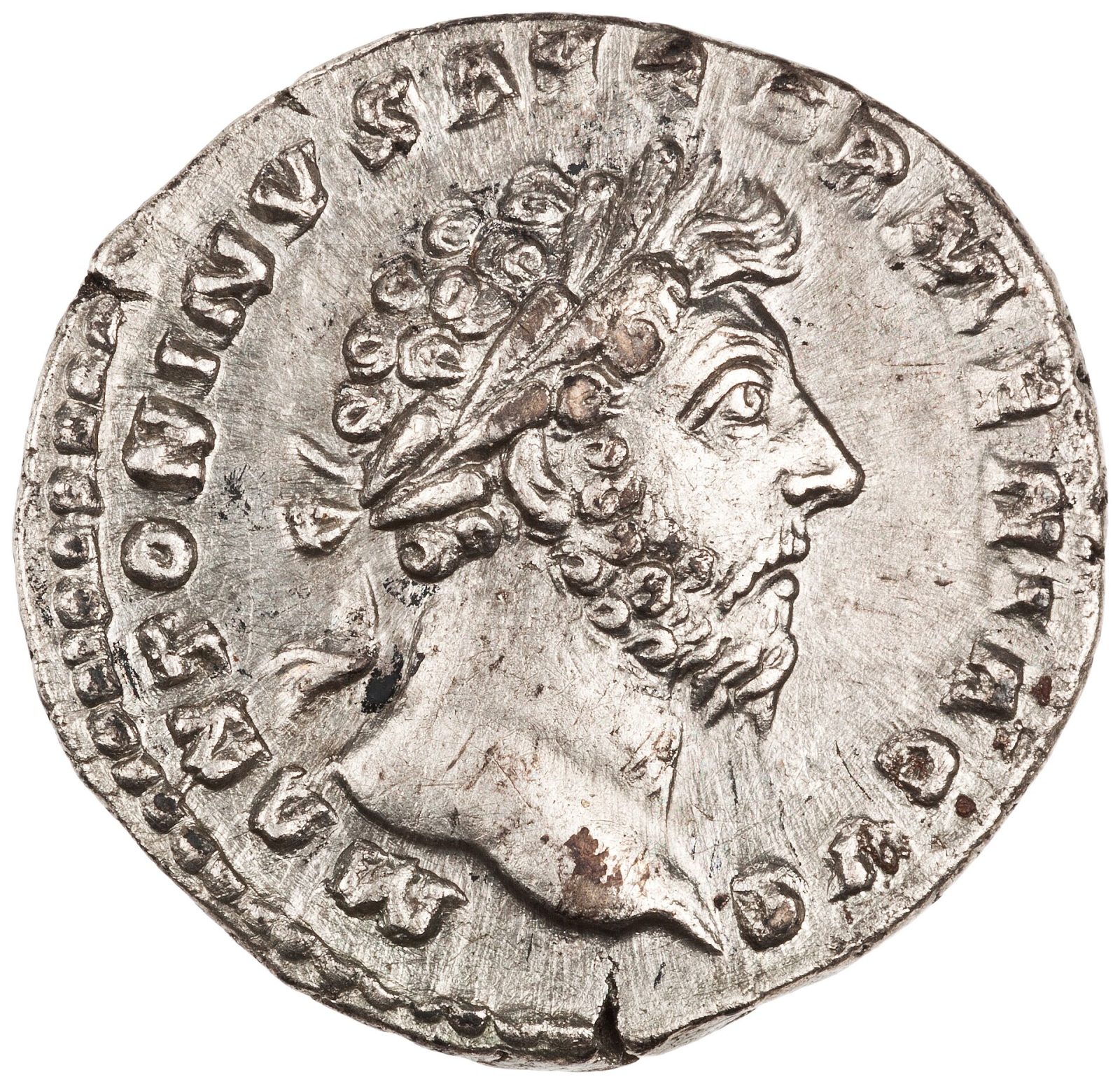
In August 2022 eight-year-old Bjarne found a worn silver coin while playing in the sandpit of his primary school in Bremen, Germany. It was a Roman denarius of the emperor Marcus Aurelius, only the third Roman coin ever found in the city.
In August 2022, Bjarne, an eight-year-old boy about to start his fourth year at primary school in Arsten, in the south of Bremen in northern Germany, was playing in his school's sandpit when he noticed a small, worn metal disc in the sand. He kept it, and it was passed to Bremen's state archaeology service.
It turned out to be a Roman silver denarius of the emperor Marcus Aurelius, who ruled from AD 161 to 180 and is remembered as the philosopher-emperor who wrote the Meditations. The coin is heavily worn and weighs 2.4 grams. Bremen's state archaeologist, Professor Uta Halle, explained that its low weight showed it was struck during a time when the silver content of Roman coins was being reduced because of inflation.
Bremen was never part of the Roman Empire. The Romans' frontier lay far to the south and west, and the region was home to a Germanic people known to the Romans as the Chauci. Roman coins still found their way north through trade, as payments, or as souvenirs carried home by men who had served in or alongside the Roman army. Halle suggested several possibilities for this one, including that it had been washed up by the river. It is only the third Roman coin ever found within the city of Bremen; the others were found during excavations at Rekum in the 1930s and at Mahndorf in the later 20th century. How it ended up in a school sandpit, perhaps in sand brought in from elsewhere, is unknown.
On 11 August 2023, Halle presented the coin at the state archaeology office and gave Bjarne a certificate praising his alertness and curiosity, along with two books on archaeology. "We're glad Bjarne paid such good attention," she said. Under Bremen's heritage law, archaeological finds belong to the state, and the coin is held by Bremen's state archaeology service.
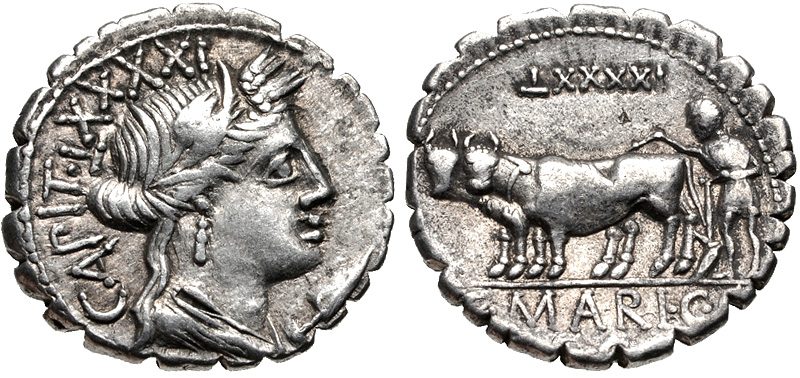
Written for Global Finds from the Bremen Senate press office (2023), Archaeology magazine (2023) and The E-Sylum (2023). Photo: a silver denarius of Marcus Aurelius, not the Bremen coin, American Numismatic Society, Wikimedia Commons, CC0.