The Trichtingen Ring: ditch-diggers found a Celtic neck-ring of silver too heavy for any human neck
Famous find Made in the 1st century BC · Found in 1928 See it on the timeline →
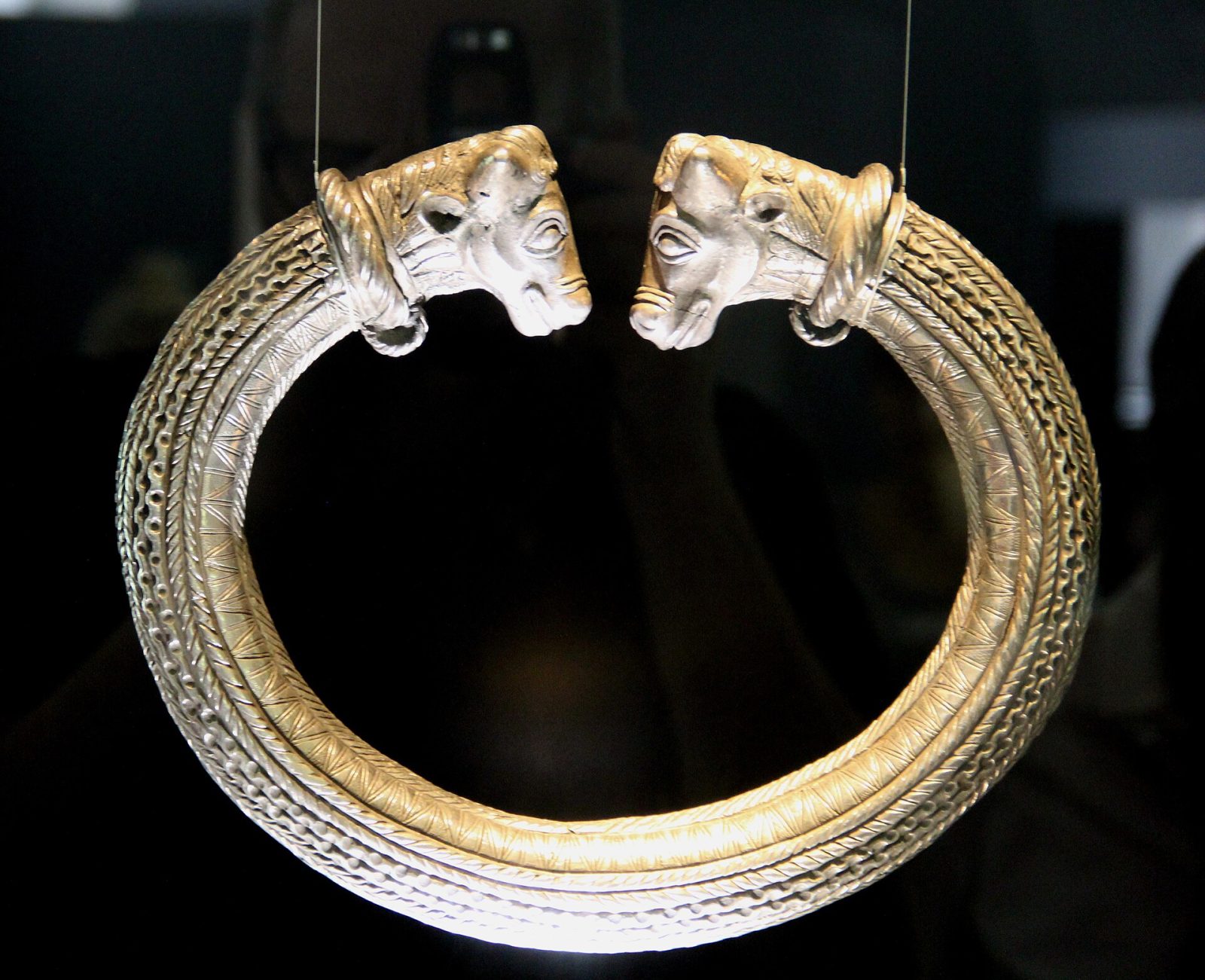
On 12 March 1928 workmen digging drainage ditches near Trichtingen in south-west Germany found a huge Celtic neck-ring of silver over iron, with two bull's heads at its ends. Weighing 6.7 kilograms, it was probably made for a statue of a god rather than a person.
On 12 March 1928, workmen digging drainage ditches in the fields near Trichtingen, a village in the Rottweil district of Baden-Württemberg in south-west Germany, struck a heavy metal ring lying at a slant about 60 centimetres down. A search of the area found nothing else with it. The names of the finders have not been recorded.
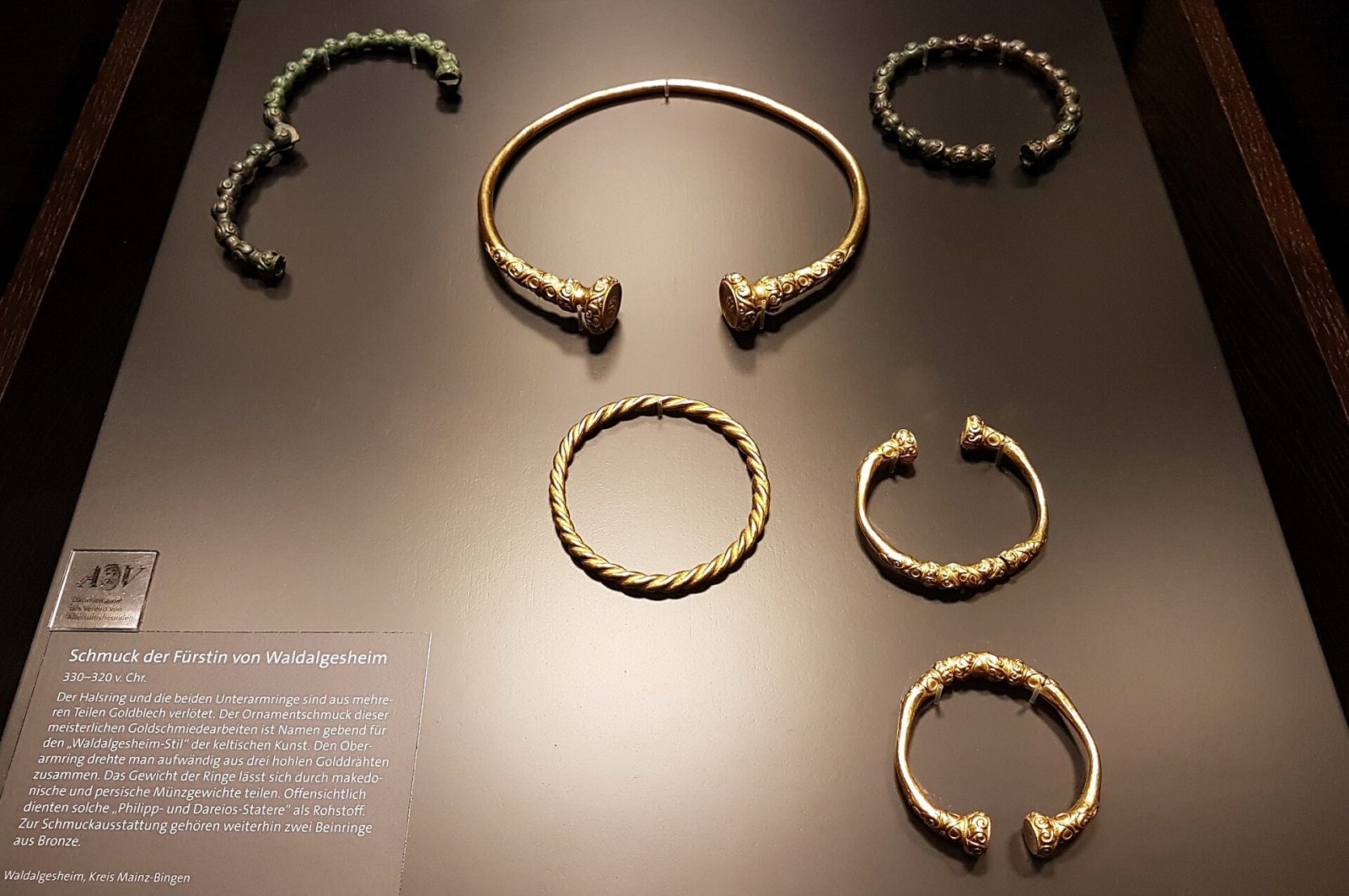
It is a torc, an open neck-ring of the kind worn by Celtic chieftains and warriors, but on a giant scale. It weighs 6.7 kilograms and measures nearly 30 centimetres across. Its core is soft iron, covered with sheets of silver about two millimetres thick, and the silver is very pure, about 96 per cent. The two ends are cast as the heads of young bulls, facing each other across a narrow gap, and each bull wears a little torc of its own around its neck. The heads are not quite the same size.
The ring was made in the 1st century BC, at the end of the Celtic Iron Age. At nearly seven kilograms it would have been far too heavy to wear for long, and it may have been made to adorn a wooden statue of a god, though there are wear marks on the inside. Its origin is a puzzle. The museum notes that its style points east, towards Thrace or even Persia, while the closest comparisons come from Gaul.
The Trichtingen ring has become a symbol of the Celts in south-west Germany. It appeared on a West German postage stamp in 1976, and in 2020 it was chosen as the emblem of the state's "Keltenland Baden-Württemberg" project. It is displayed in the Landesmuseum Württemberg in the Old Castle in Stuttgart.
Written for Global Finds from the Landesmuseum Württemberg (museum-digital collection record) and published accounts of the find. Photo: the Trichtingen ring in the Landesmuseum Württemberg, RudolfSimon, Wikimedia Commons, CC BY-SA 3.0.