The Sozopol Coin: a holiday diver found one of the world's very first coins in a metre of water off a Bulgarian beach
Famous find Struck in Lydia about 650 to 600 BC · Found in 2014 See it on the timeline →
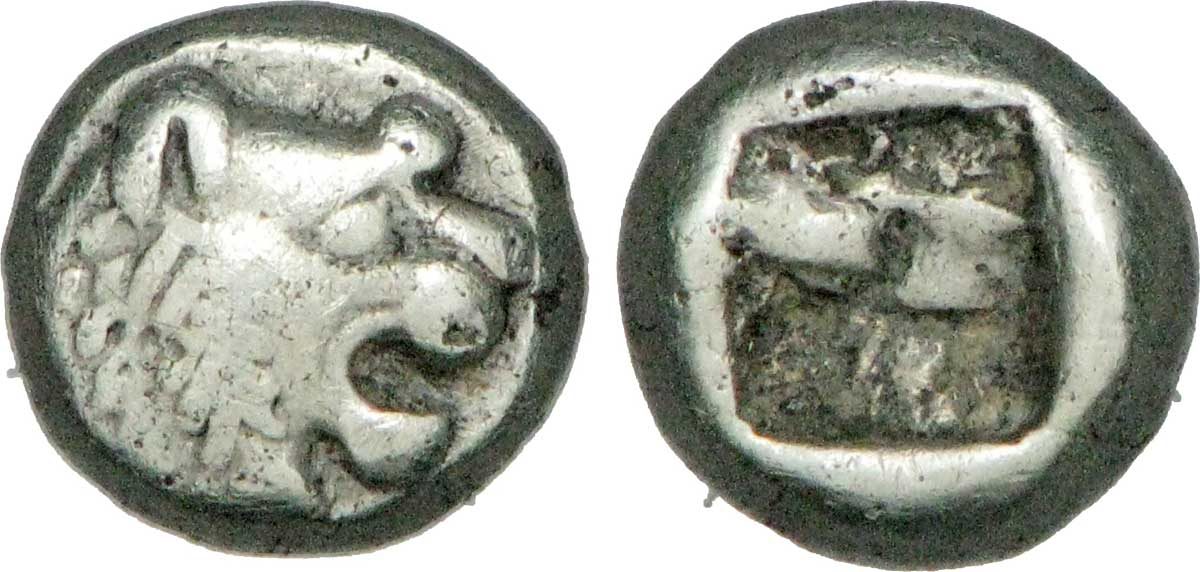
In 2014 a diver on holiday at Sozopol on Bulgaria's Black Sea coast spotted a glint in shallow water and picked up a tiny coin of electrum, a natural alloy of gold and silver. It was struck in the kingdom of Lydia in the 7th century BC, among the first coins ever made.
In the summer of 2014, a diver on holiday at Sozopol, a seaside town on Bulgaria's Black Sea coast, saw something glinting on the seabed in shallow water near a beach, about a metre deep, and brought it ashore. He gave it to Bozhidar Dimitrov, a historian who had grown up in Sozopol, had once been a diver himself, and was then the director of Bulgaria's National Museum of History in Sofia. The museum announced the find in September 2014.
The coin weighs just 0.63 grams. It is made of electrum, a natural mixture of gold and silver found in the rivers of western Anatolia, in what is now Turkey. The museum's coin specialist, Vladimir Penchev, identified it as a 1/24 stater from the kingdom of Lydia, struck in the second half of the 7th century BC. The Lydians are credited with inventing coinage at about that time, stamping lumps of electrum of fixed weight with the mark of their kings, and this tiny coin is among the very first coins ever made. Penchev said it was the first coin of its kind found in Bulgaria. Some early headlines called it gold, but he stressed that it is electrum.
Its findspot makes sense. Sozopol stands on the site of Apollonia Pontica, a Greek colony founded around 611 BC by settlers from Miletus, a great Greek city on the coast of Asia Minor that was a close neighbour of the kingdom of Lydia. Penchev said it was not surprising that a coin of Lydia should turn up in a colony founded by Miletus. Whoever dropped it, or lost it in a shipwreck, was among the first people anywhere to use money in the form of coins.
The coin, about 2,650 years old, was handed to the National Museum of History in Sofia.
Written for Global Finds from The Sofia Globe, reporting the Bulgarian News Agency (2014), and The E-Sylum (2014). Photo: another Lydian electrum coin of the same era, a larger 1/12 stater, not the Sozopol coin, cgb, Wikimedia Commons, CC BY-SA 3.0.
Source: The Sofia Globe (2014)