The Vindolanda Aureus: after forty years of digging, a volunteer found the fort's first gold coin, 'just sitting there, shining'
Famous find Struck about AD 64 to 65 · Found in 2014 See it on the timeline →
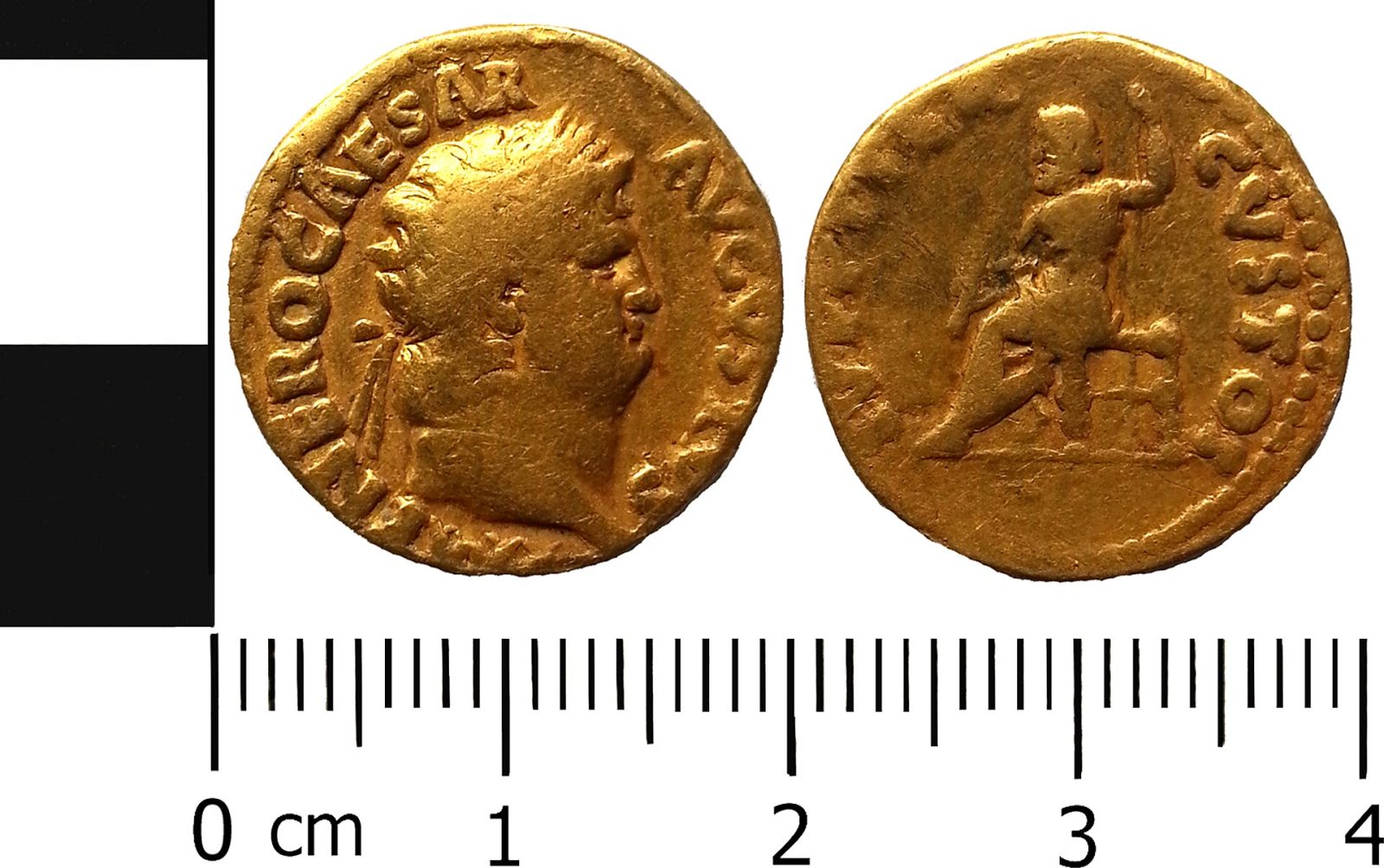
In June 2014 Marcel Albert, a volunteer from Nantes who had dug at Vindolanda for six years, found a gold aureus of the emperor Nero in a 4th-century layer of the fort beside Hadrian's Wall. It was the first gold coin from Vindolanda in more than forty years of excavation.
In June 2014, Marcel Albert, a volunteer from Nantes in France who had been coming to dig at Vindolanda for about six years, was scraping back the soil in a 4th-century level of the Roman fort in Northumberland, just south of Hadrian's Wall. "It was just sitting there," he told the BBC, "as I scraped back the soil, shining." It was a gold coin.
Vindolanda is one of the most intensively excavated Roman sites in Britain, famous for the wooden writing tablets that preserve the letters and accounts of its soldiers and their families. In more than forty years of excavation, archaeologists and volunteers had recovered thousands of coins there, but never a gold one. The deputy director, Justin Blake, called it an absolutely magical moment, and the excavation director, Andrew Birley, called it a special find.
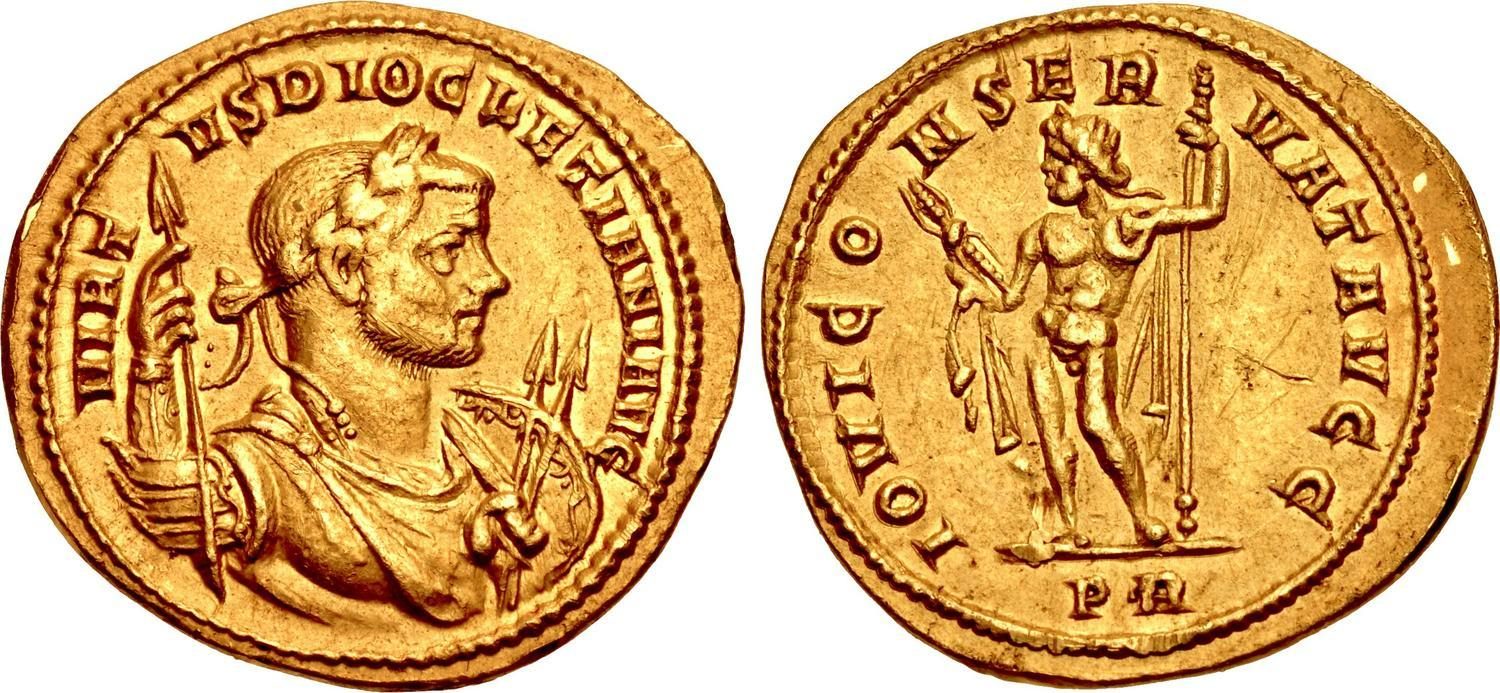
The coin is an aureus of the emperor Nero, dated by its portrait to around AD 64 to 65, the time of the Great Fire of Rome. It is well worn. It was lost, or perhaps hidden, about three hundred years after it was struck, which shows that gold coins could stay in use or be kept as savings for generations. How much it was worth to its owner is debated. The BBC reported that it would have been more than half a year's pay for a soldier, while the coin writers of Numismatic News argued it was nearer several weeks' pay. Either way, it was a serious sum, and whoever lost it would have been very sorry.
The Vindolanda Trust said the coin was likely to be put on display in the museum at the site, which tells the story of the fort and the people who lived there.
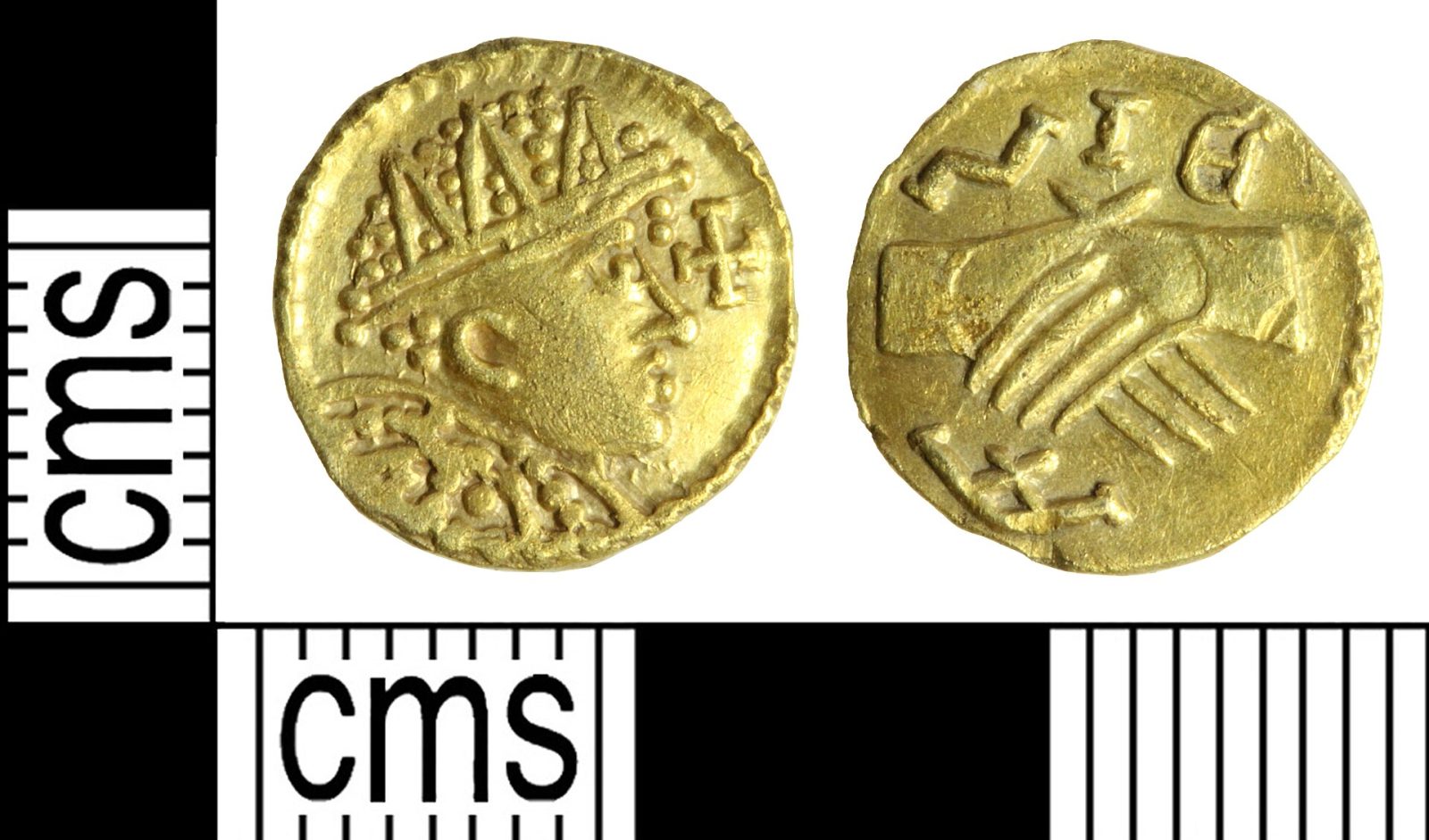
Written for Global Finds from BBC News (2014), Archaeology magazine (2014) and Numismatic News (2014). Photo: another gold aureus of Nero of the same date, found in Britain, not the Vindolanda coin, Dot Boughton, Portable Antiquities Scheme, Wikimedia Commons, CC BY 2.0.
Linked finds
Source: BBC News (2014)