The Tauranga Half Sovereign: a detectorist nearly threw away a 'bottle top' that was one of the rarest Australian gold coins
Famous find Struck at the Sydney Mint in 1855 · Found in 2020 See it on the timeline →
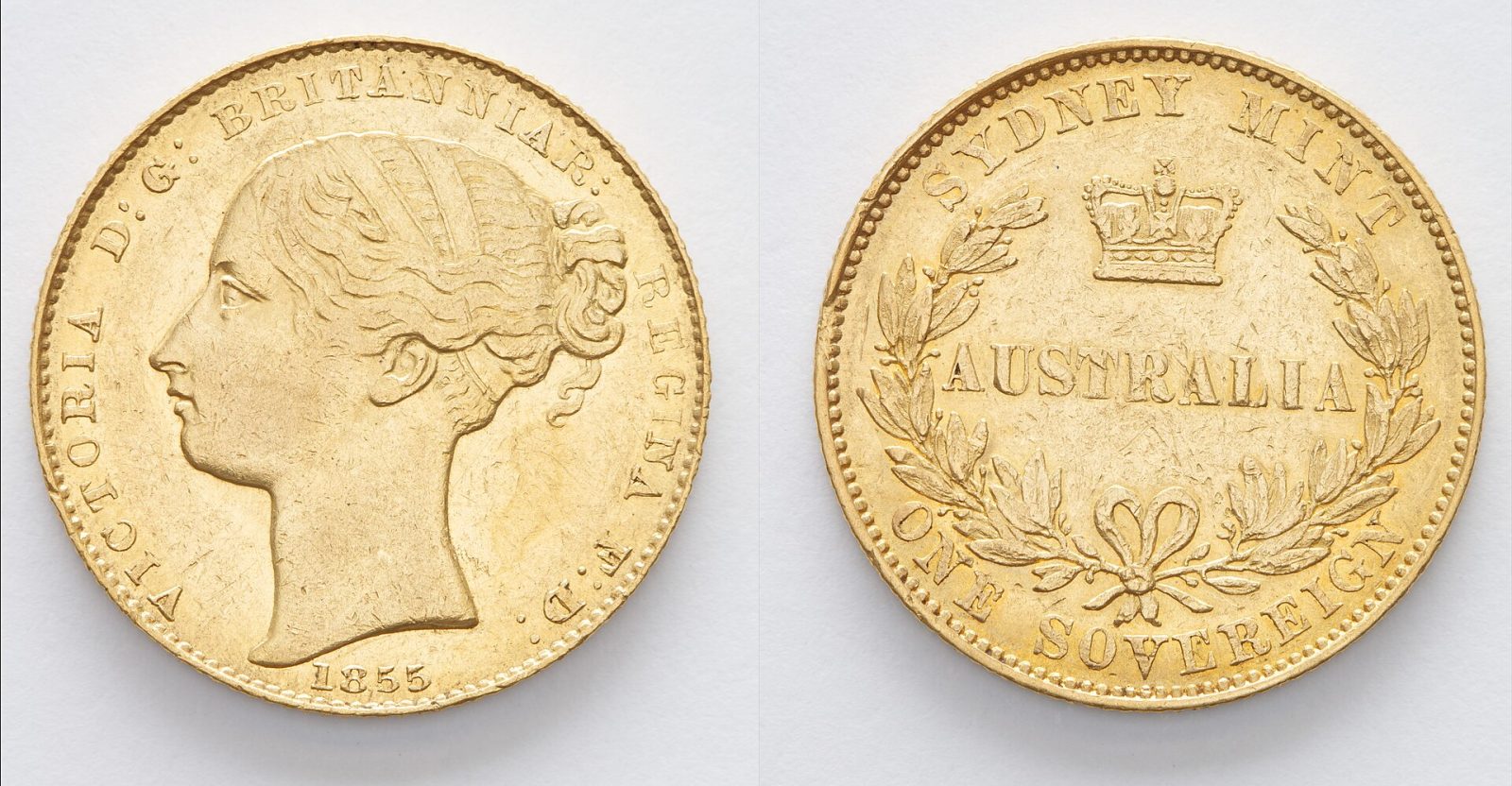
In 2020 Joe McGregor, detecting a beach at Tauranga in New Zealand after a day of bottle tops and rubbish, nearly threw away another one. It was an 1855 gold half sovereign from the Sydney Mint, struck in the Australian gold rush, of which only about 40 are known on the market.
Around the beginning of 2020, Joe McGregor, a hobby metal detectorist from Tauranga, in the Bay of Plenty on New Zealand's North Island, was searching a local beach. He had been digging bottle tops and rubbish all day, and when another small disc came up from about 15 centimetres down, he nearly threw it away as one more bottle top. Then he looked again. It was gold. He later said that his dog watched him dancing around like a prized clown.
The coin is a gold half sovereign dated 1855, struck at the Sydney Mint, the first branch of the Royal Mint ever set up outside England. The mint was opened in 1855 to turn the gold pouring out of the Australian goldfields into coins, and the first Sydney gold coins carried their own design: Queen Victoria's young head with a ribbon in her hair on one side, and the words SYDNEY MINT, AUSTRALIA and HALF SOVEREIGN on the other. Only about 21,000 half sovereigns were struck in 1855, in two batches that summer, and the Australian coin dealers Coinworks estimate that only about 40 survive on the market, most of them badly worn. Even the Reserve Bank of Australia was said to hold only seven.
How a coin from the Australian gold rush ended up on a New Zealand beach is unknown. There was constant traffic across the Tasman Sea in the 1850s and 1860s, including gold miners moving to New Zealand's own goldfields, and sovereigns from the Sydney Mint circulated in both colonies.
McGregor sent photographs to Heritage Auctions in the United States, and he said they rang him back about eight hours later. The coin was graded as extremely fine but cleaned, and offered in Heritage's world coin sale in August 2020 with an estimate of US$10,000 to $15,000. According to 1News, it sold for $46,671, almost $50,000, and McGregor watched the sale stomping around, as he put it, like Thomas the Tank Engine.
Written for Global Finds from 1News (2020), CoinWeek and Heritage Auctions (2020) and Coinworks. Photo: an 1855 Sydney Mint gold sovereign, the same year and design as the Tauranga half sovereign but twice its value, not the Tauranga coin, State Library of New South Wales, Wikimedia Commons, public domain.
Source: 1News (2020)