Saruq al-Hadid: Dubai's ruler spotted dark dunes from his helicopter, and the desert gave up Iron Age swords and gold
Famous find Iron Age metalworking, about 1100-600 BC · Found in 2002 See it on the timeline →
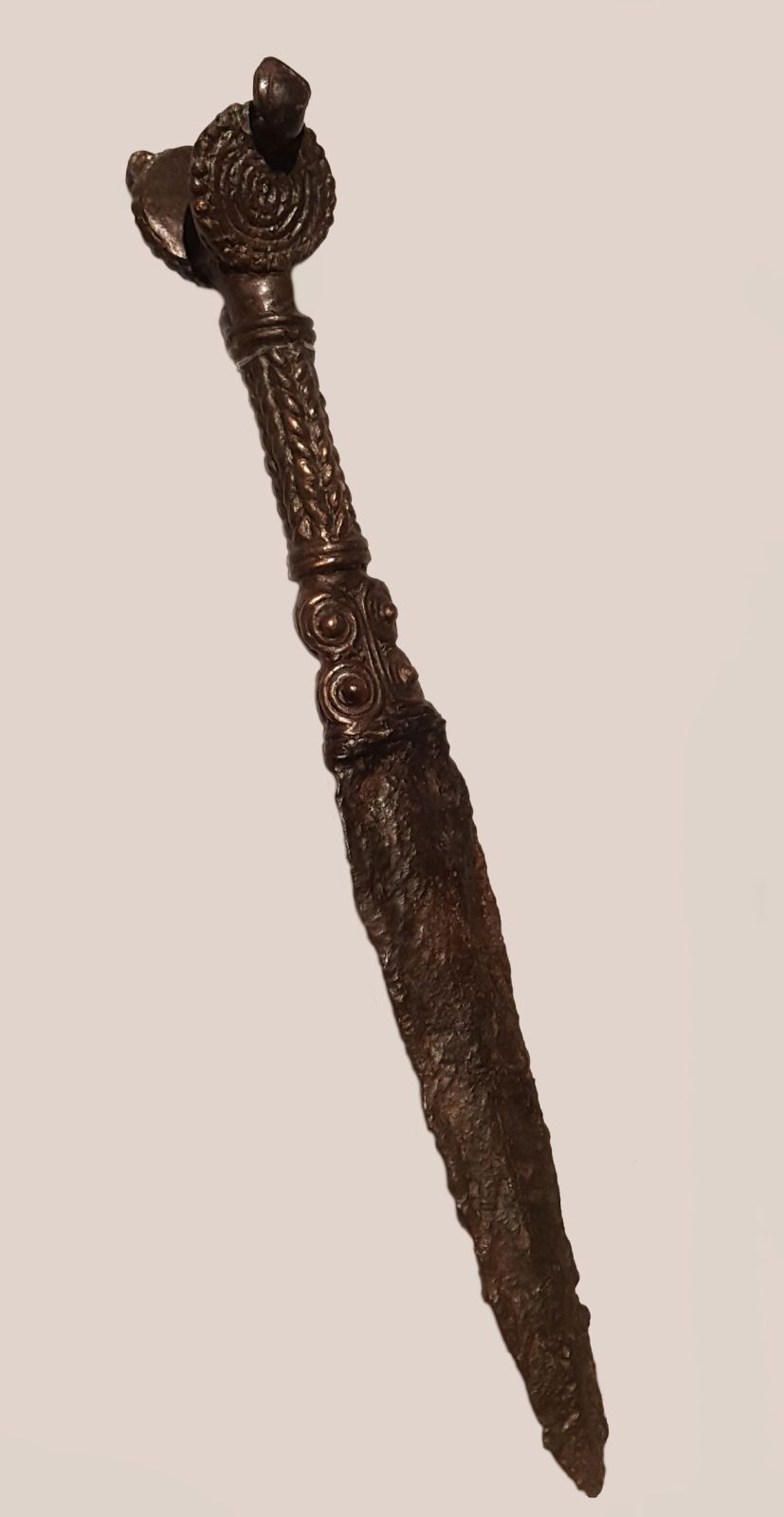
In 2002 Sheikh Mohammed bin Rashid Al Maktoum, flying over the desert south of Dubai, noticed a patch of dark dunes. It was a crust of ancient copper slag, and beneath it archaeologists have found more than 12,000 objects, among them Iron Age swords, daggers and gold jewellery.
In 2002 Sheikh Mohammed bin Rashid Al Maktoum, the ruler of Dubai, was flying by helicopter over the dunes on the edge of the Empty Quarter, inland from Jebel Ali. Below him he noticed something odd: a patch of darker dunes, lying at a different angle from the sand around them. He reported it, and in 2003 archaeologists went to look. The dark patch was a crust of black slag left by ancient copper smelting, and in and under it lay thousands of prehistoric objects.
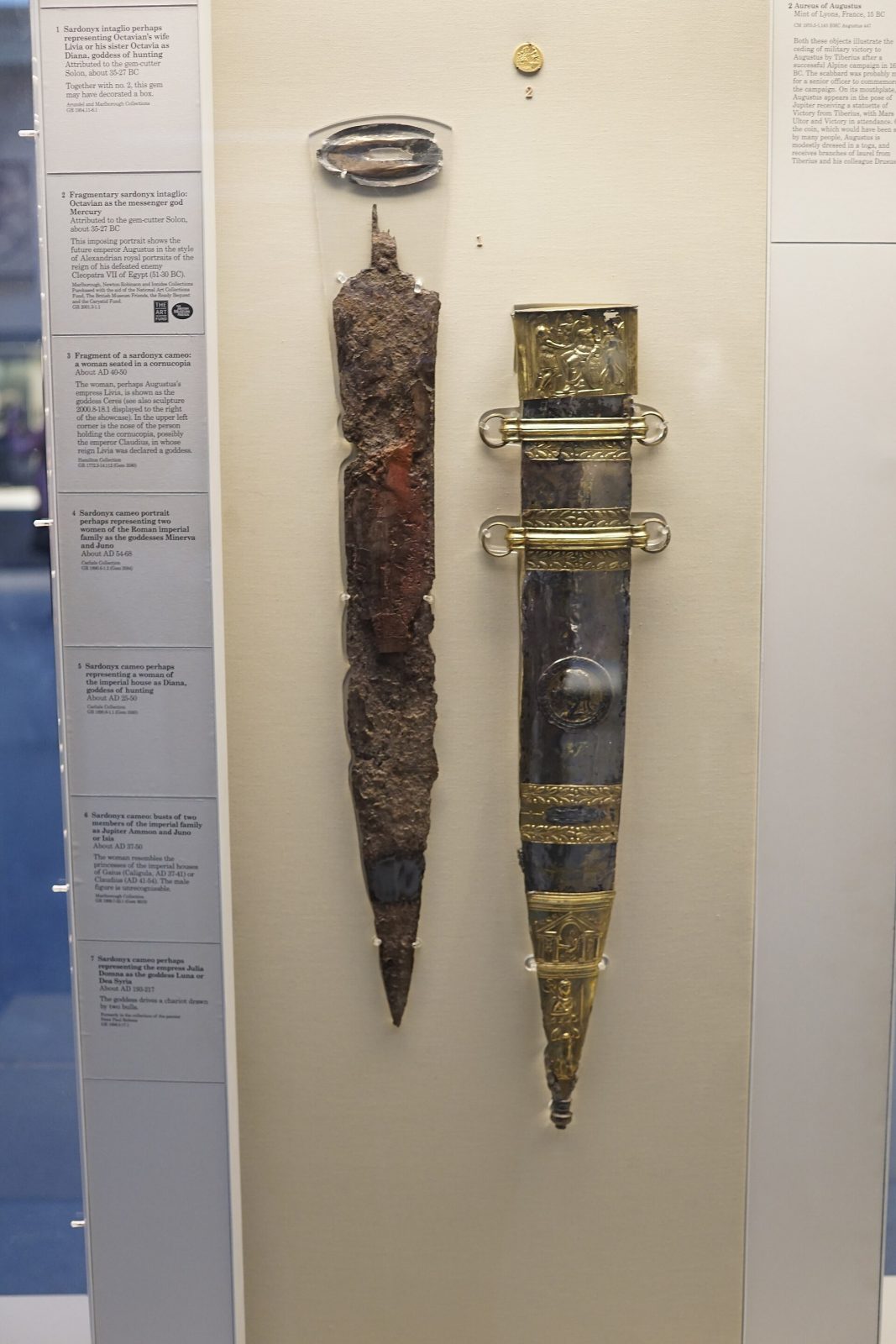
The site, called Saruq al-Hadid, has been dug by teams from Dubai, Jordan, the United States, Australia, Spain, Germany and Poland. They have recovered more than 12,000 objects. There are copper-alloy swords, daggers, axe-heads and arrowheads, and iron weapons, including long swords like those of Luristan in western Iran, which make up almost all the iron known from Iron Age south-east Arabia. There is gold jewellery and gold strip, carnelian necklaces, carved shell, seals linked to Mesopotamia, Egypt and Bahrain, and bronze snakes and snake-decorated pottery that suggest a snake cult.
People came here from about 2600 BC, but the site was busiest as a metalworking centre between about 1100 and 600 BC. It is a puzzle. There is no ore, no water and no fuel nearby, and no walls, houses or graves have ever been found. The excavators think people gathered here seasonally to make metal objects and, it seems, to deposit or discard many of them. The slag crust that caught the Sheikh's eye also stopped the wind from scouring the sand away, and so protected everything beneath it.
One small find became world famous. A ring of pure gold, made of linked circles and loops, inspired the logo of Expo 2020 Dubai, revealed in 2016. The press often call it 4,000 years old, but it belongs to the Iron Age metalwork, nearer 3,000. The finds are shown in the Saruq Al Hadid Archaeology Museum, opened in 2016 in a 1928 wind-tower house in Al Shindagha, Dubai.
Written for Global Finds from Weeks, Cable and Franke in the Near Eastern Archaeology Foundation Bulletin (2017), Gulf News (2019) and Khaleej Times (2019). Photo: an iron dagger with a decorated bronze hilt from Saruq al-Hadid, Alexandermcnabb, Wikimedia Commons, CC BY-SA 4.0.
Source: Near Eastern Archaeology Foundation Bulletin 59 (2017)