Towton: a detectorist and an archaeologist mapped England's bloodiest battle, and found some of Europe's oldest battlefield guns
Famous find Fought on 29 March 1461 · Found in 1996 See it on the timeline →
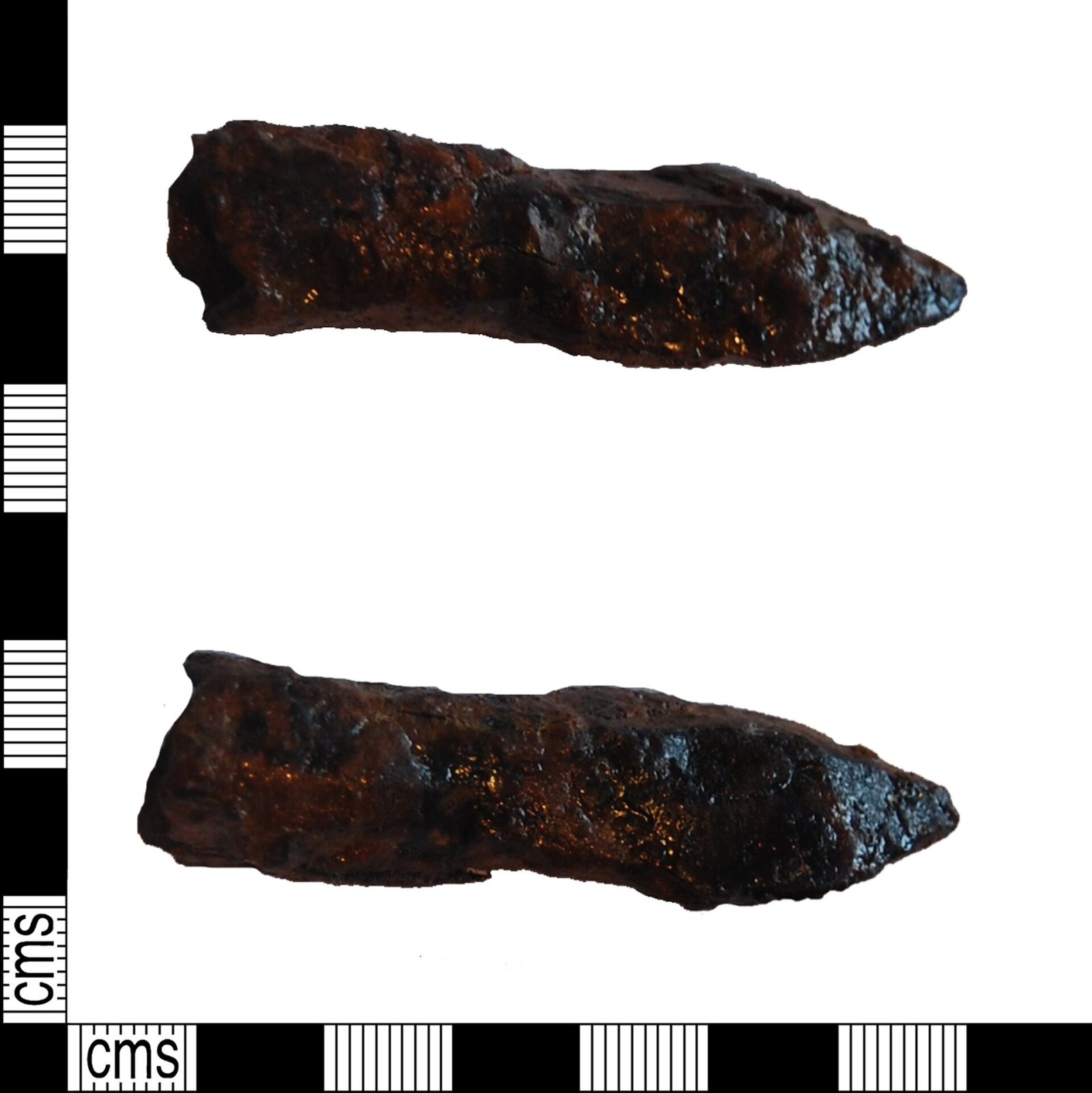
After a mass grave was found at Towton Hall in 1996, archaeologist Tim Sutherland and detectorist Simon Richardson spent years plotting finds from the battlefield of 1461: over 150 arrowheads, spurs, armour, a Yorkist badge, and fragments of two of the earliest handguns found in Britain.
On Palm Sunday, 29 March 1461, the armies of York and Lancaster met between the villages of Towton and Saxton, near Tadcaster in North Yorkshire. Edward IV's Yorkists won, and the battle is often called the bloodiest ever fought on British soil, although the figure of 28,000 dead that is usually quoted is disputed.
In 1996 builders working at Towton Hall uncovered a mass grave of soldiers with terrible wounds. It led to the Towton Battlefield Archaeological Survey, led by the archaeologist Tim Sutherland, who worked for years with the Tadcaster metal detectorist Simon Richardson to search the fields systematically and plot the position of every find.
They recovered more than 150 arrowheads, along with spurs, pieces of armour, rings, a Yorkist badge and lead shot, all brought up into the topsoil by deep ploughing. When the arrowheads were examined at the Royal Armouries, most turned out to be small cone-shaped sockets with thin wings brazed on with copper alloy, a way of making them nobody had recognised before. They were cheap and made to a standard pattern, quantity rather than quality, and arrowheads of the same type have been found at Tewkesbury, where a battle was fought ten years later. On the best of them, only the tip had been hardened.
In November 2010 the team announced something more surprising: fragments of two handguns, found where the Lancastrian line is thought to have stood. They are probably the earliest cast gun fragments from Britain, and possibly the earliest firearms from any known battlefield in Europe. At least one had been fired, and one appears to have burst apart in use. Sutherland has suggested they may have belonged to Burgundian mercenary gunners.
Many of the finds were recorded with the Portable Antiquities Scheme, and they remain in private hands. Some, including a fragment of the burst handgun, were lent to the Richard III Experience in York from 2015, but that museum closed in 2020, and the finds are not on public display.
Written for Global Finds from Archaeology magazine (2011), T. Sutherland (2006) and T. Starley and E. Cubitt in Historical Metallurgy (2014). Photo: an iron crossbow bolt head found near Towton and probably from the battle, recorded with the Portable Antiquities Scheme, The Portable Antiquities Scheme, Stuart Noon, Wikimedia Commons, CC BY-SA 4.0.
Source: Archaeology magazine (2011)