The Bastar Helmets: farmers on an Albanian hill found a Greek and an Illyrian bronze helmet buried side by side
Famous find Made in the 6th or 5th century BC · Found in 1955 See it on the timeline →
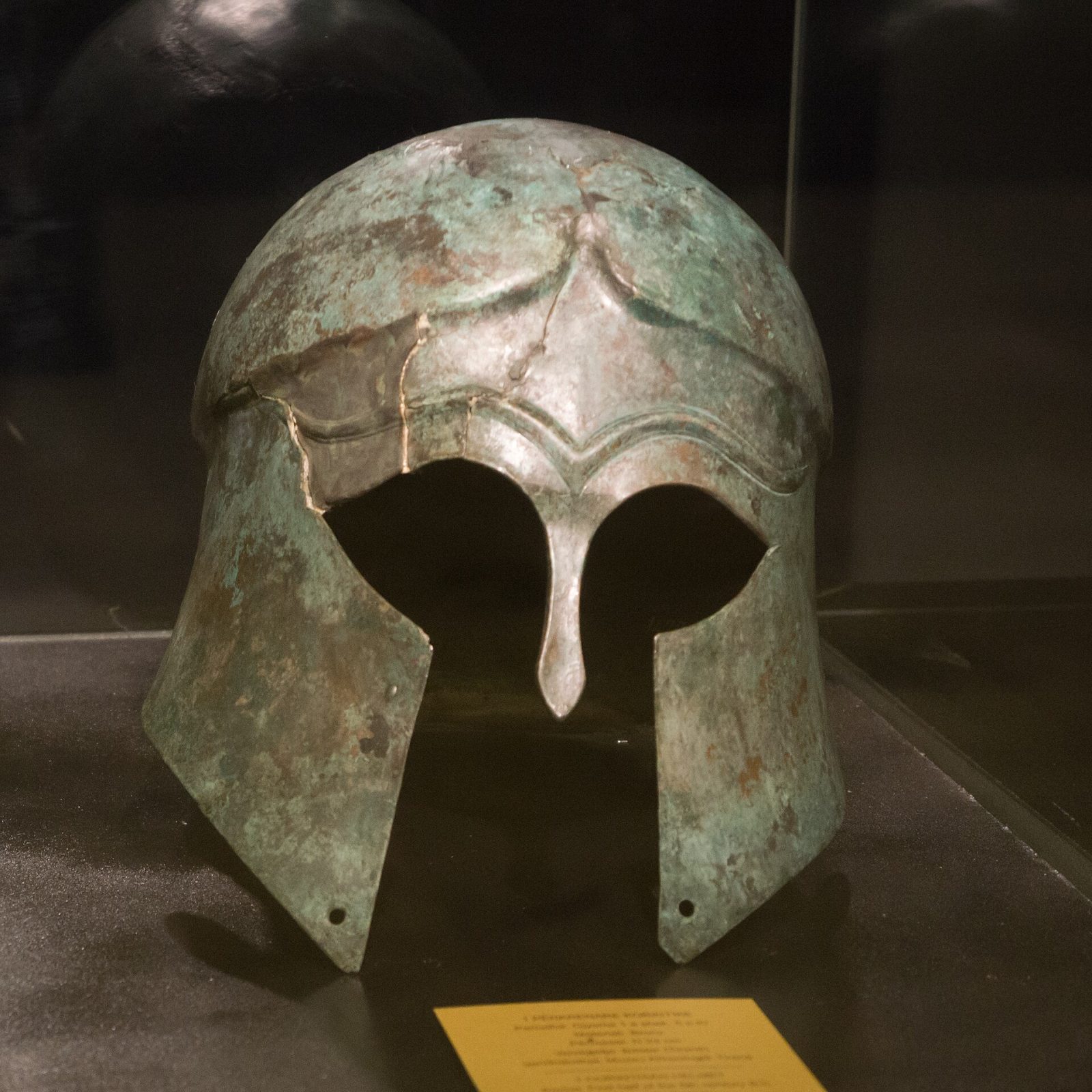
In 1955 farm work on a hill called Qytezë at Bastar, north-east of Tirana in Albania, uncovered two bronze helmets lying close together: one of the Illyrian type and one Corinthian. Dated to the 6th or 5th century BC, they are now in the National Archaeological Museum in Tirana.
In 1955, during farm work on a hill known as Qytezë, at Bastar i Mesëm in the mountains about 18 kilometres north-east of Tirana, the capital of Albania, the ground gave up two ancient bronze helmets. They lay close together, in what appears to have been a burial. The names of those who found them have not been recorded. The helmets were taken to Tirana, and today they are displayed side by side in the National Archaeological Museum.
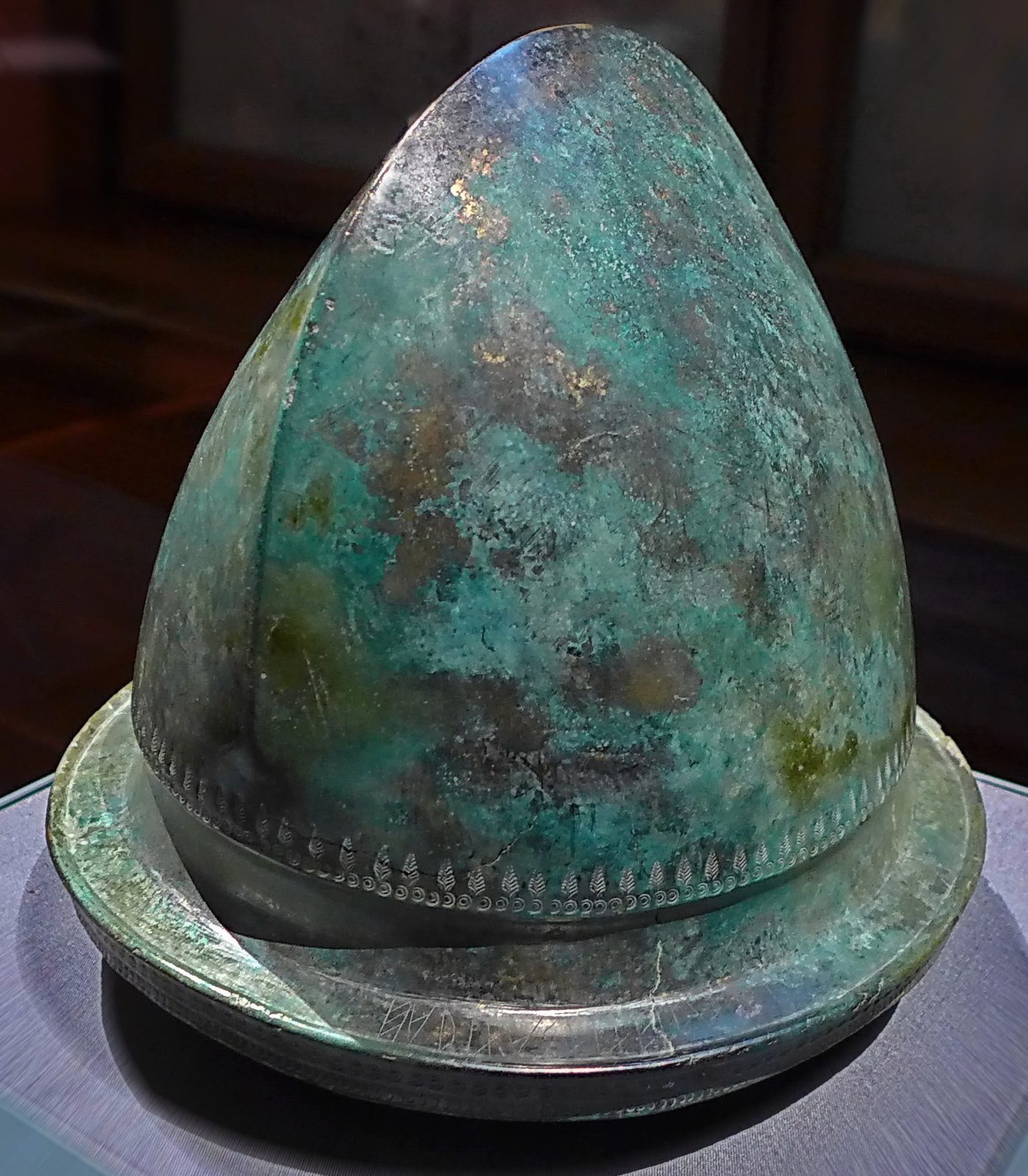
They are two very different helmets. One is of the Illyrian type, an open-faced helmet with cheek-pieces, worn by the warriors of the Illyrian tribes of the western Balkans. The other is a Corinthian helmet, the classic Greek hoplite helmet that covers the whole face apart from the eyes and mouth; it stands 23 centimetres high. The Illyrian helmet is well preserved, while the Corinthian one has a distinct impact mark near the eye, which may be damage from a blow in battle. The archaeologist Adem Bunguri dates both to the 6th century BC, while the museum's label dates the Corinthian helmet to the 5th century BC; recent analysis of the metal places it in the 6th or 5th century BC. Bunguri argues that helmets of such quality and cost must have belonged to princes or senior commanders, not ordinary warriors.
The great question is why a Greek helmet and an Illyrian one were buried together. Greek colonies such as Epidamnos, modern Durrës, and Apollonia lay on the coast not far away, and the Illyrian elite traded with them and copied their arms. The two helmets may have belonged to two warriors, or one man may have owned both. The site lies in the lands of the Parthini, an Illyrian tribe, and the archaeologist Hasan Ceka noted that a 4th-century BC king of the Paeonians, a people further east, was named Bastar, which has led to the theory that the place itself is named after him. That remains unproven.
Written for Global Finds from Visit Tirana (2026), quoting the archaeologist Adem Bunguri, and the National Archaeological Museum of Albania. Photo: the Corinthian helmet from Bastar in the National Archaeological Museum, Tirana, Fanny Schertzer, Wikimedia Commons, CC BY-SA 3.0.
Linked finds
Source: Visit Tirana (2026)