The Ardagh Chalice: Ireland's finest early Christian treasure, dug up with the potatoes
Famous find Made in the 8th century AD · Found in 1868 See it on the timeline →
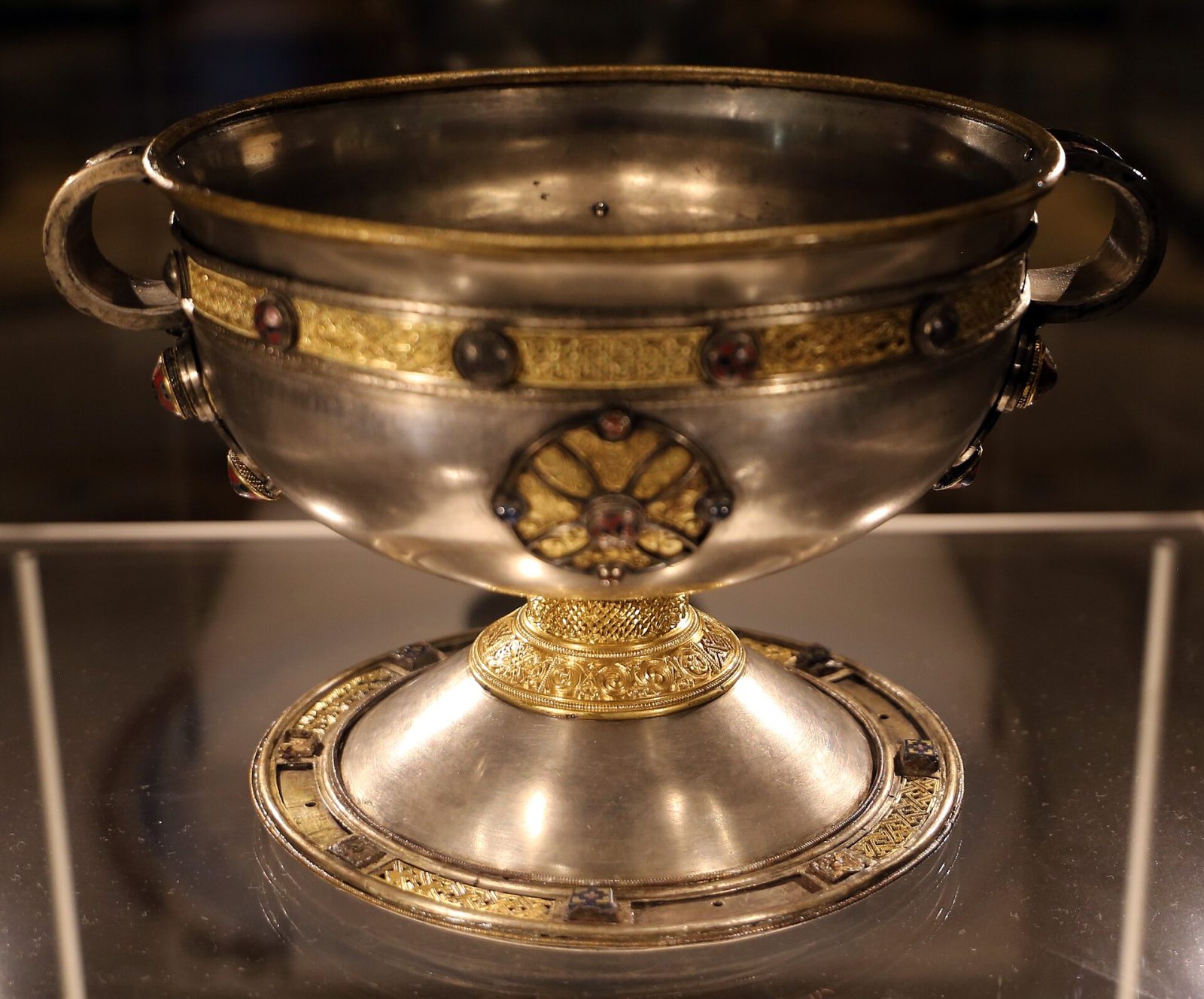
In 1868 two young men digging potatoes in a ringfort near Ardagh in County Limerick found a silver chalice, a bronze cup and four brooches. The chalice is one of the masterpieces of early Irish metalwork.
In September 1868, Jim Quin and Paddy Flanagan were digging potatoes inside an old ringfort at Reerasta, beside the village of Ardagh in County Limerick, on land rented by Jim's widowed mother. Under a stone slab they found a silver chalice, and packed inside it a plain bronze cup and four brooches. Local tradition holds that it was Flanagan, a farm labourer, who actually turned it up.
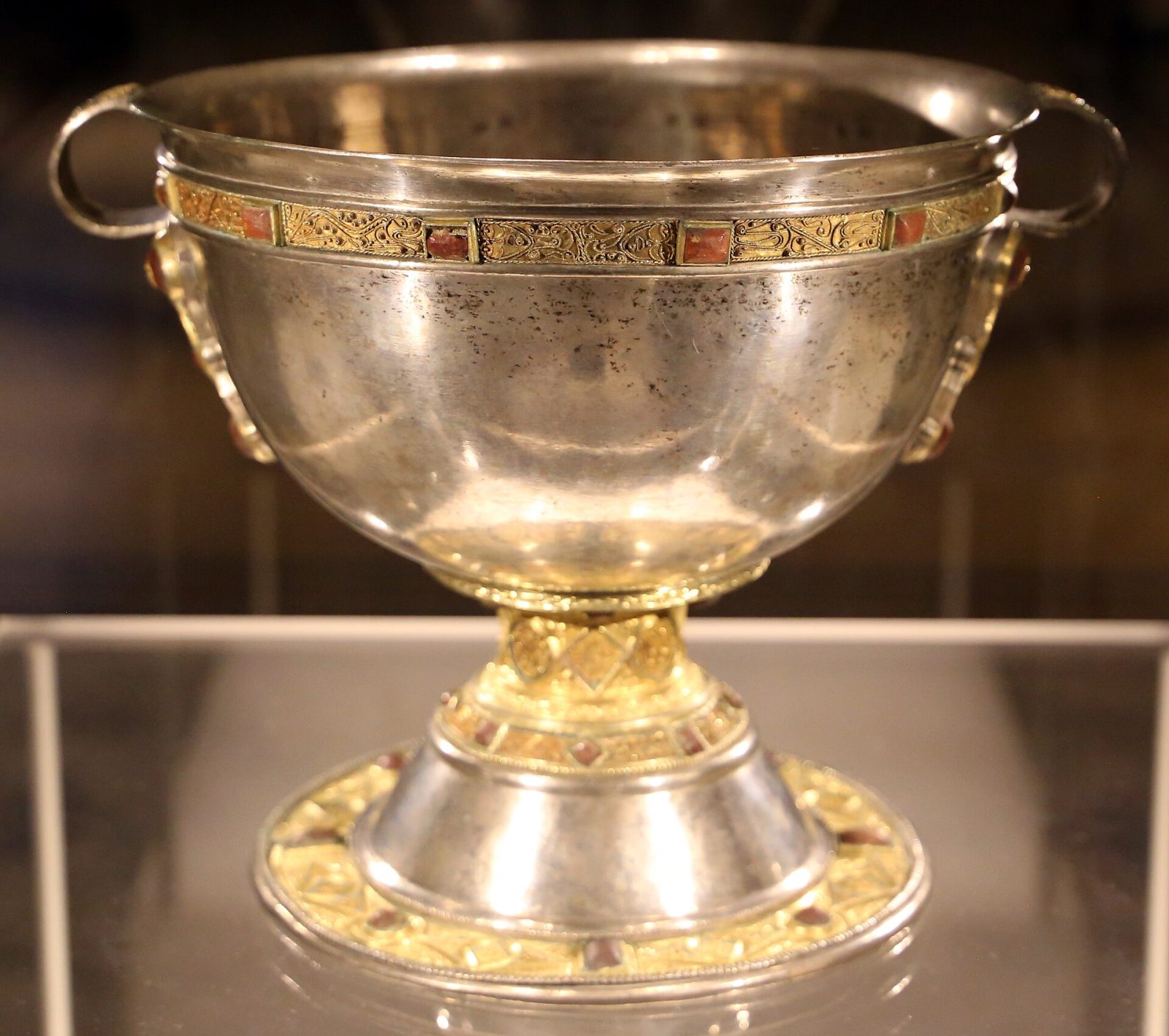
The chalice is about 18 centimetres tall and is built from 354 separate parts: beaten silver, gold filigree, gilt bronze, enamel, glass and rock crystal. The names of the apostles are engraved in Latin around the bowl. It was made in the 8th century AD. One of the brooches, a silver thistle brooch, was made in the early 10th century, so the hoard cannot have been buried before then. Why it was hidden is not known. Viking raids are often suggested, but there is no proof.
Mrs Quin sold the hoard to George Butler, the Bishop of Limerick, for £50. The Royal Irish Academy claimed it as treasure trove, and after years of delay the bishop settled with the Treasury in 1877 for £100. One Treasury official called it a cheap present to the Irish nation. Paddy Flanagan is said to have received nothing and to have died poor.
The hoard passed to the Royal Irish Academy and then, in 1890, to the museum in Dublin that is now the National Museum of Ireland. In 1961 the chalice was taken apart for study and conservation at the British Museum's research laboratory, which is how so much is known about the way it was made. It inspired copies by the Dublin silversmith Edmond Johnson in the 1890s, and later the Sam Maguire Cup, the trophy of the All-Ireland football championship.
The Ardagh Chalice is on display in the Treasury at the National Museum of Ireland on Kildare Street in Dublin.
Written for Global Finds from History Ireland, the World History Encyclopedia and other published accounts. Photo: the Ardagh Chalice in the National Museum of Ireland, Sailko, Wikimedia Commons, CC BY 3.0.
Approximate location52.49, -9.07View on map
Source: History Ireland