The Seaton Down Hoard: 22,888 Roman coins and the PAS's millionth find
Famous find Buried around AD 350 · Found in 2013 See it on the timeline →
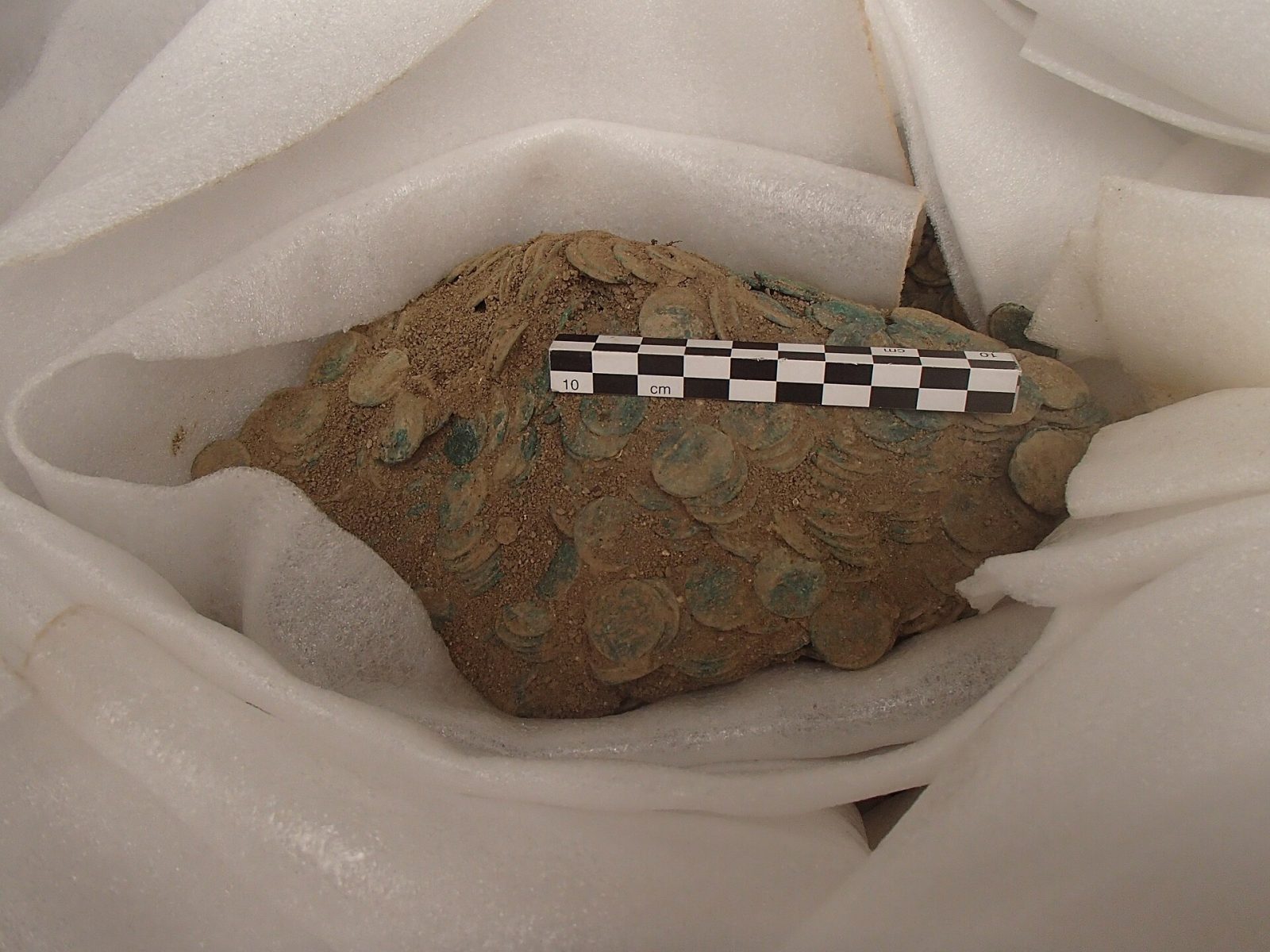
In November 2013 a detectorist in east Devon found a hoard of 22,888 Roman coins, reported it at once and helped archaeologists dig it out. Its first coin became the one-millionth find recorded by the Portable Antiquities Scheme.
In November 2013, Laurence Egerton was metal detecting on land at Seaton Down in east Devon, belonging to Clinton Devon Estates, when he found a large hoard of small bronze Roman coins. He reported it straight away to the Portable Antiquities Scheme and to Devon County Council's historic environment team, and archaeologists from AC Archaeology excavated it, with his help.
There were 22,888 coins, weighing 68 kilograms, almost all of them nummi, the small copper-alloy coins that were everyday change in the 4th century. They range in date from AD 260 to 348, but 99 per cent were struck between 330 and 341, under Constantine the Great and his sons. The hoard was probably buried around AD 350. It lay close to Honeyditches, a known Roman site nearby.
It has a place in the history of recording, too. The first coin from it to be logged, struck at Lyon in AD 332 to celebrate the new city of Constantinople, became the one-millionth find recorded by the Portable Antiquities Scheme.
The hoard was declared Treasure under the Treasure Act and shown at the British Museum in 2014. The Royal Albert Memorial Museum in Exeter then raised the money to buy it, with support from the Heritage Lottery Fund, Clinton Devon Estates, Devon County Council, private donors and the public, and it went on display there in 2016.
It is the largest hoard ever found in Devon, and one of the largest 4th-century coin hoards from anywhere in the Roman Empire.
Written for Global Finds from the Royal Albert Memorial Museum, Devon County Council and other published accounts. Photo: the main block of the Seaton Down Hoard, The Portable Antiquities Scheme / The Trustees of the British Museum, Wikimedia Commons, CC BY-SA 2.0.
Approximate location50.72, -3.09View on map
Source: Royal Albert Memorial Museum