The Hunterston Brooch: a royal Celtic brooch with a Viking owner's name on the back
Famous find Made about AD 700 · Found in 1830 See it on the timeline →
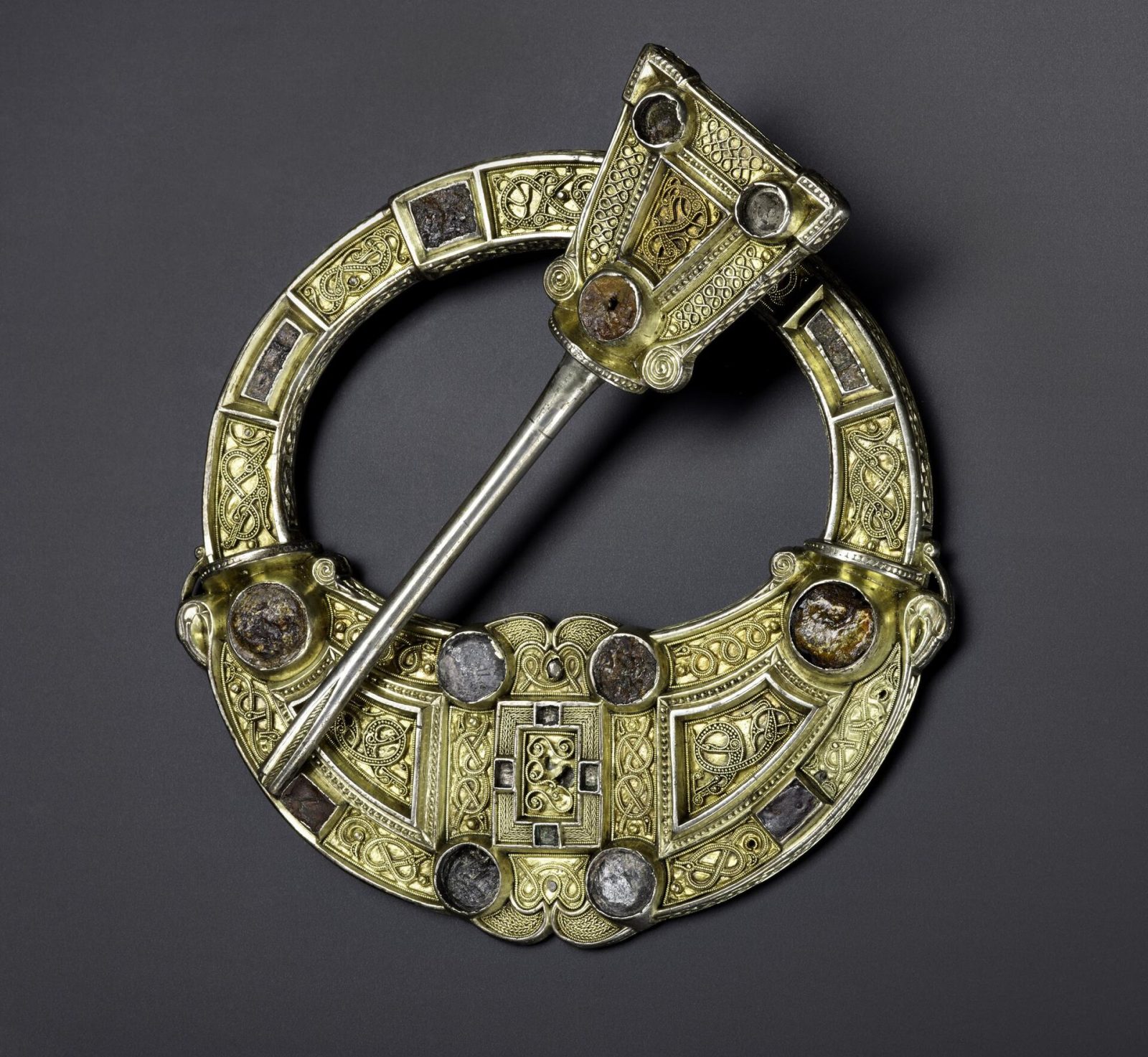
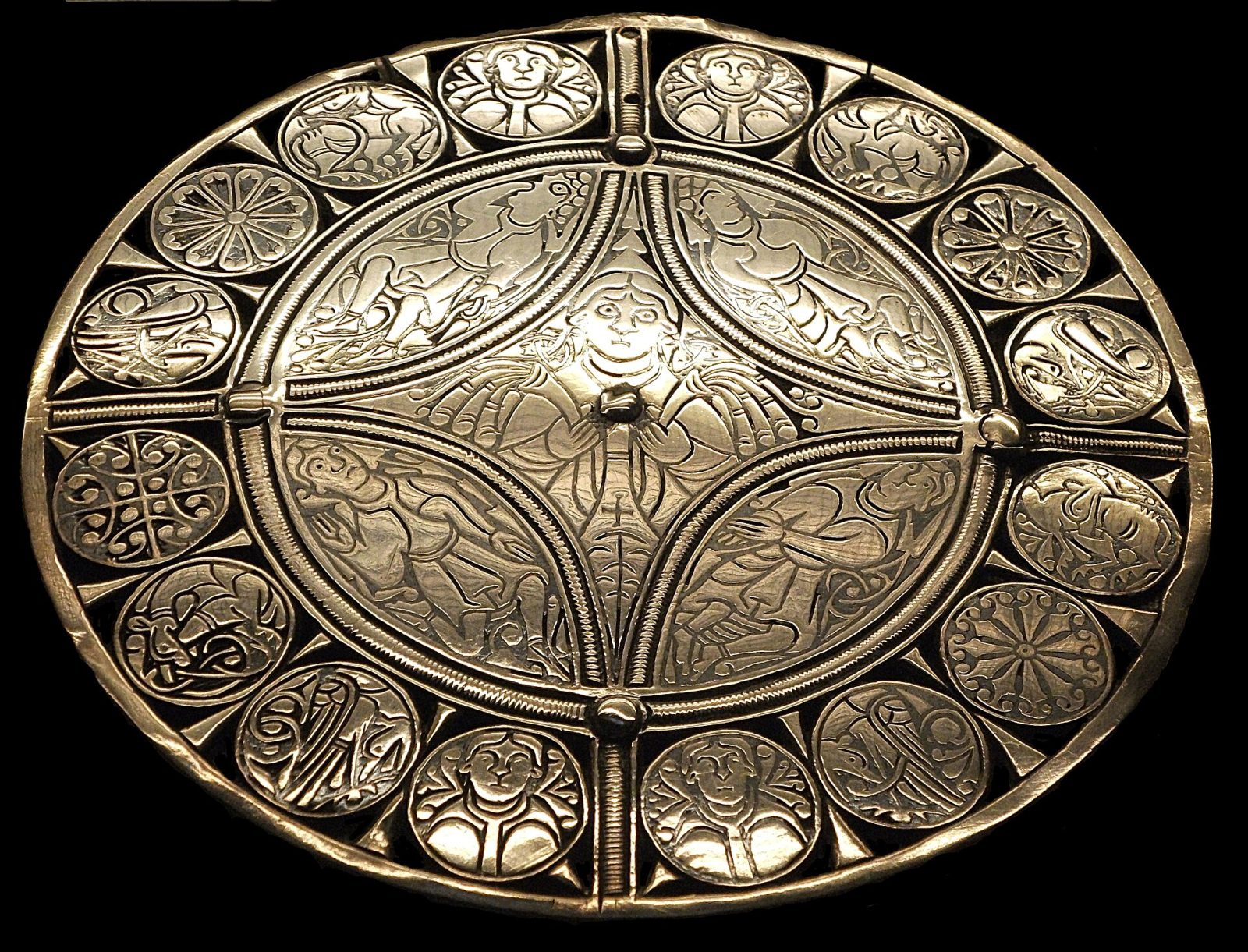
Found lying near the surface on the Hunterston estate in Ayrshire around 1830, this gilded silver brooch is one of the finest ever made in Scotland or Ireland. Two centuries after it was made, an owner scratched his name on it in runes.
The Hunterston Brooch was found on the estate of the Hunter family at Hunterston, near West Kilbride on the Ayrshire coast, by two men working on the land. The earliest scholarly account, published in 1868, says it was found in the autumn of 1830, lying near the surface at the foot of a steep cliff about a hundred yards from the sea. Another account gives the year as 1826 and says the men were digging drains. Either way, it was not buried deep, and the point of its pin had broken off.
The brooch is about 12 centimetres across, made of cast silver, gilded, with panels of gold filigree and granulation showing interlaced creatures, and settings of amber, most of which are now missing. A cross sits at its centre. It was made around AD 700, perhaps in western Scotland, possibly at the royal stronghold of Dunadd, or in Ireland. It is often compared with the 'Tara' Brooch, its closest rival, and the two may have come from linked workshops.
Around two centuries after it was made, someone scratched Old Norse runes on the back. National Museums Scotland translates them as "Melbrigda owns this brooch". Melbrigda is a Gaelic name, Máel Brigte, meaning devotee of Saint Brigid: a Gael marking his property in Norse runes, in the mixed world of the Viking Age around the Irish Sea. One early reading also found a second owner's name, a woman called Olfriti.
The Hunter family kept the brooch for many years before it went to the national museum. It is now on display in the National Museum of Scotland in Edinburgh, and Victorian silver-gilt replicas of it still turn up at auction.
Written for Global Finds from National Museums Scotland, the Proceedings of the Society of Antiquaries of Scotland and other published accounts. Photo: the Hunterston Brooch, National Museums Scotland, Wikimedia Commons, CC BY-SA 4.0.
Approximate location55.71, -4.90View on map