The Pietroasele Treasure: Gothic gold that survived thieves, fire and a trip to Moscow
Famous find Made in the late 4th or early 5th century AD · Found in 1837 See it on the timeline →
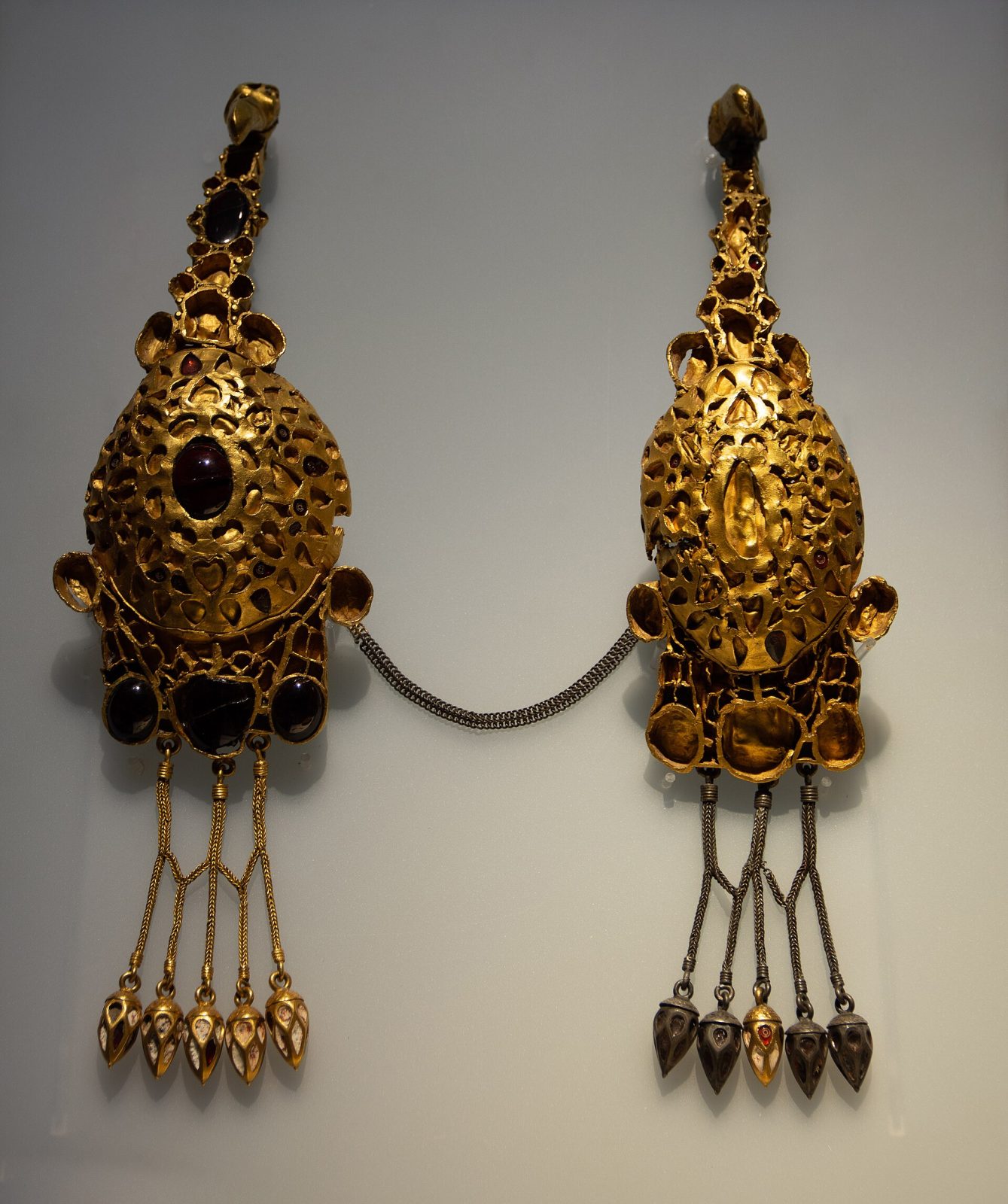
In 1837 two quarrymen in Romania found a hoard of Gothic gold known as the Hen with the Golden Chicks. Since then it has been broken up, stolen, saved from a fire and held in Moscow for 40 years.
Around Easter 1837, two men quarrying stone on Istrița hill near the village of Pietroasele in Buzău County, Romania, Ion Lemnaru and his father-in-law Stan Avram, uncovered a hoard of gold objects. They were cutting stone for a wall for the bishopric in Buzău.
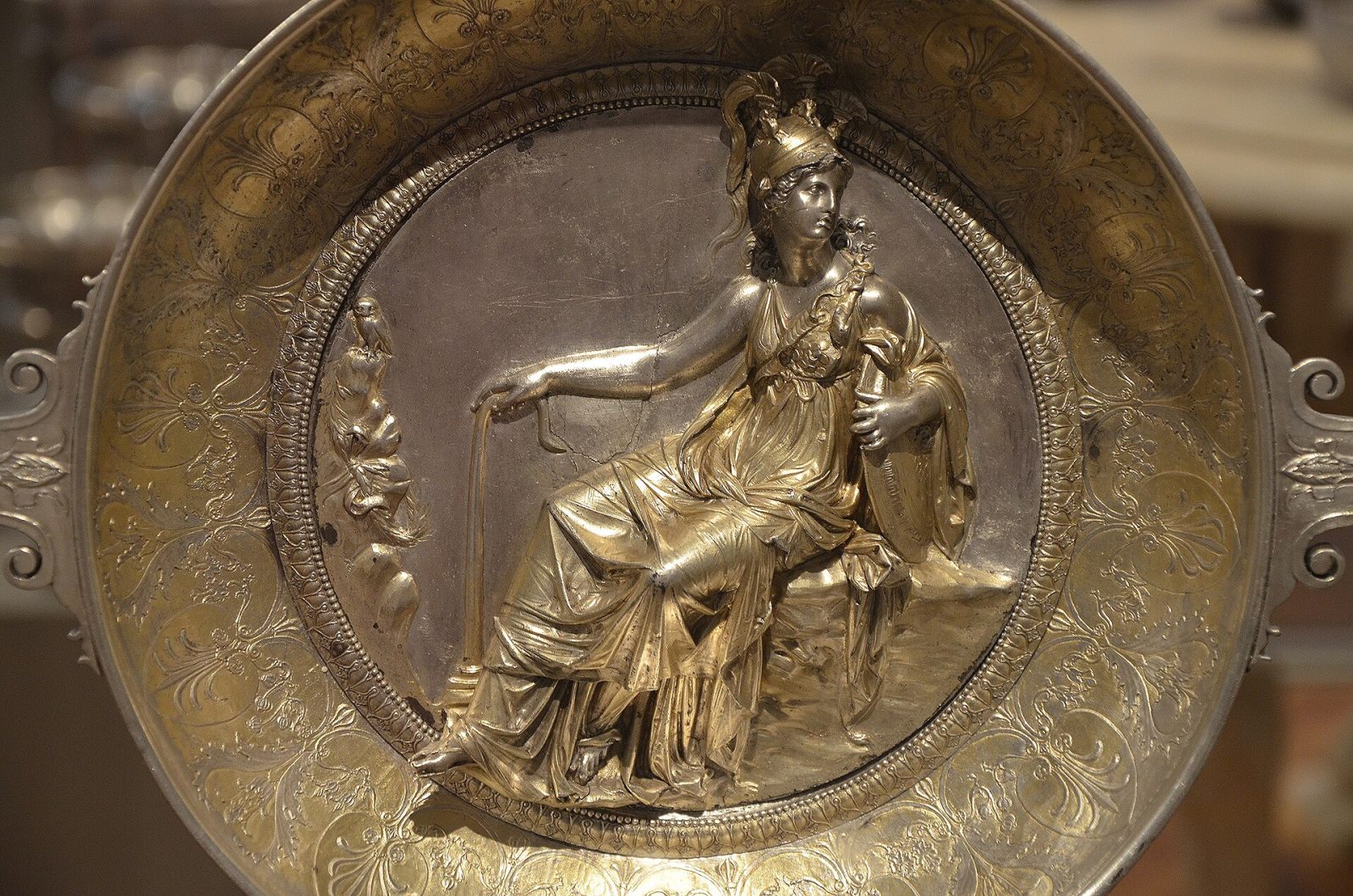
The finders and the merchant they worked for broke up and sold some of the pieces before the authorities stepped in. The hoard is thought to have held about 22 objects, but only 12 survive, weighing almost 19 kilograms in all. They include a large brooch in the shape of an eagle and three smaller brooches set with stones, a gold dish decorated with a seated goddess surrounded by figures, two openwork cups with handles shaped like big cats, a large tray, a jug and three neck-rings. In Romania the treasure is known as Cloșca cu puii de aur, the Hen with the Golden Chicks.
One of the neck-rings carries an inscription in runes, usually read as including the words gutani and hailag, linking it to the Goths and to something sacred. Part of it was destroyed in 1875, so the full reading is still argued over. The treasure is dated to the late 4th or early 5th century AD. It has traditionally been linked to the Visigothic king Athanaric, but others connect it with Goths living under the Huns a generation later.
The surviving pieces have had an eventful history. After being shown in Paris, London and Vienna, the treasure was stolen in November 1875 by a thief who drilled through the floor of the room above. Most of it was recovered, but the runic ring had been cut in two and some of the gold melted down. It survived a fire at the museum in 1884. In 1916, during the First World War, it was sent to Moscow for safekeeping with the rest of Romania's national treasure, and it did not come home until 1956.
The Pietroasele Treasure is on display in the National History Museum of Romania in Bucharest, and a replica is shown at the county museum in Buzău.
Written for Global Finds from Romanian press accounts and other published sources. Photo: brooches from the Pietroasele Treasure in the National History Museum of Romania, Dorieo, Wikimedia Commons, CC BY-SA 4.0.
Approximate location45.10, 26.57View on map
Source: Newsweek România