The Treasure of Guarrazar: the gold votive crowns of the Visigothic kings
Famous find Made in the 7th century AD · Found in 1858 See it on the timeline →
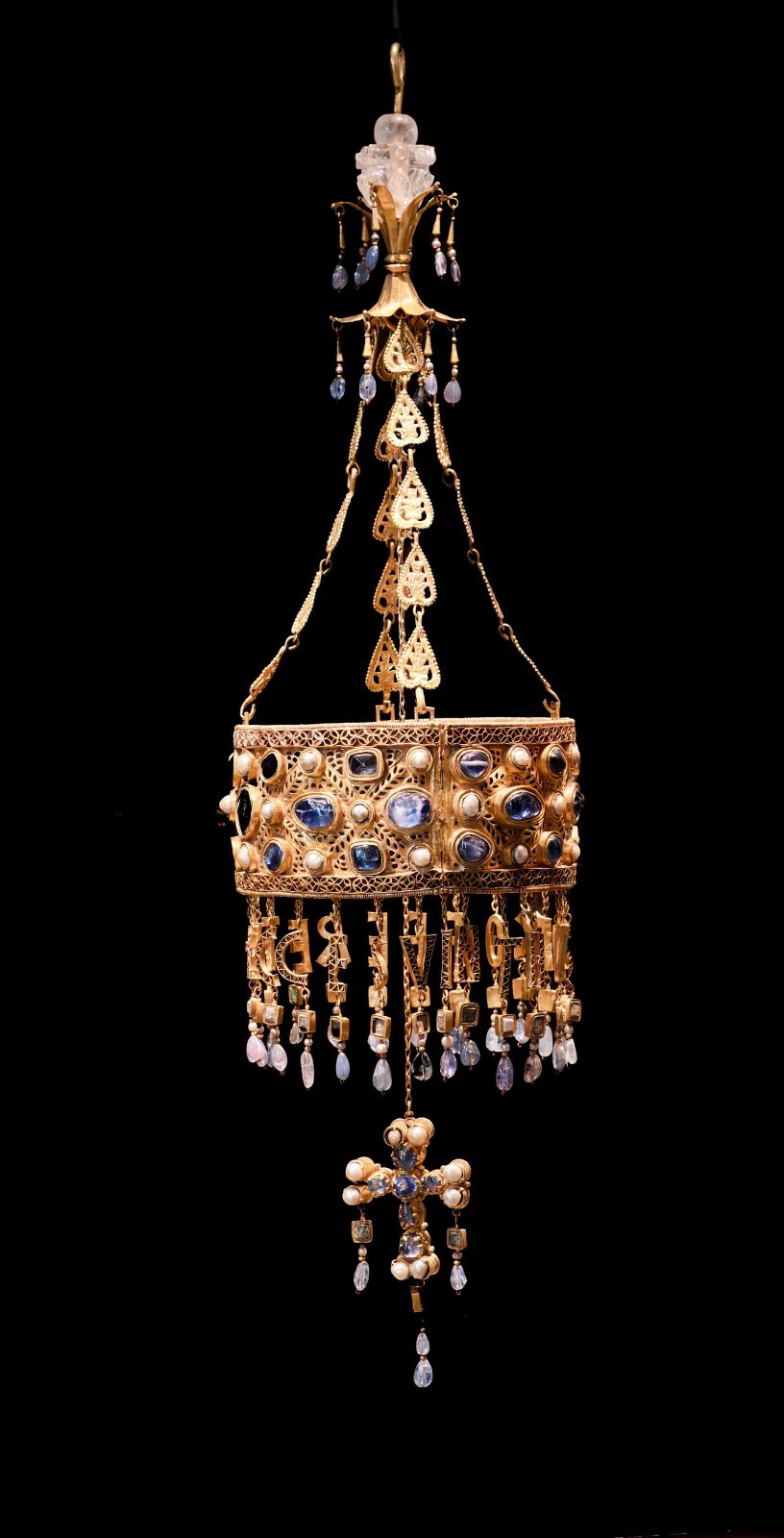
In 1858 gold was spotted in a pit beside a spring near Toledo in Spain. It was the treasure of the Visigothic kings: jewelled votive crowns and crosses, one of which spells out the name of King Reccesuinth.
In August 1858, near Guadamur, about 10 kilometres from Toledo in central Spain, a young girl in the family of Francisco Morales spotted gold in a stone-covered pit beside the spring of Guarrazar. The usual account says heavy rain had washed the ground away. It was the first of two caches buried close to the remains of an early church. A local gardener, Domingo de la Cruz, found a second, smaller group, and pieces kept coming out of the ground until 1861.
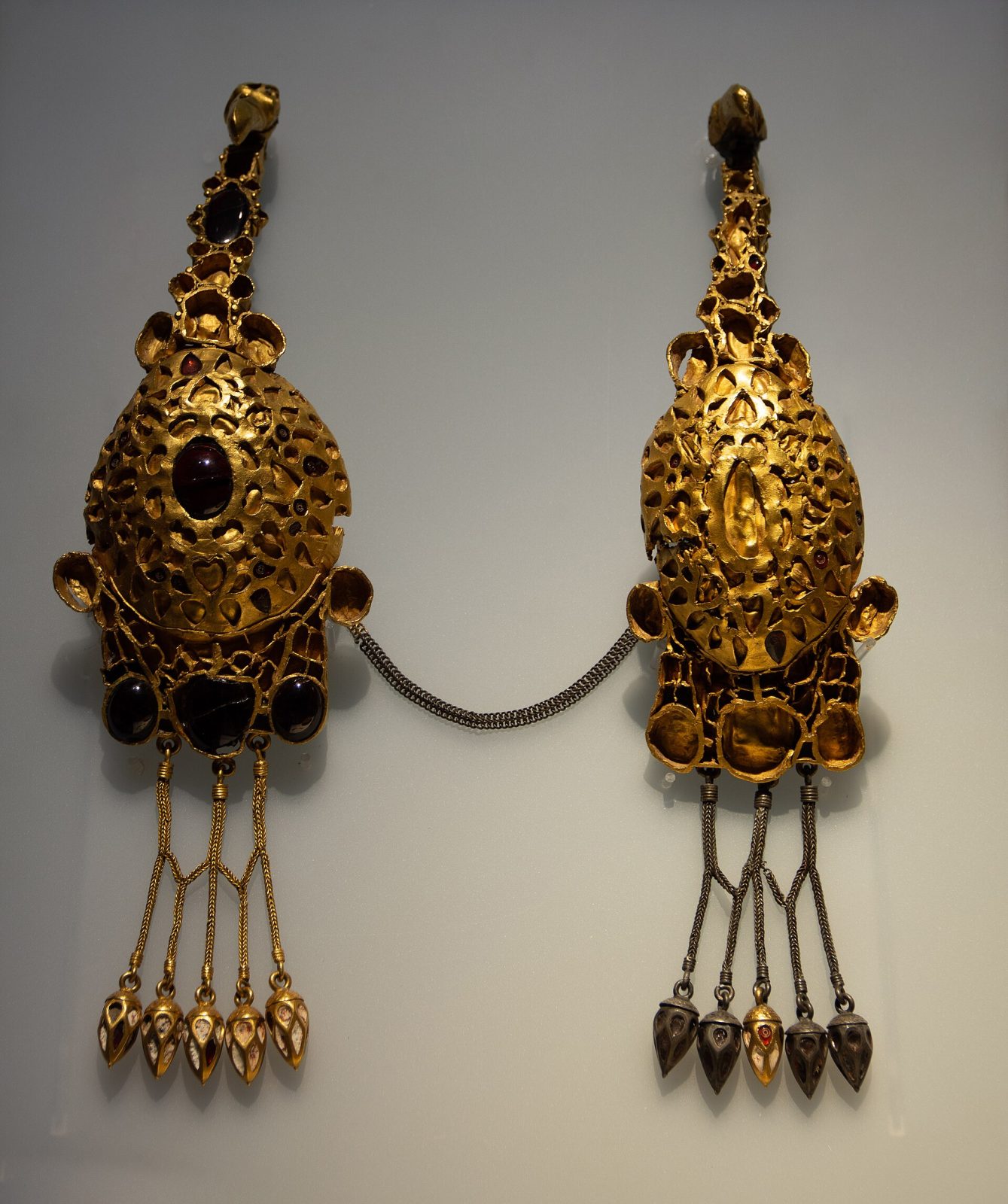
The treasure is made up of votive crowns and crosses, around 26 pieces in all, of gold set with sapphires, pearls and other stones. The crowns were not made to be worn but to hang above an altar as offerings. The most famous was given by Reccesuinth, king of the Visigoths in Spain from about 649 to 672. Twenty-two gold letters hang from its rim, spelling RECCESVINTHVS REX OFFERET, King Reccesuinth offers this. The treasure dates from the 7th century. It is often said that it was hidden to keep it from the Muslim armies that invaded Spain in 711, but that cannot be proved.
The Morales family broke up some of the pieces and sold them to silversmiths in Toledo. A jeweller, José Navarro, bought pieces, reassembled crowns from them and in 1859 sold them in Paris to the French state for the Musée de Cluny, while the Spanish government protested. De la Cruz gave his finds, including the crown of King Suinthila, to Queen Isabel II in return for a pension.
Suinthila's crown was stolen from the Royal Armoury in Madrid in April 1921 and has never been found. In 1941 an exchange between the French and Spanish governments brought six crowns, including Reccesuinth's, and four crosses back to Spain, in return for paintings by Velázquez and El Greco and other works.
Most of the surviving treasure is now in the National Archaeological Museum in Madrid, and some pieces remain in the Musée de Cluny in Paris.
Written for Global Finds from Spanish and French published accounts. Photo: the votive crown of King Reccesuinth in the National Archaeological Museum, Madrid, Luis Fernández García, Wikimedia Commons, CC BY-SA 4.0.
Approximate location39.81, -4.15View on map
Source: Wikipedia