The Treasure of Aliseda: Phoenician-style gold dug up by a boy making tiles
Famous find Late 7th or early 6th century BC · Found in 1920 See it on the timeline →
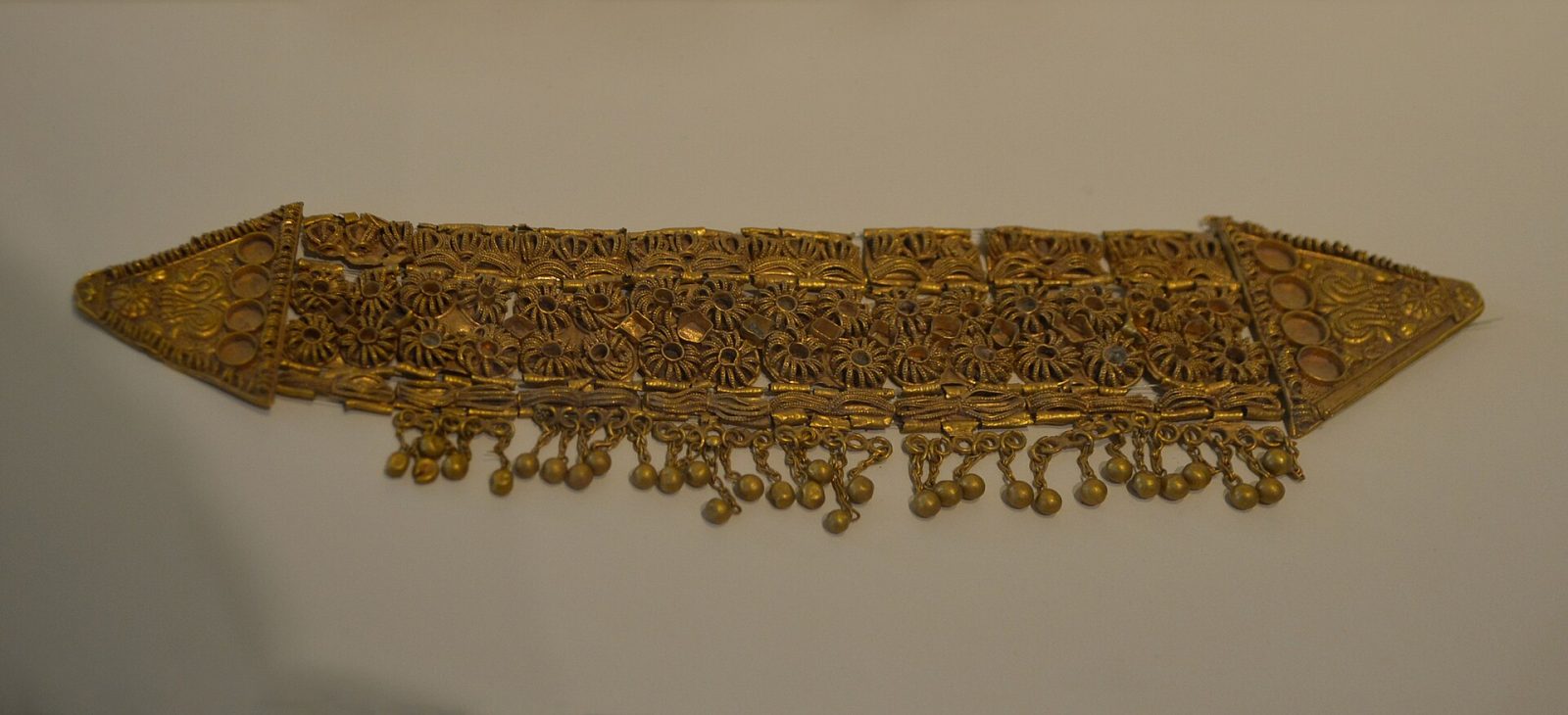
On 29 February 1920 a boy digging clay for a tile kiln at Aliseda in western Spain struck a hoard of gold: a diadem, a great belt, earrings, necklaces and rings. Much of it was sold to goldsmiths before the authorities stepped in.
On 29 February 1920, a boy named Jenaro Vinagre was digging clay for a tile kiln on the common land of Aliseda, a village in the province of Cáceres, in Extremadura in western Spain, when his tools struck what looked like a pot, and then gold chains and bracelets. What he had found was one of the most important ancient gold treasures in the Iberian Peninsula.
At first it seemed it would be lost. Pieces of the gold were taken to the city of Cáceres and sold to goldsmiths, for little more than the value of the metal. Within days the village authorities reported the sale as unlawful, the courts and police intervened, and much of the treasure was recovered. A royal order declared it the property of the state, with compensation paid later, and in September 1920 the archaeologist José Ramón Mélida brought it to the National Archaeological Museum in Madrid under the escort of the Guardia Civil. The findspot was excavated in 1921.
The treasure contains some 285 gold objects and fragments. The finest are a gold diadem, a magnificent belt nearly 70 centimetres long made of gold plaques decorated in tiny granules with scenes of a hero fighting a lion, together with griffins and palm leaves, and large ornate earrings, necklaces, bracelets and rings, some set with stones. With them were silver vessels, a bronze mirror, a brazier and a small glass jug imported from Egypt.
The National Archaeological Museum dates the treasure to the late 7th or early 6th century BC. It belongs to the Orientalising period, when Phoenician traders from the eastern Mediterranean had settled on the coasts of southern Spain and local elites in the interior were adopting their luxury goods and styles. Whether the treasure came from the grave of a high-ranking woman, from a shrine, or was a hidden hoard is not known, because the findspot was dug out by workmen before archaeologists could record it.
The Treasure of Aliseda is on display in the National Archaeological Museum in Madrid. A replica is shown at an interpretation centre in Aliseda.
Written for Global Finds from the National Archaeological Museum of Spain's guide to the treasure and research published by the University of Extremadura to mark its centenary. Photo: the gold diadem from the Treasure of Aliseda in the National Archaeological Museum, Madrid, Dorieo, Wikimedia Commons, CC BY-SA 4.0.
Approximate location39.42, -6.69View on map