The León Tremissis: a man digging for a porch found a Visigothic king's gold coin, from a mint 600 km away
Famous find Struck at Eliocroca (Lorca), AD 612 to 621 · Found in 2021 See it on the timeline →
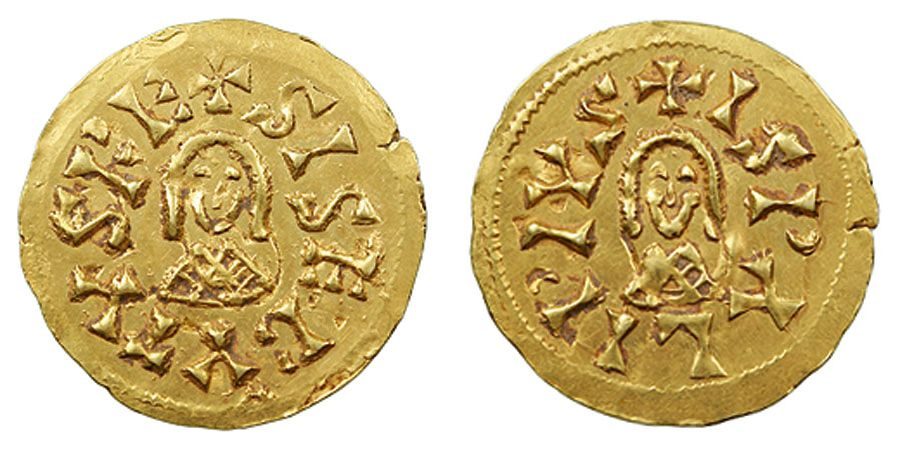
On 19 October 2021 a resident of León in northern Spain, digging trenches for a porch in his walled garden, found a small gold coin of Sisebut, King of the Visigoths. It came from the mint of Lorca, 600 km away, and carries a spelling of the town's name never seen before.
On 19 October 2021, a resident of the city of León in north-western Spain was digging trenches 30 to 50 centimetres deep for a porch in a walled garden in the city centre when he found a small gold coin. He passed it to his son, a police officer, and it was handed in to the authorities. The archaeologist who later published it, David Martínez Chico, thanked the finder for behaving in an exemplary way. His name has not been published.
The coin is a tremissis, a gold coin worth a third of a solidus, weighing 1.40 grams and 18 millimetres across. It was struck for Sisebut, King of the Visigoths, who ruled Spain from 612 to 621. On both sides is a stylised facing bust. Around one is the king's name, SISEBVTVS REX; around the other, the name of the mint and the word PIVS, "pious".
The mint turned out to be the most interesting thing about it. It was Eliocroca, the town now called Lorca, in Murcia in the far south-east of Spain, some 600 kilometres from León. Only two other coins from this mint were known, and the León coin spells the town's name in a way never seen before, ILIORICE, closer to its original Iberian name. Martínez Chico linked this spelling to the form Ilorcire in a copy of the Roman writer Pliny made in Northumbria in the 8th century, a clue in a long debate about where the Roman general Gnaeus Cornelius Scipio died fighting Hannibal's Carthaginians in 211 BC. Because nothing else of archaeological interest turned up in the garden, the coin may have arrived in soil brought in from elsewhere.
Sisebut was one of the most learned Visigothic kings, a writer of letters and poetry who drove the Byzantines out of much of southern Spain. Under Spanish law, chance archaeological finds belong to the state, and the finder and the owner of the land share a reward of half the coin's value. The coin is in the Museo de León.
Written for Global Finds from D. Martínez Chico, Documenta & Instrumenta 20 (2022), and Diario de León (2021). Photo: a gold tremissis of Sisebut of the same type from the Seville mint, not the León coin, Numismática Pliego, Wikimedia Commons, CC BY-SA 3.0.
Source: Documenta & Instrumenta (2022)