The Nagyszentmiklós Treasure: 23 gold vessels and an inscription nobody can read
Famous find Made in the 7th to 9th centuries AD · Found in 1799 See it on the timeline →
In 1799 a farm worker near Nagyszentmiklós, now Sânnicolau Mare in Romania, dug up 23 gold vessels weighing about 10 kilograms. It is the largest known gold treasure of the early Middle Ages, and who made it is still argued over.
In 1799, a farm worker digging near the town of Nagyszentmiklós in the Banat, then part of the Kingdom of Hungary and now Sânnicolau Mare in western Romania, found a hoard of gold vessels. The land belonged to the Nákó family, and the treasure was bought from them the same year and taken to Vienna for the imperial collections.
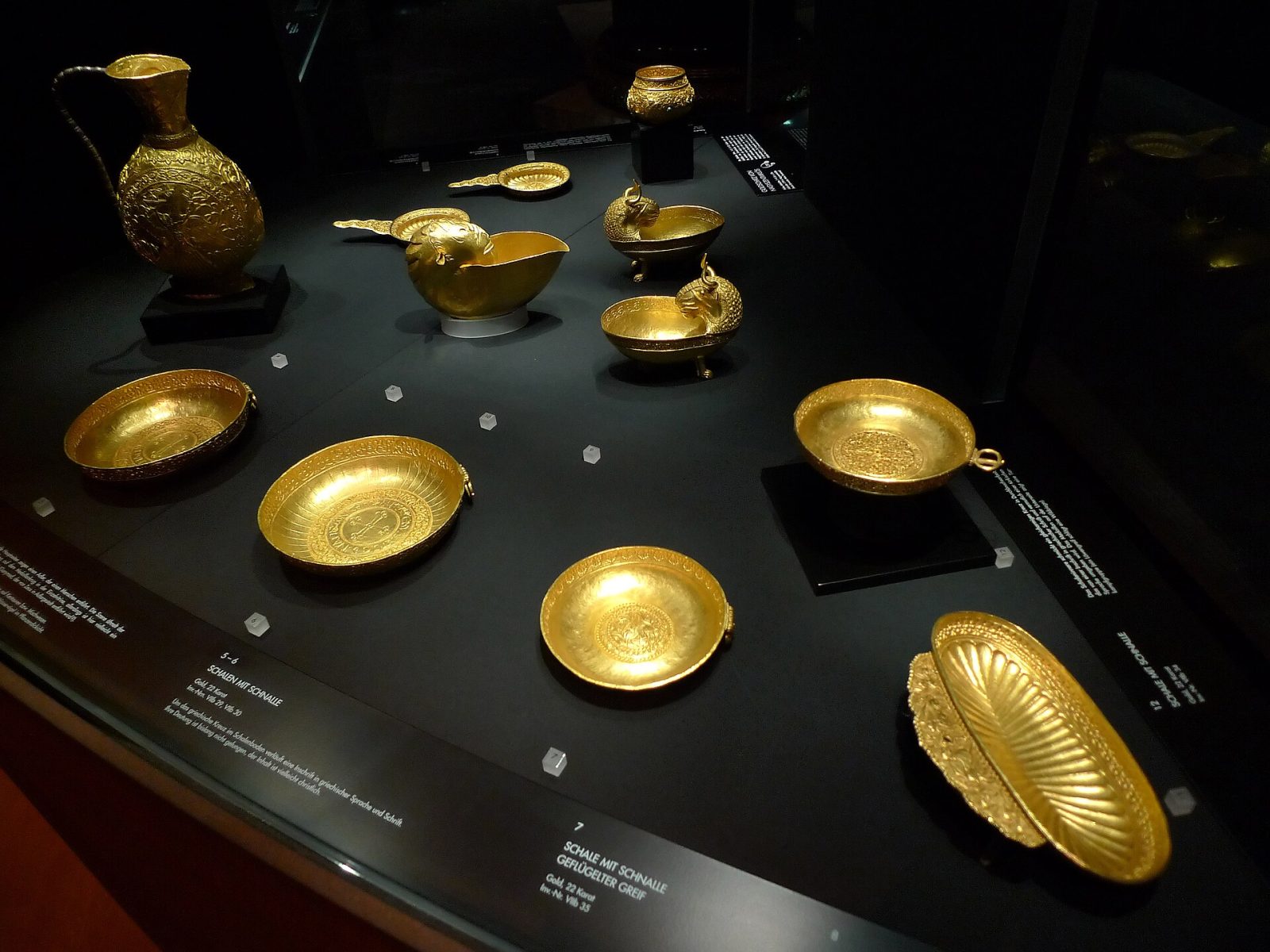
There are 23 vessels of gold, weighing about 10 kilograms in all: jugs, bowls, bowls with buckles for hanging from a belt, beakers, a drinking horn and a pair of bowls ending in the heads of bulls. The Kunsthistorisches Museum in Vienna calls it the largest known gold treasure of the early Middle Ages. Its decoration mixes styles from Byzantium, Persia and the steppes, with hunting scenes, fabulous beasts and a figure often described as a victorious prince on horseback.
Several vessels carry short inscriptions. The most famous, written in Greek letters but in a Turkic language, is usually read as including names and titles, among them the word zoapan, and has never been fully deciphered.
Who owned it is one of the great puzzles of early medieval archaeology. The museum dates the vessels to between the 7th and 9th centuries AD, and they show long use and repair before they were buried. A research project at the University of Vienna concluded that it was probably a small part of the royal treasure of the Avars, a nomadic people who ruled the Carpathian basin until Charlemagne's armies defeated them in the 790s and carried most of their treasure away. Others have argued for the Bulgars, the Magyars or the Khazars.
The treasure has remained in Vienna since 1799 and is on display in the Kunsthistorisches Museum.
Written for Global Finds from the Kunsthistorisches Museum Vienna, the Austrian Science Fund's research project on the treasure and other published accounts. Photo: the Nagyszentmiklós Treasure in the Kunsthistorisches Museum, Vienna, Sandstein, Wikimedia Commons, CC BY 3.0.
Approximate location46.07, 20.63View on map
Source: Kunsthistorisches Museum Vienna