The Sponsian Coin: a gold coin of a Roman emperor nobody had heard of, dismissed as a fake for 150 years
Famous find Probably struck in the AD 260s · Found in 1713 See it on the timeline →
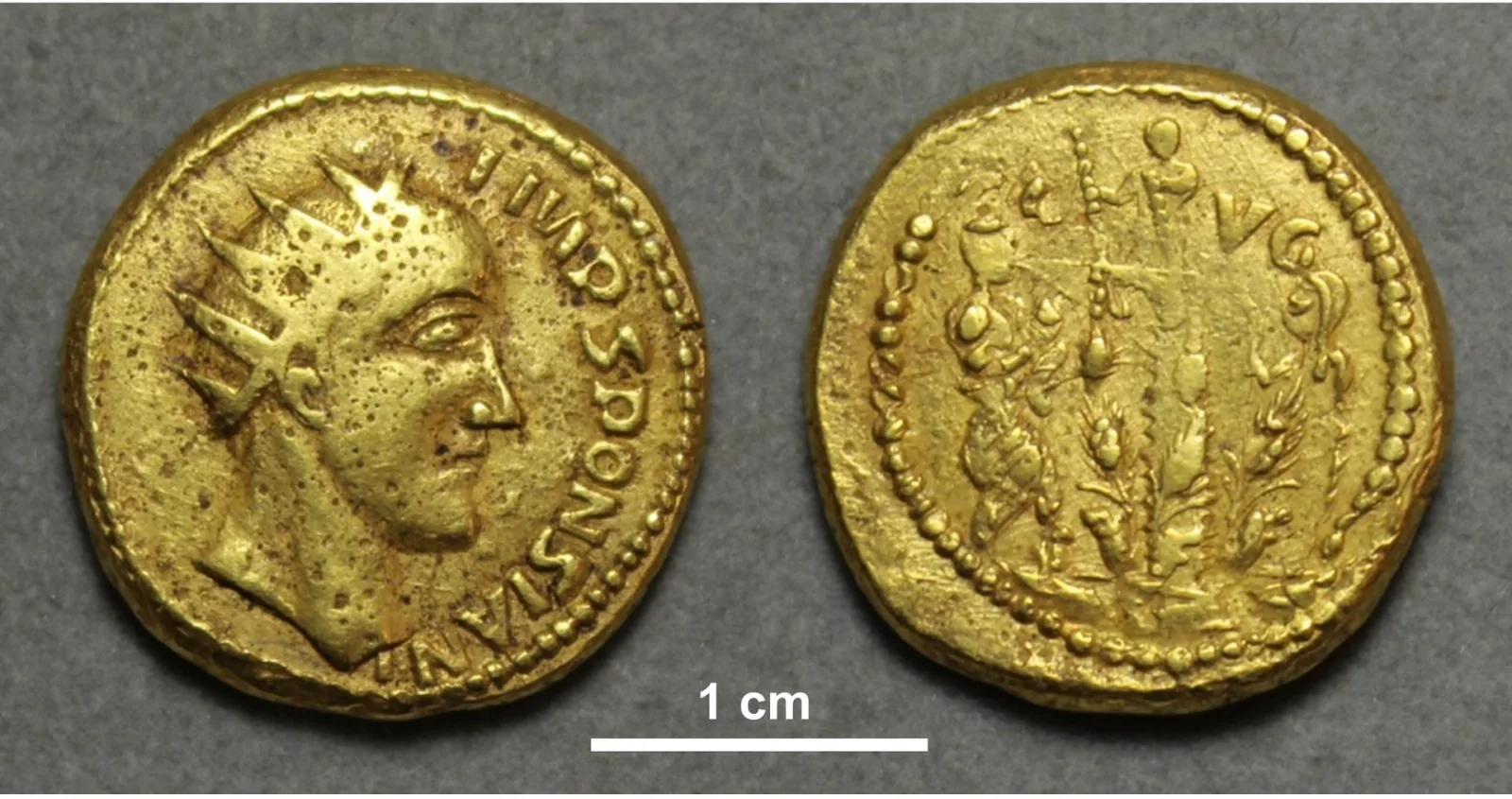
In 1713 an imperial official in Vienna bought gold coins said to have been found in Transylvania. One named an emperor, Sponsian, unknown to any historian, and was written off as a forgery. In 2022 scientists argued it is genuine and that Sponsian really existed.
In March 1713, Carl Gustav Heraeus, the inspector of medals for the imperial collection in Vienna, recorded buying eight gold coins of five designs that were said to have been found in Transylvania, in what is now Romania. He bought them from Johann David von Palm, a Habsburg official responsible for mines and precious metals. Nothing else about the find, who made it, where or when, was written down.
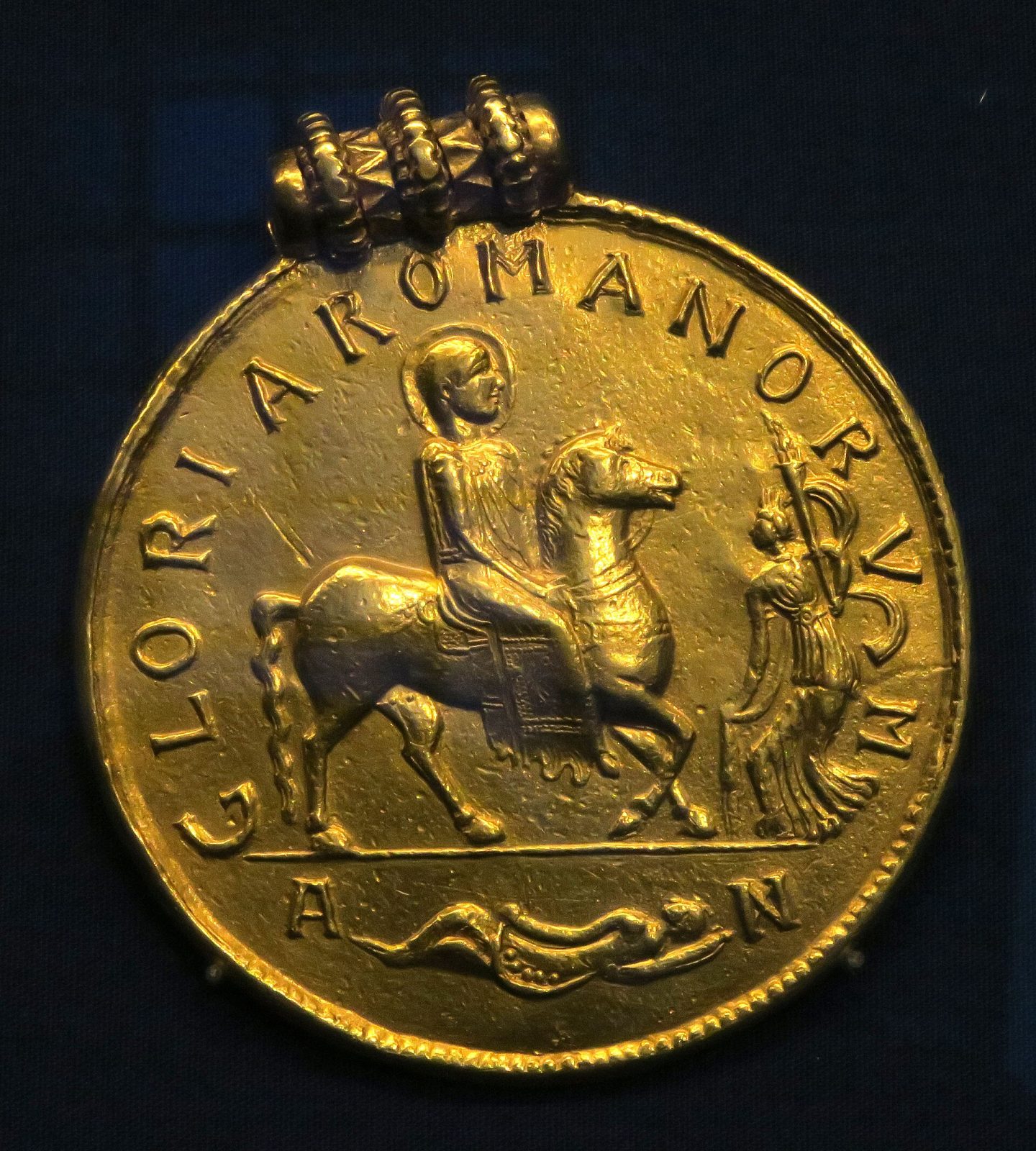
One of the designs named an emperor no Roman historian ever mentions: IMP SPONSIANI, "of the emperor Sponsian". The coin shows a head wearing a radiate crown, and on the back two men in togas beside a column, a scene copied from a Roman silver coin of 135 BC, three and a half centuries older. At 10.84 grams it is heavy for a gold aureus.
In 1782 the Scottish anatomist and collector William Hunter bought one of the Sponsian coins from the estate of a Viennese antiquarian, and it came to Glasgow with his collection the following year. In 1868 the French numismatist Henry Cohen declared these coins crude modern fakes, and that verdict stood for 150 years.
In 2022 a team led by Paul Pearson of University College London examined the Glasgow coin under the microscope and found deep scratches of the kind made by wear in circulation, and soil minerals cemented to its surface, signs of long burial and later excavation. They argued that it is genuine, and that Sponsian was a real army commander who took charge in the isolated Roman province of Dacia during the troubles of the 260s, minting his own gold from local mines, before the Romans abandoned the province in the 270s.
Not everyone is convinced. Several leading numismatists still think the coins are 18th-century forgeries, and the argument continues. Four Sponsian coins survive: two in Vienna, one at the Brukenthal National Museum in Sibiu, Romania, and the one in Glasgow, which the Hunterian put on display after the study.
Written for Global Finds from P. Pearson and colleagues in PLOS ONE (2022), the Hunterian, University of Glasgow (2022), and the American Numismatic Society. Photo: the Sponsian gold coin in the Hunterian, Glasgow, from Pearson and colleagues in PLOS ONE (2022), Sponsianus, Wikimedia Commons, CC BY 4.0.