The Dacian gold bracelets: treasure looted with metal detectors, and the hunt to bring it home
Famous find 1st century BC · Found in 1999 See it on the timeline →
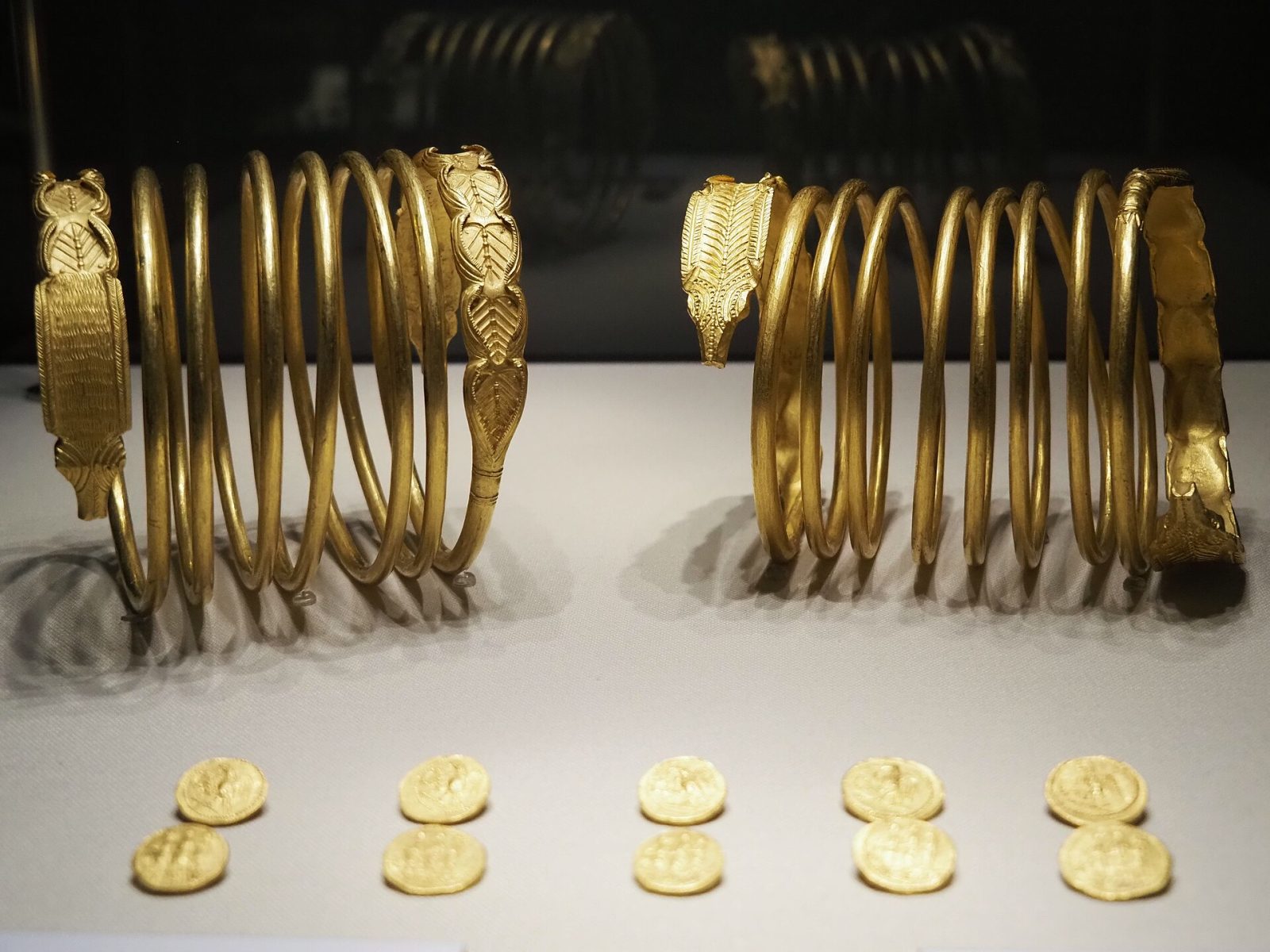
Between 1999 and 2001 organised gangs with metal detectors dug 24 massive gold spiral bracelets from around the ancient Dacian capital in Romania's mountains and sold them abroad. Thirteen have been recovered; in 2025 three were stolen again from a Dutch museum.
Sarmizegetusa Regia, high in the Orăștie Mountains of Transylvania, was the capital of the Dacian kingdom before the Roman conquest in AD 106. Today it is a UNESCO World Heritage Site. Between 1999 and 2001, organised gangs of treasure hunters, equipped with metal detectors, off-road vehicles and even small diggers, searched the slopes around it and dug up a series of gold hoards.
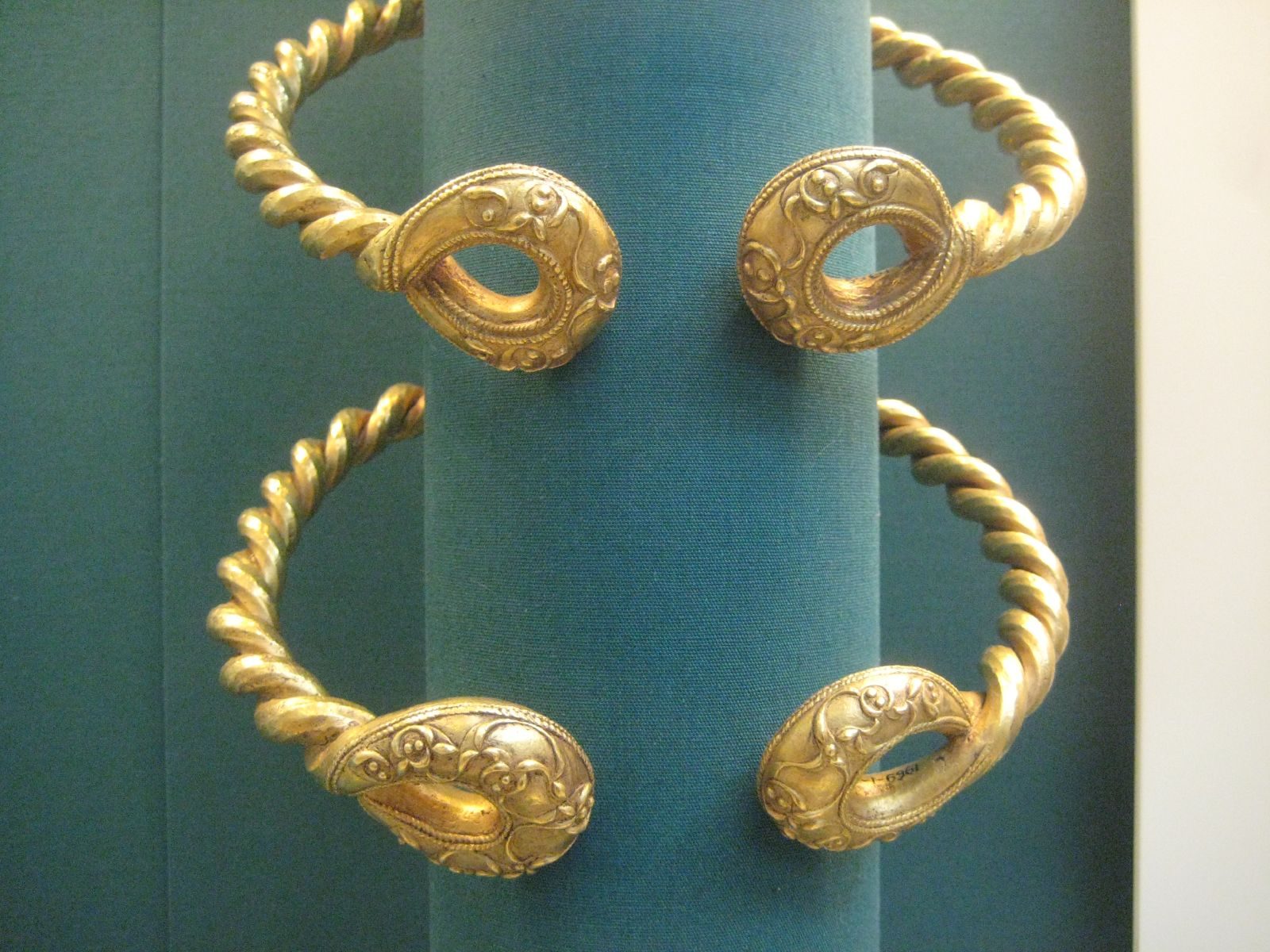
They found 24 spiral bracelets of solid gold, in five separate groups. The largest, ten bracelets, came out of Căprăreața Hill in May 2000. Each bracelet is a massive coil of five to seven turns, ending in stylised animal heads with palmette decoration, and weighs between 682 grams and nearly 1.2 kilograms. Uncoiled, a single bracelet would be almost three metres long. Analysis has shown that they were made from local gold, panned from the region's rivers, and they show no signs of wear, which suggests they were made as offerings to the gods rather than to be worn. They date from the 1st century BC.
The looters sold the bracelets through dealers to collectors in the United States, Germany, Switzerland and France. One was sold at auction. Romania began a long international hunt to get them back. Five were recovered in 2006, four of them bought back from an American collector and one seized at an antiques fair in Paris, and more followed in 2007, 2008 and 2011. Thirteen have now been returned. Eleven are still missing. In Romania, 28 people were charged, and in December 2009 thirteen of them were sentenced to between seven and twelve years in prison.
The story took another turn in January 2025. Three of the recovered bracelets were on loan to the Drents Museum in Assen, in the Netherlands, along with the famous golden helmet of Coțofenești, when thieves used explosives to break into the museum at night and took all four objects. In April 2026 the helmet and two of the bracelets were handed back as part of a deal with the suspects, and in June 2026 three men were each sentenced to 47 months in prison. The third bracelet has not been found.
The recovered bracelets are in the National History Museum of Romania in Bucharest.
Written for Global Finds from the Trafficking Culture project's case study, National Geographic (2015), DutchNews (April 2026) and ArtDependence (June 2026). Photo: two of the Dacian gold bracelets on loan to the National Archaeological Museum in Madrid, Laci3, Wikimedia Commons, CC0.
Approximate location45.62, 23.31View on map
Source: Trafficking Culture