The Silverdale Hoard: Viking silver that named a forgotten king
Famous find Buried about AD 900 to 910 · Found in 2011 See it on the timeline →
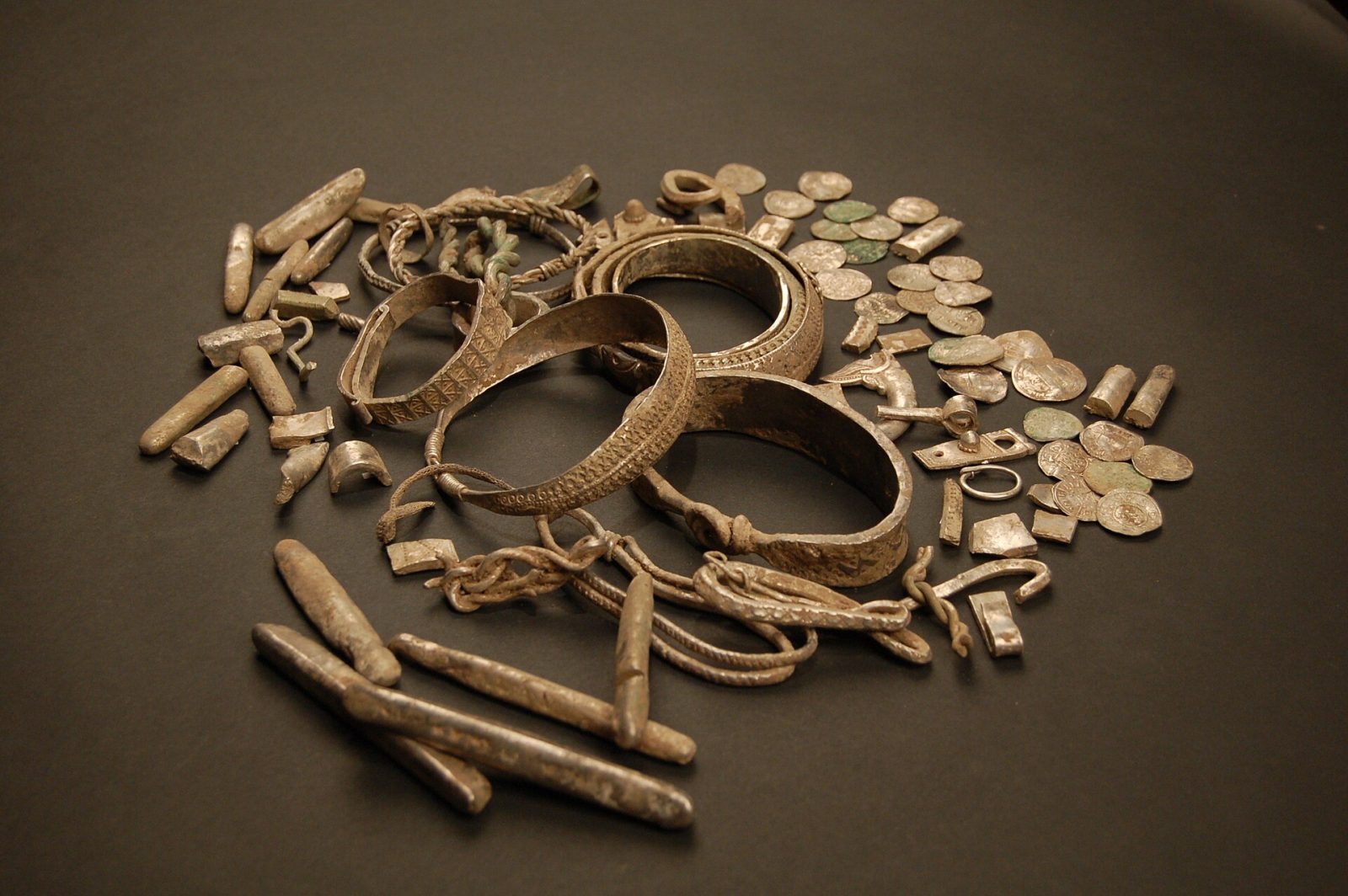
In 2011 a detectorist near Silverdale in Lancashire found a lead pouch packed with more than 200 pieces of Viking silver. One coin carried the name of a king nobody had heard of.
In September 2011, Darren Webster, a local detectorist, was searching a field near Silverdale in north Lancashire when he found a folded sheet of lead about 45 centimetres down. When he bent it back to look inside, he saw silver. He reported the find to the Finds Liaison Officer the same evening.
The hoard has 201 silver objects, just over a kilogram of silver: 27 coins, 10 complete arm-rings, 2 finger-rings, 14 ingots, fragments of brooches, a braid of wire and 141 pieces of hacksilver, silver cut up to be used as money by weight. All but one of the coins were packed in the lead pouch, which protected them, and five large arm-rings lay beneath it. Many pieces carry small nicks where someone tested the purity of the silver.
The coins include pennies of Alfred the Great and Viking copies of them, coins from the Frankish kingdoms, and Islamic dirhams, the oldest struck in Baghdad in the 760s. One coin was unlike any known before. Around a small cross it reads AIRDECONUT, a form of the Scandinavian name Harthacnut, and on the other side DNS REX, Lord King. It appears to name a Viking ruler in Northumbria around AD 900 who is not recorded anywhere else. The British Museum's experts date the burial of the hoard to about 900 to 910.
The hoard was declared Treasure in December 2011 and valued at about £110,000, shared between the finder and the landowner. Lancashire County Council's museum service bought it in 2013 with grants from the National Heritage Memorial Fund, the Art Fund and the V&A Purchase Grant Fund, among others. It has since been shown at Lancaster City Museum, in Preston, at Jorvik in York and at Clitheroe Castle Museum.
Written for Global Finds from the National Heritage Memorial Fund, the Art Fund, Lancashire County Council and other published accounts. Photo: the Silverdale Hoard, The Portable Antiquities Scheme, Wikimedia Commons, CC BY-SA 2.0.
Approximate location54.17, -2.83View on map
Source: National Heritage Memorial Fund