The Shapwick Hoard: 9,238 Roman silver coins hidden under a villa floor
Famous find Coins struck 32 BC to AD 224; buried about AD 224 · Found in 1998 See it on the timeline →
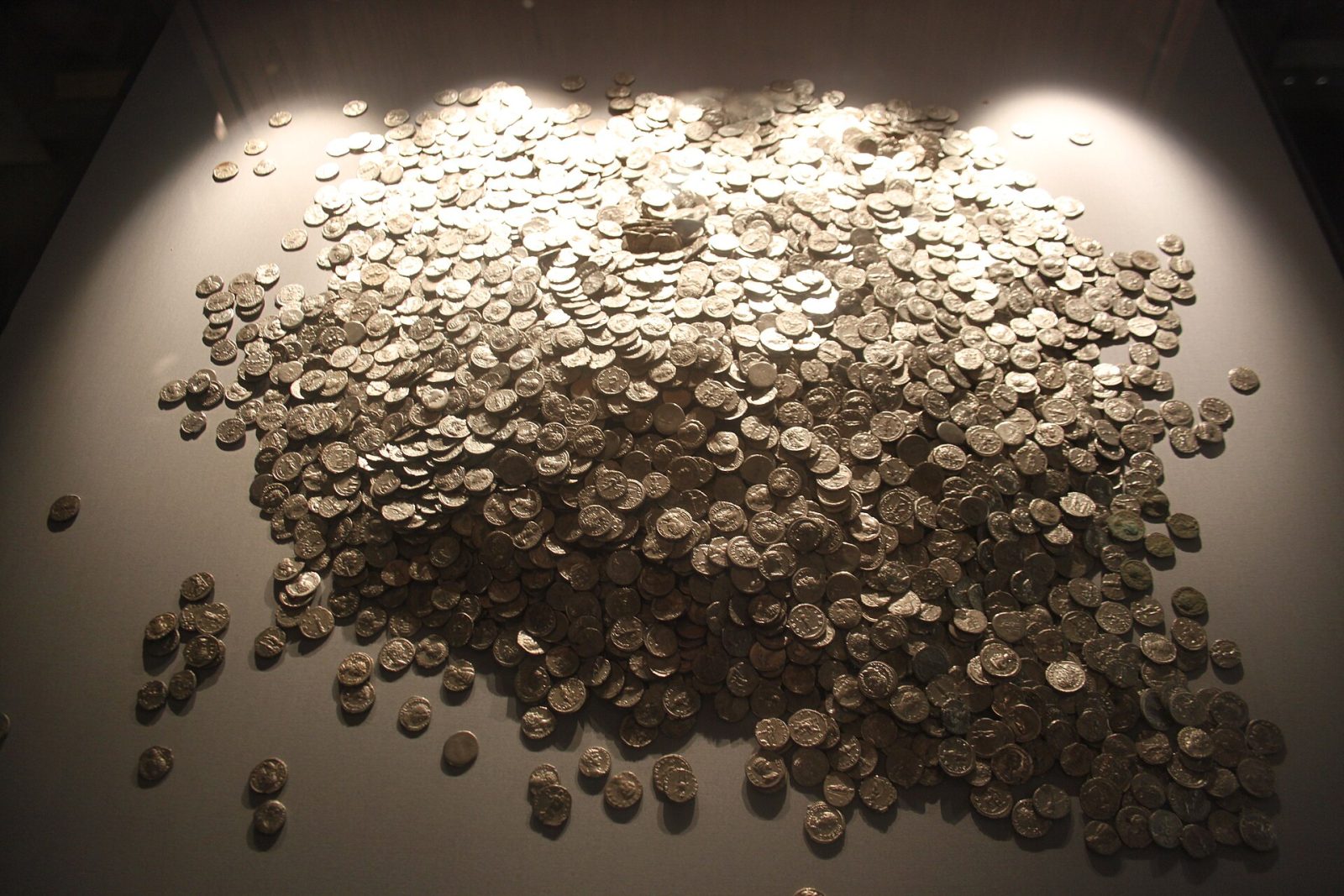
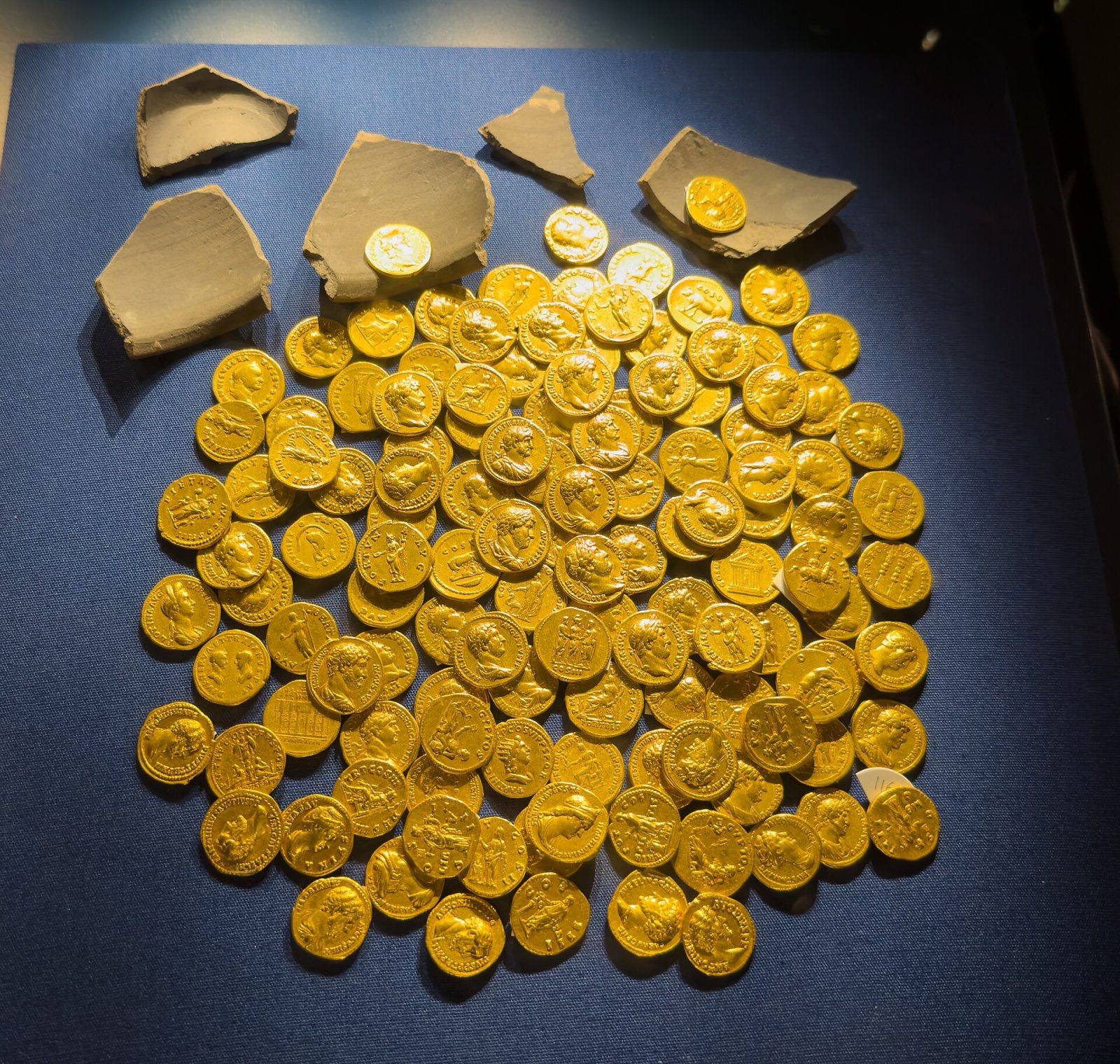
In 1998 two cousins detecting a ploughed field in Somerset found 9,238 Roman silver denarii, one of the largest hoards of denarii ever found in Britain. Excavation showed they had been buried under the floor of an unknown Roman villa.
On 14 September 1998, cousins Kevin and Martin Elliott were metal detecting in a ploughed field at Shapwick, on the Polden Hills in Somerset. Their first coin was near the edge of the field. Following the line of the plough furrow across it, they found a group of about 70 coins, and half an hour later the hoard itself.
It contained 9,238 Roman silver denarii, though other published totals differ slightly. The earliest were struck for Mark Antony's legions around 32 BC, and the latest under the emperor Severus Alexander in about AD 224, which dates the burial. Among them are two coins of Manlia Scantilla, wife of Didius Julianus, who ruled for only a couple of months in AD 193. Most of the coins are in remarkable condition.
About 9,000 of the coins were still where they had been placed, standing on edge in neat rows, which suggests they had been packed in rolls of cloth or leather inside a bag. The finders reported the discovery, and geophysical survey and excavation then revealed that the coins had been buried beneath the floor of a room in a Roman courtyard villa that nobody had known existed.
The hoard was declared Treasure and acquired in 2000 by the Somerset County Museum in Taunton, now the Museum of Somerset, with grants from the National Heritage Memorial Fund and the Art Fund. The total cost was £265,000.
Written for Global Finds from the National Heritage Memorial Fund, the Art Fund, the Journal of Roman Archaeology and other published accounts. Photo: the Shapwick Hoard at the Museum of Somerset, Rodw, Wikimedia Commons, CC BY-SA 3.0.
Approximate location51.15, -2.82View on map
Source: National Heritage Memorial Fund