The Boscoreale Treasure: Roman silver hidden as Vesuvius erupted
Famous find Made about 30 BC to AD 79; buried AD 79 · Found in 1895 See it on the timeline →
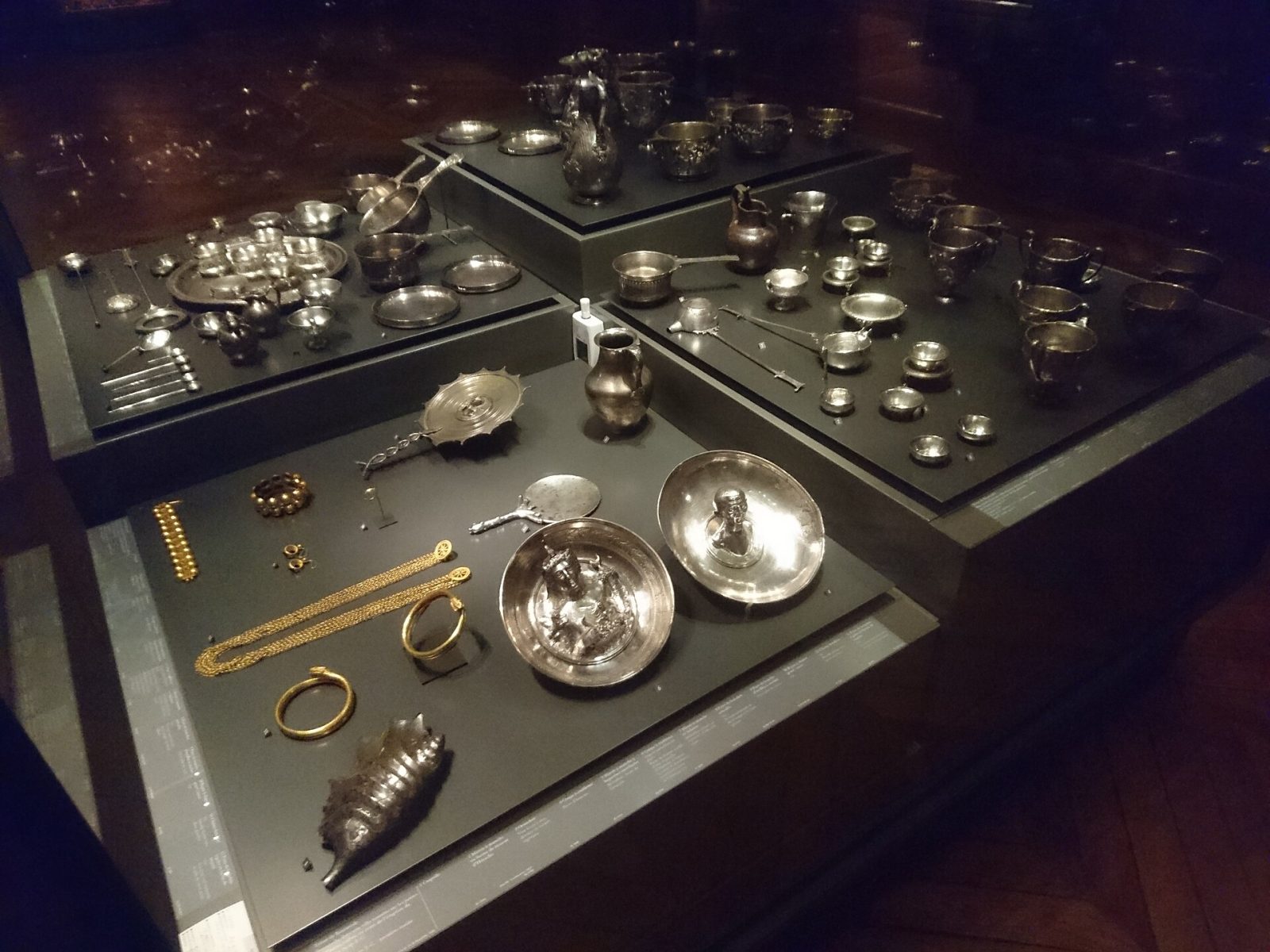
In 1895, digging at a Roman villa near Pompeii uncovered more than a hundred pieces of silver tableware and over a thousand gold coins, hidden in an empty wine vat when Vesuvius erupted in AD 79. Within months it had been sold and given to the Louvre.
In 1895, Vincenzo De Prisco was excavating on his land at Boscoreale, about 3 kilometres from Pompeii, where the remains of a Roman villa, the Villa della Pisanella, lay buried under the ash of Vesuvius. In the part of the villa where grapes were pressed, his workmen found that an empty cistern for wine had been used as a hiding place.
Inside were more than a hundred pieces of silver tableware, together with gold jewellery and more than a thousand gold coins. It seems someone hid the household's valuables there as the eruption of AD 79 began, and never came back for them.
The silver includes some of the finest Roman tableware ever found, most of it made in the late 1st century BC and the early 1st century AD. There are cups decorated with scenes of the emperors Augustus and Tiberius, a dish with a gilded bust often identified as a personification of Africa, and two famous cups covered in skeletons labelled with the names of well-known poets and philosophers, with mottoes urging the drinker to enjoy life while it lasts. Many pieces have their weight engraved underneath, and several are scratched with the name Maxima, perhaps one of their owners.
De Prisco's agent, the Naples dealer Ercole Canessa, sold the silver in June 1895 to Baron Edmond de Rothschild, who gave it to the Louvre that autumn. He kept a few pieces, which his family later gave to the museum as well. The coins were dispersed. Whether taking the treasure out of Italy was legal at the time is still argued over, and the case is often said to have helped bring about Italy's stricter export laws.
The Boscoreale Treasure is on display in the Louvre in Paris. The villa itself was reburied after it had been dug.
Written for Global Finds from François Baratte's inventory of the treasure for the Rothschild collections project, the Pompeii archaeological park and other published accounts. Photo: the Boscoreale Treasure on display in the Louvre, Shonagon, Wikimedia Commons, CC0.
Approximate location40.76, 14.47View on map