The Wickham Market Hoard: 840 Iron Age gold staters from Suffolk
Famous find Struck about 40 BC to AD 15; buried about AD 15 to 20 · Found in 2008 See it on the timeline →
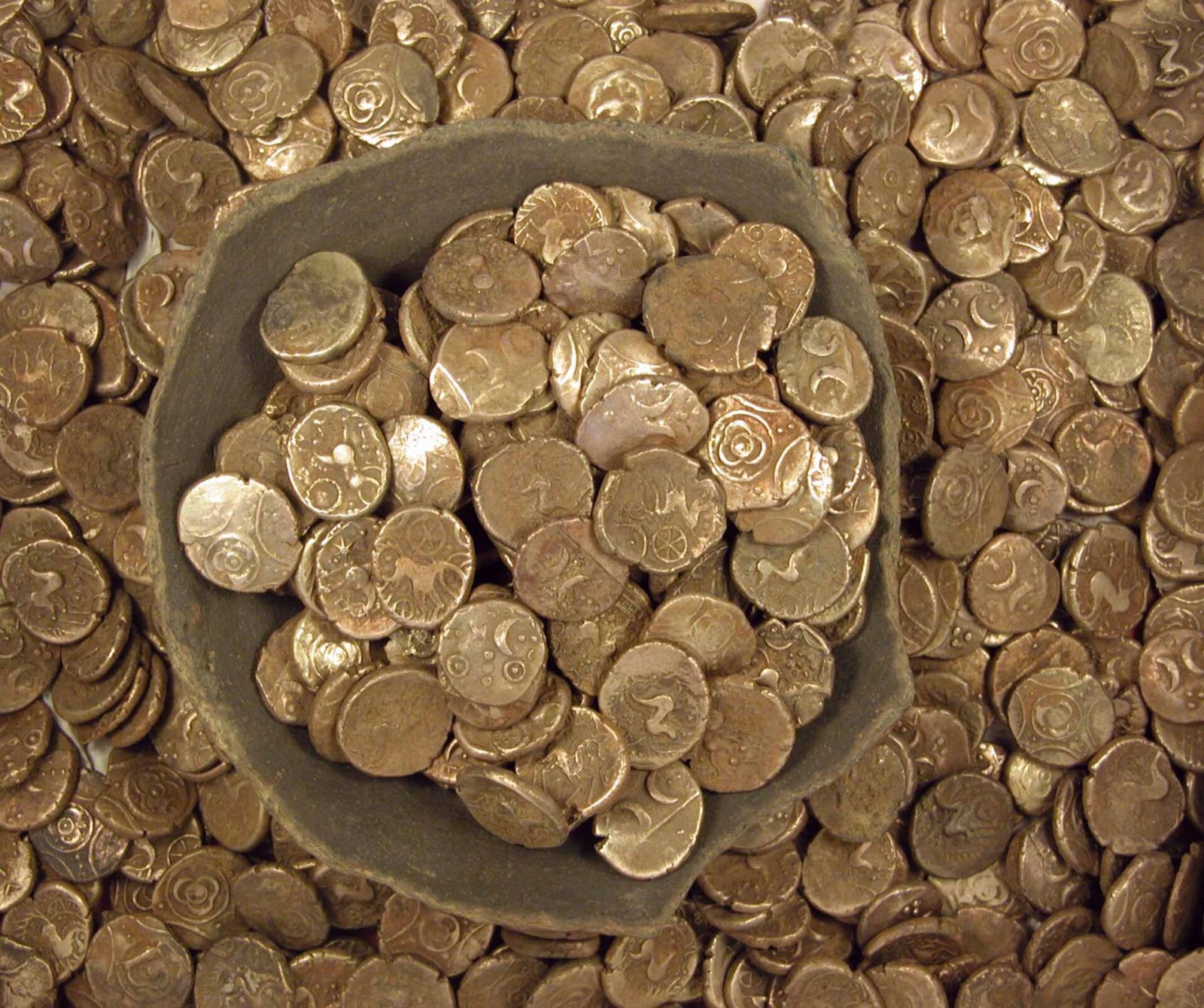
In 2008 a detectorist near Wickham Market in Suffolk found 840 gold staters of the Iceni, buried two generations before Boudica. It is the largest Iron Age gold hoard found in Britain since 1849.
In March 2008, metal detectorist Michael Darke, who was detecting with a friend, Keith Lewis, found an Iron Age gold coin in a field in the parish of Dallinghoo, near Wickham Market in Suffolk. Over the following days the find grew into a hoard of hundreds of gold coins, and it was reported to the Portable Antiquities Scheme.
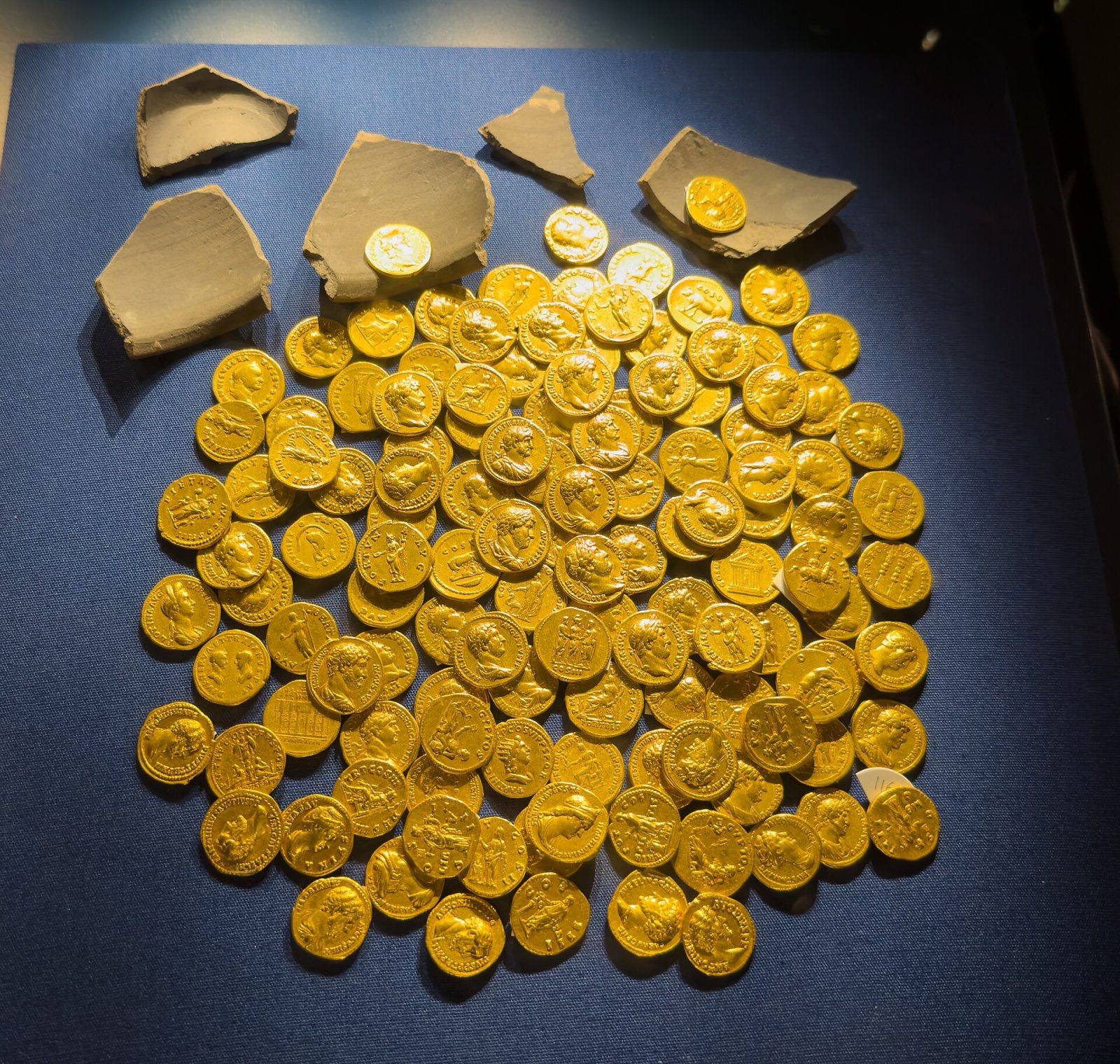
In all there are 840 gold staters, found with the base of the pot that had held them. Archaeologists from Suffolk County Council excavated the site in October 2008, with funding from the British Museum, and recovered more coins that had been scattered by the plough. They found that the hoard had been buried inside an enclosure surrounded by a ditch, which may have been a religious site.
Almost all the coins were struck by the Iceni, the people of what is now Norfolk and Suffolk, with a handful from the Corieltauvi of the East Midlands. They date from about 40 BC to AD 15, and the hoard was buried around AD 15 to 20, two generations before Boudica led the Iceni in revolt against Rome. It weighs about 4.6 kilograms and is the largest Iron Age gold hoard found in Britain since the Whaddon Chase hoard of 1849.
The hoard was declared Treasure, and in 2011 Ipswich Museum acquired it for about £300,000, with grants from the Heritage Lottery Fund, the Art Fund, the V&A Purchase Grant Fund and others. Ipswich Museum is currently closed for a major redevelopment, so check before planning a visit to see it.
Written for Global Finds from the Art Fund, the National Lottery Heritage Fund, the Portable Antiquities Scheme and other published accounts. Photo: the Wickham Market Hoard, The Portable Antiquities Scheme, Wikimedia Commons, CC BY 2.0.
Approximate location52.15, 1.31View on map
Source: Art Fund