The Torrs Pony-cap: Iron Age art from a Galloway bog that Sir Walter Scott kept
Famous find Made about 300 to 200 BC · Found in 1812 See it on the timeline →
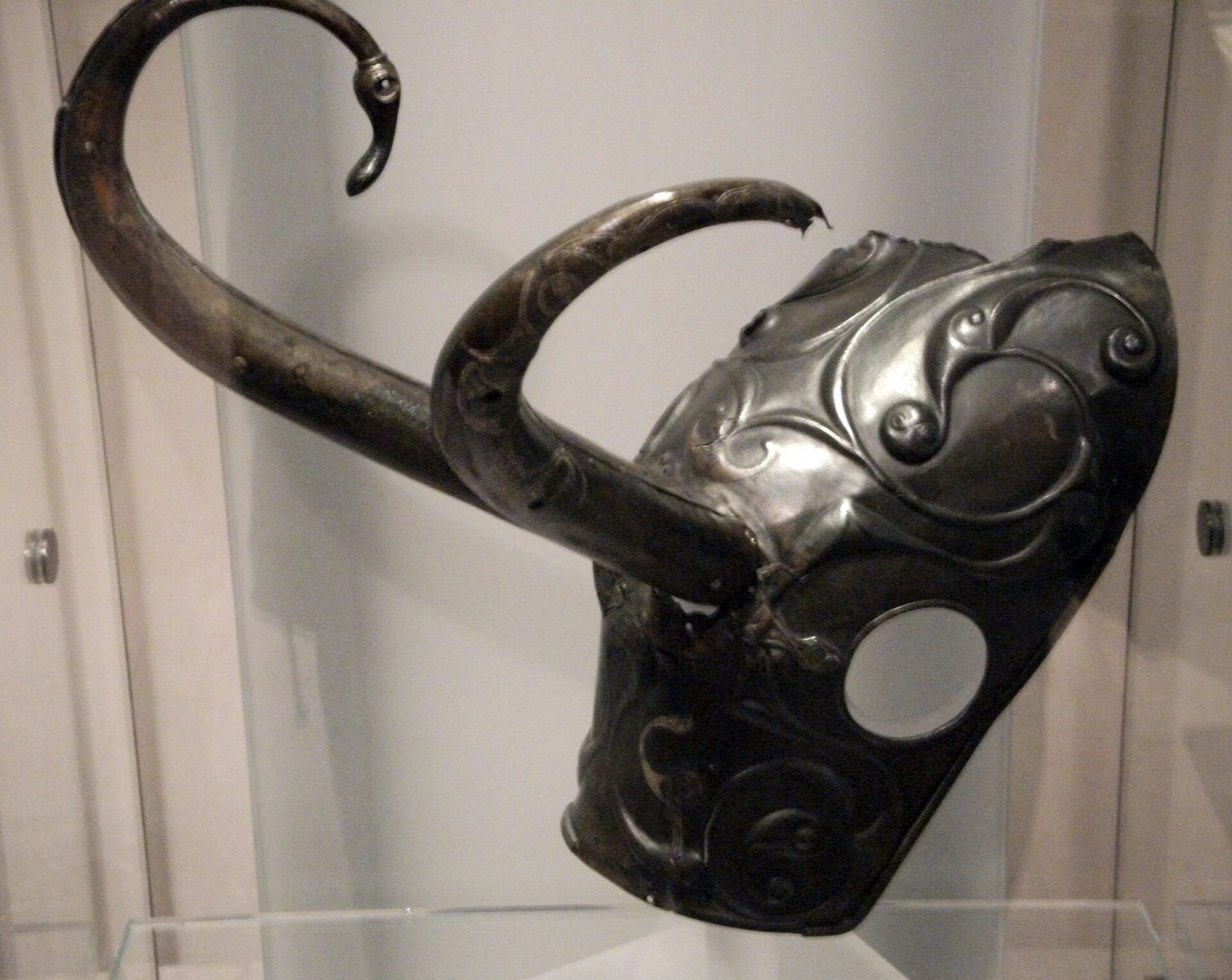
Early in the 19th century workmen draining a bog at Torrs, near Castle Douglas, found a bronze cap with two curving horns. It passed to Sir Walter Scott, and is now one of the masterpieces of Iron Age art in the National Museum of Scotland.
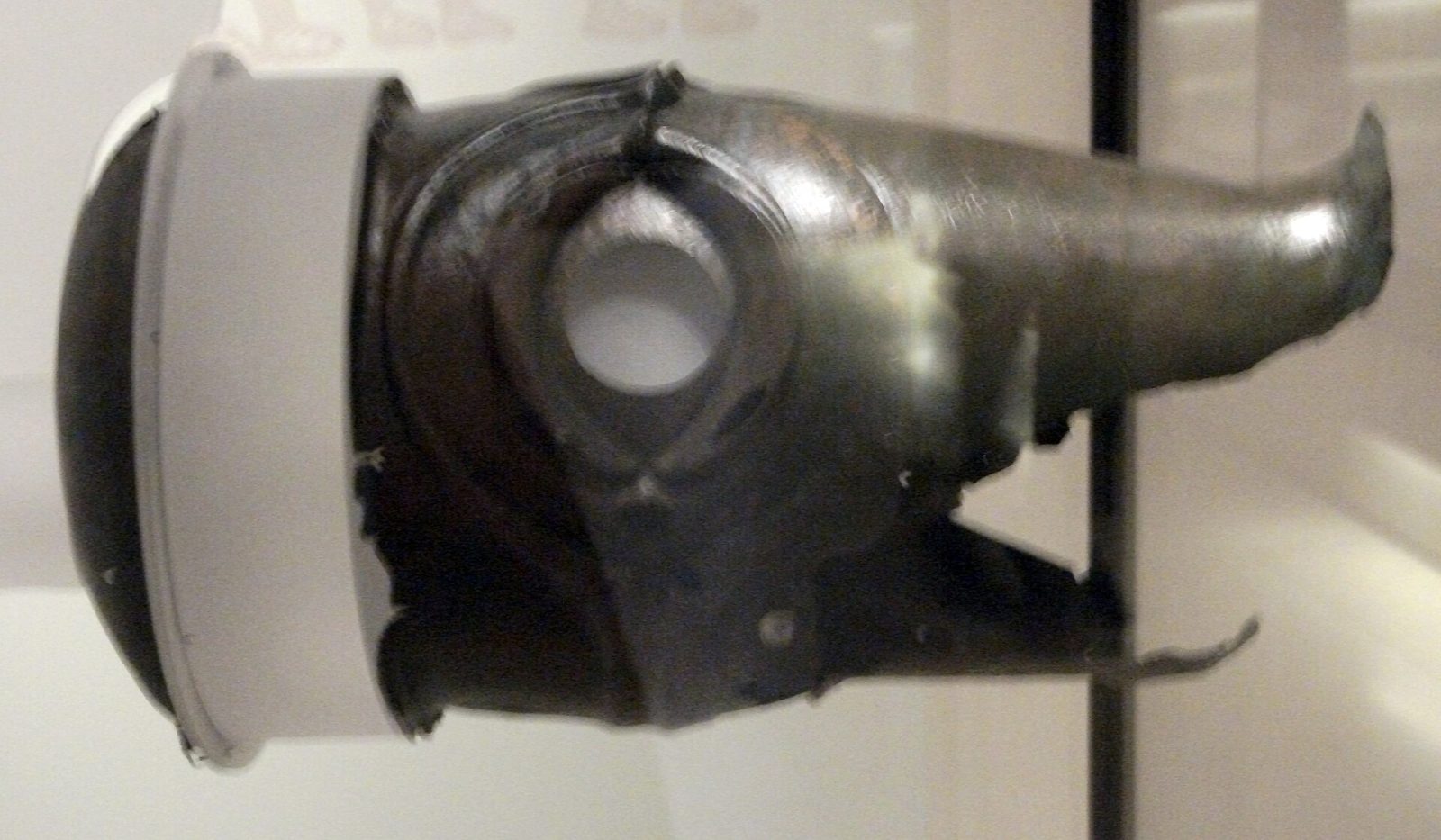
Early in the 19th century, workmen draining a boggy hollow on the farm of Torrs, in the parish of Kelton near Castle Douglas in Galloway, dug up a strange object of thin bronze: a cap shaped to fit an animal's head, with two holes for the eyes and two long, curving horns. The National Museum of Scotland gives the date as 1812; the local antiquarian Joseph Train, who acquired it, later wrote that it was found about 1820. The workmen who found it were never named.
Train, an exciseman with a passion for antiquities, made a drawing of it and gave it to his friend Sir Walter Scott, who displayed it at his home at Abbotsford, on a wooden stand inscribed with the place where it was found. Train thought it was a mask worn by a mummer. Only in 1867, after Scott's death, was it recognised as a masterpiece of Iron Age Celtic art.
The cap is made of two pieces of sheet bronze riveted together, about 27 centimetres long, and decorated with raised curving patterns of leaves and spirals. Hidden in the curves are stylised birds' heads, which only appear when you look closely. The horns are engraved with flowing designs, including a tiny human face, and the complete horn ends in the head of a bird, probably a duck. The cap had been damaged and patched three times in antiquity, each time with a small decorated plate, which shows how much it was valued. It is so small it could only have fitted a little pony.
What it actually was has been argued over for decades. In 1955 the archaeologists Richard Atkinson and Stuart Piggott took it apart and argued that the horns had come from something else, perhaps drinking horns, and been added to the cap later. The National Museum now says a newly discovered contemporary newspaper report shows that the horns were attached to the cap in the Iron Age. The museum dates the cap to about 300 to 200 BC, and in 2016 its archaeologists excavated around the findspot to learn more about where it had lain.
The Torrs Pony-cap is in the National Museum of Scotland in Edinburgh, and a replica is at Abbotsford.
Written for Global Finds from J. A. Smith's description in the Proceedings of the Society of Antiquaries of Scotland (1867), R. J. C. Atkinson and S. Piggott's study in Archaeologia (1955) and the National Museum of Scotland. Photo: the Torrs Pony-cap and horns in the National Museum of Scotland, Johnbod, Wikimedia Commons, CC BY-SA 3.0.
Approximate location54.93, -3.91View on map
Source: Proceedings of the Society of Antiquaries of Scotland