The Varna gold: the oldest worked gold in the world
Famous find Buried about 4600 to 4350 BC (Copper Age) · Found in 1972 See it on the timeline →
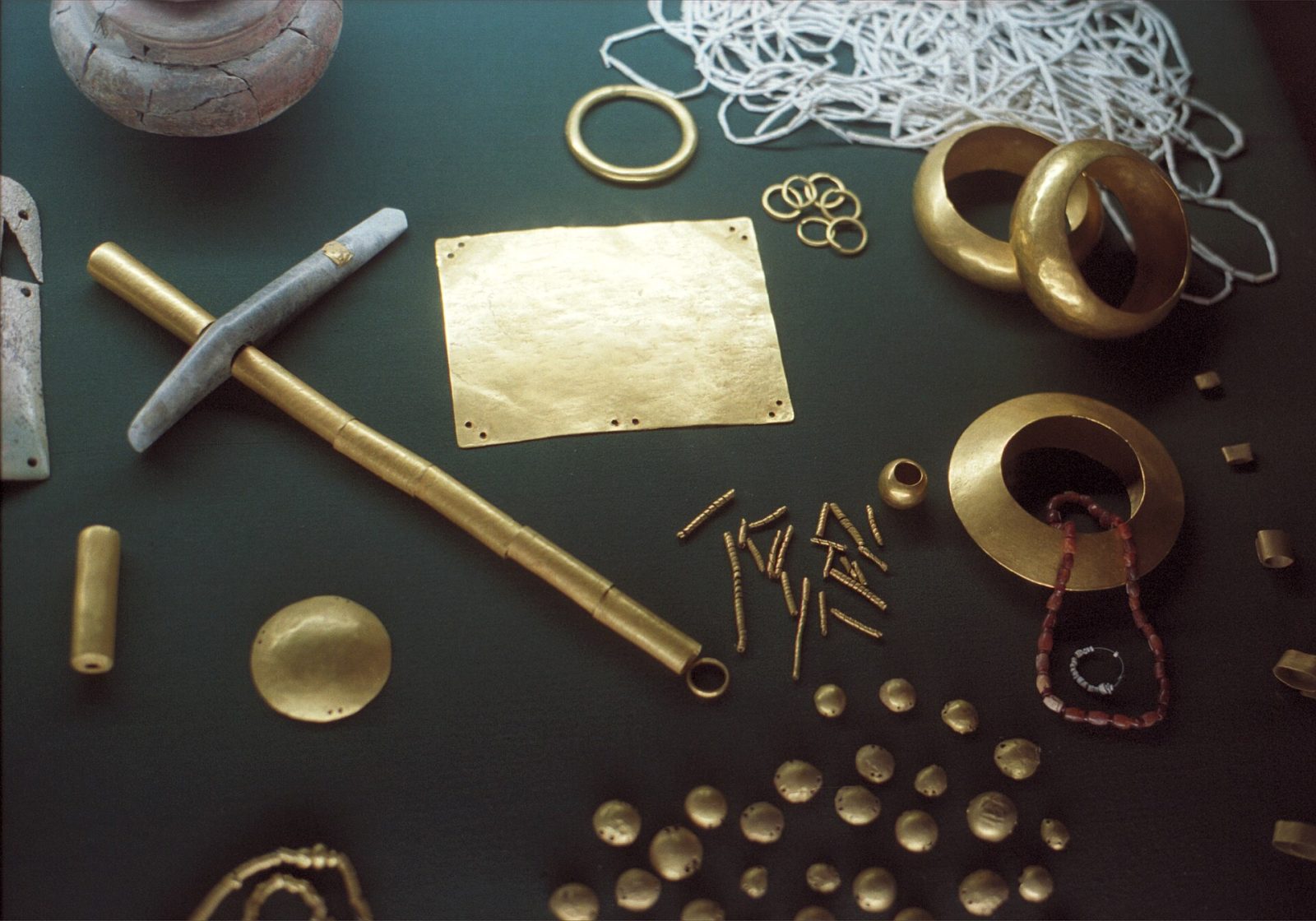
In 1972 a young excavator driver digging a cable trench in Varna, Bulgaria, uncovered a Copper Age cemetery full of gold. Made around 4500 BC, it is the oldest worked gold yet found anywhere.
On 22 October 1972, Raycho Marinov, a 22-year-old excavator operator, was digging a trench for an electricity cable in the western industrial zone of Varna, on Bulgaria's Black Sea coast, a few hundred metres from Lake Varna, when he noticed gold, copper and flint objects in the soil. He took some of them to the museum in Dalgopol, whose founder recognised their importance, and archaeologists from the Varna museum came to collect them.
The site turned out to be a cemetery of the Copper Age. Excavations led by Mihail Lazarov and Ivan Ivanov continued, with breaks, until 1991 and uncovered 294 graves, with perhaps 30 per cent of the cemetery still unexcavated. The graves held more than 3,000 gold objects weighing around 6 kilograms in all, along with copper tools, flint blades, pottery and bracelets made from Spondylus shells. Some of the richest graves held no body at all.
Radiocarbon dating published in 2018 shows that the cemetery was in use for a few generations, from about 4600 to 4350 BC. That makes the Varna gold the oldest worked gold yet found anywhere in the world, more than 3,000 years older than the treasures of Tutankhamun.
The most famous burial, grave 43, was that of a man aged about 40 to 45. He was buried with around 990 gold objects weighing about 1.5 kilograms, among them heavy gold arm rings, plaques and a stone axe or sceptre with a handle sheathed in gold. He has been called a chieftain or prince, and his grave is often seen as early evidence of great differences in wealth and power, though what his role actually was is still debated.
Most of the gold is in the Varna Archaeological Museum, which displays grave 43 as a reconstructed burial. Some pieces are in the National History Museum in Sofia, and the gold has toured museums abroad since the 1970s.
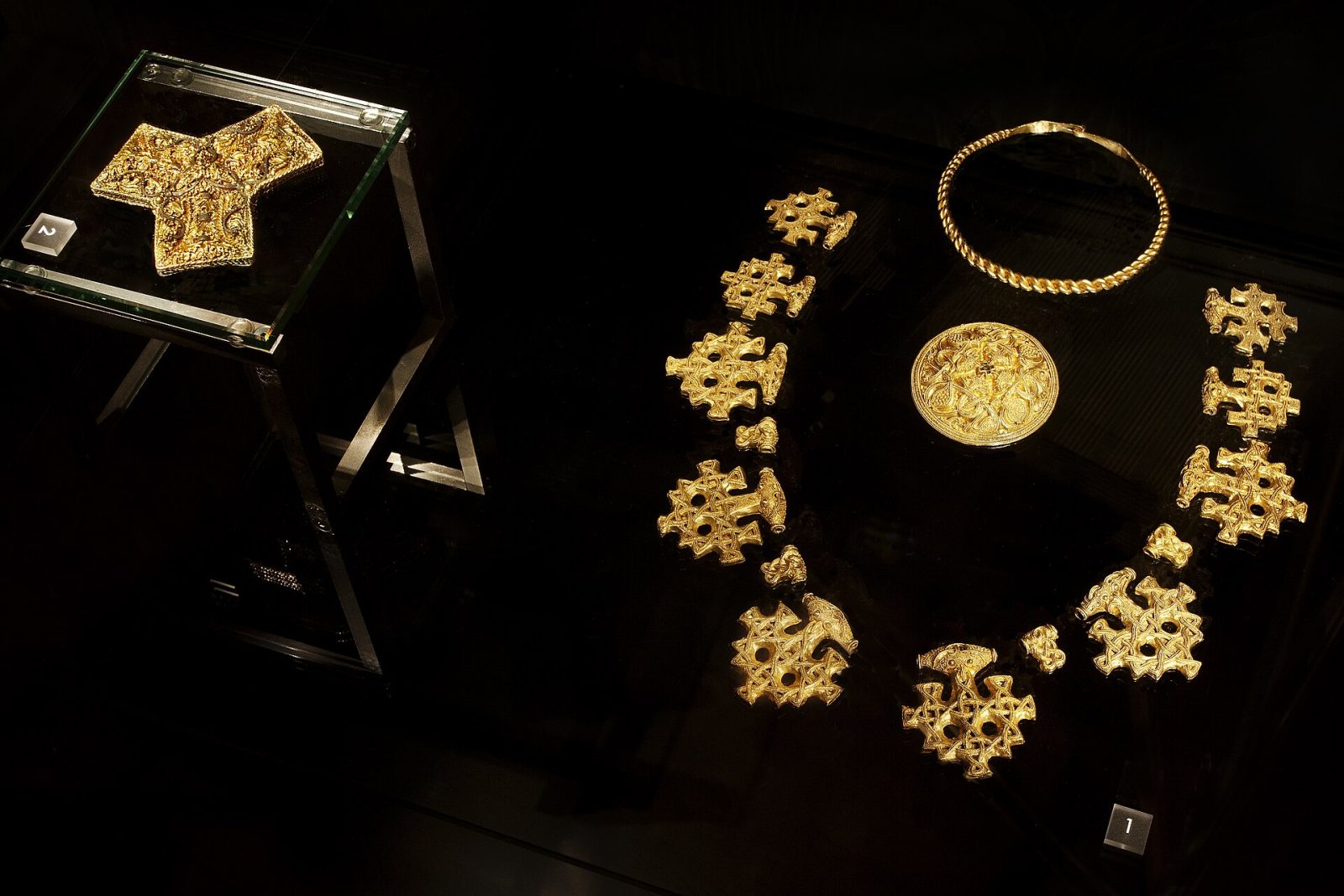
Written for Global Finds from the official Varna city website, the Bulgarian News Agency, the journal Radiocarbon and other published accounts. Photo: gold from the Varna cemetery in the Varna Archaeological Museum, Zde, Wikimedia Commons, CC BY-SA 4.0.
Approximate location43.21, 27.86View on map
Source: Visit Varna (City of Varna)