The Didcot Hoard: 126 Roman gold coins in a pot
Famous find Coins struck AD 64 to 160; buried about AD 160 · Found in 1995 See it on the timeline →
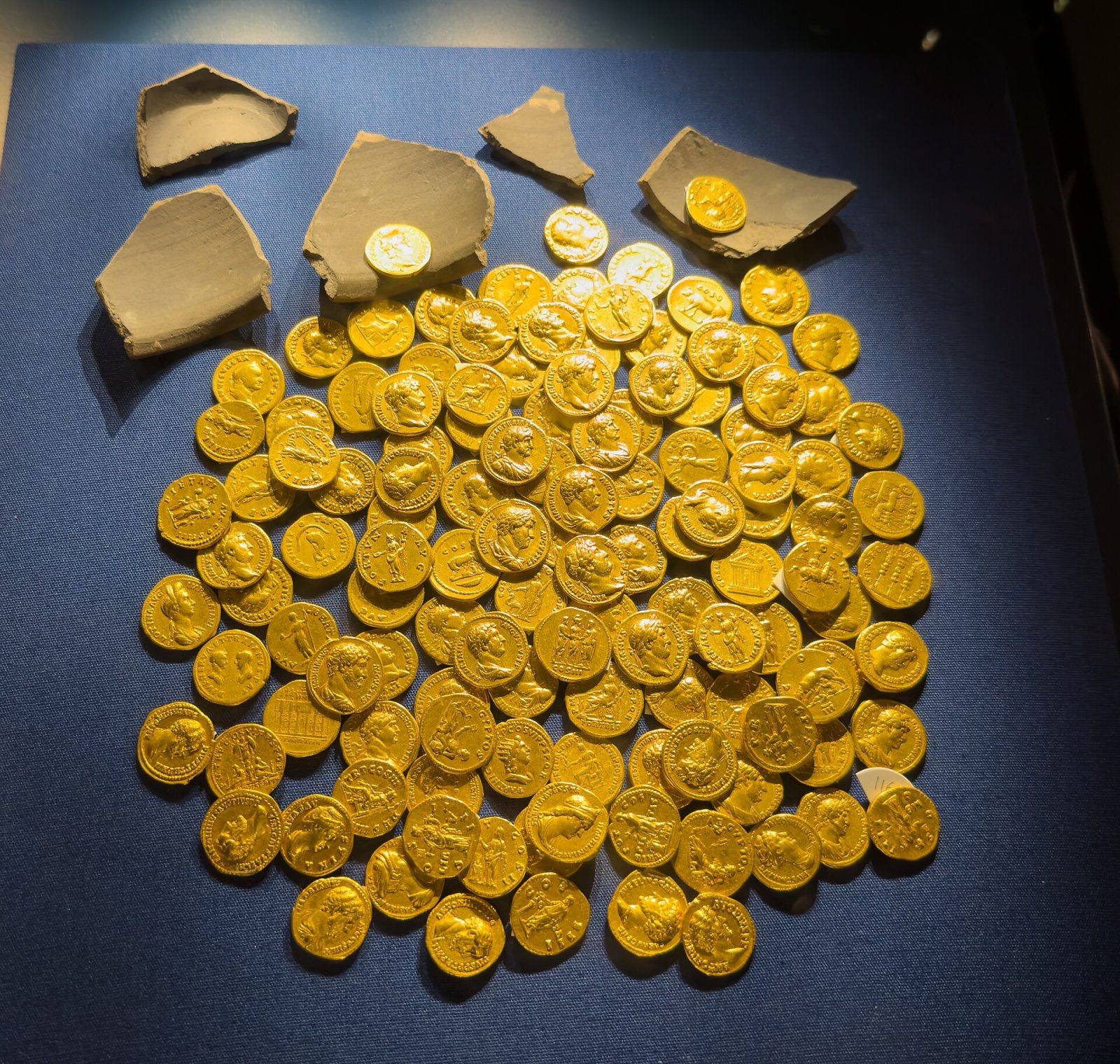
In 1995 a metal detectorist near Didcot in Oxfordshire found a small pot holding 126 Roman gold aurei, buried around AD 160. It was worth about ten years' pay for a Roman soldier.
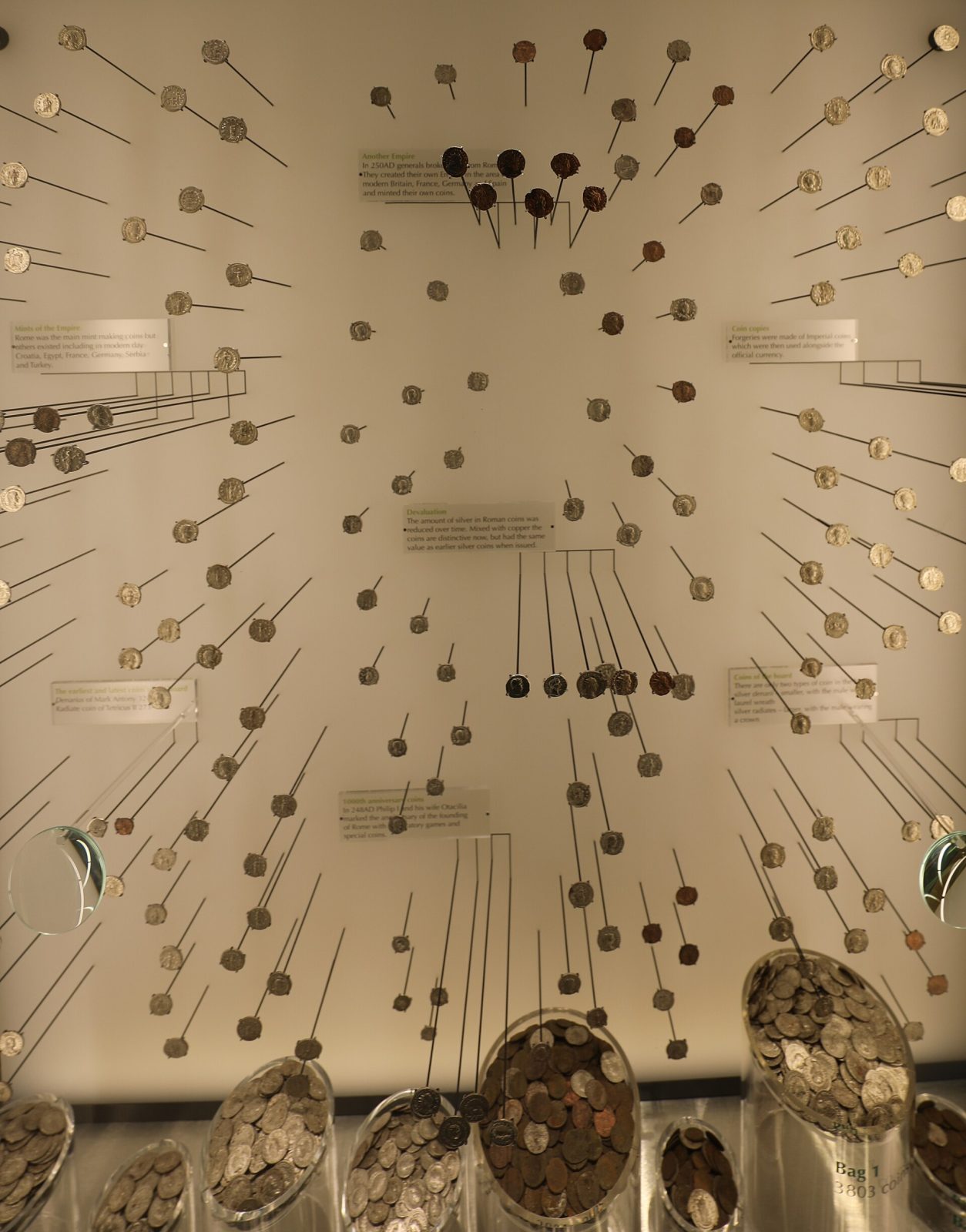
In April 1995, a metal detectorist searching farmland near Didcot in Oxfordshire found Roman gold coins. Together they made up a hoard of 126 gold aurei, buried in a small grey pottery jar made in the Oxford area, some pieces of which survive. The finder showed the coins to the auction house Bonhams, which sent them to the British Museum.
The coins were struck under eight emperors, from Nero to Antoninus Pius, and show thirteen rulers and members of the imperial family, including the empresses Sabina, Plotina and Faustina. All but two were minted in Rome: one came from Lyon and one from Antioch. The earliest dates from around AD 64 and the latest from AD 159 or 160, so the hoard was buried around AD 160. The British Museum estimates it was worth about ten and a half years' pay for a Roman soldier, and suggests it may have been a bonus, a gift or an offering that its owner never came back for.
It was the largest group of Roman gold coins found in Britain since 160 aurei were dug up at Corbridge in 1911. An inquest in December 1995 declared it treasure trove, under the law in force before the Treasure Act of 1996.
The British Museum acquired the hoard in 1996 for £141,850, with help from the National Heritage Memorial Fund, the Art Fund and others. It has been shown on loan at the Ashmolean Museum in Oxford, not far from where it was found.
Written for Global Finds from Oxford University's Coin Hoards of the Roman Empire database, the Art Fund, the National Heritage Memorial Fund and other published accounts. Photo: the Didcot Hoard at the Ashmolean Museum, Mike Peel, Wikimedia Commons, CC BY-SA 4.0.
Approximate location51.61, -1.28View on map
Source: Coin Hoards of the Roman Empire (University of Oxford)