The Beau Street Hoard: 17,577 Roman coins in eight bags under Bath
Famous find Coins struck 32 BC to AD 274; buried about AD 274 · Found in 2007 See it on the timeline →
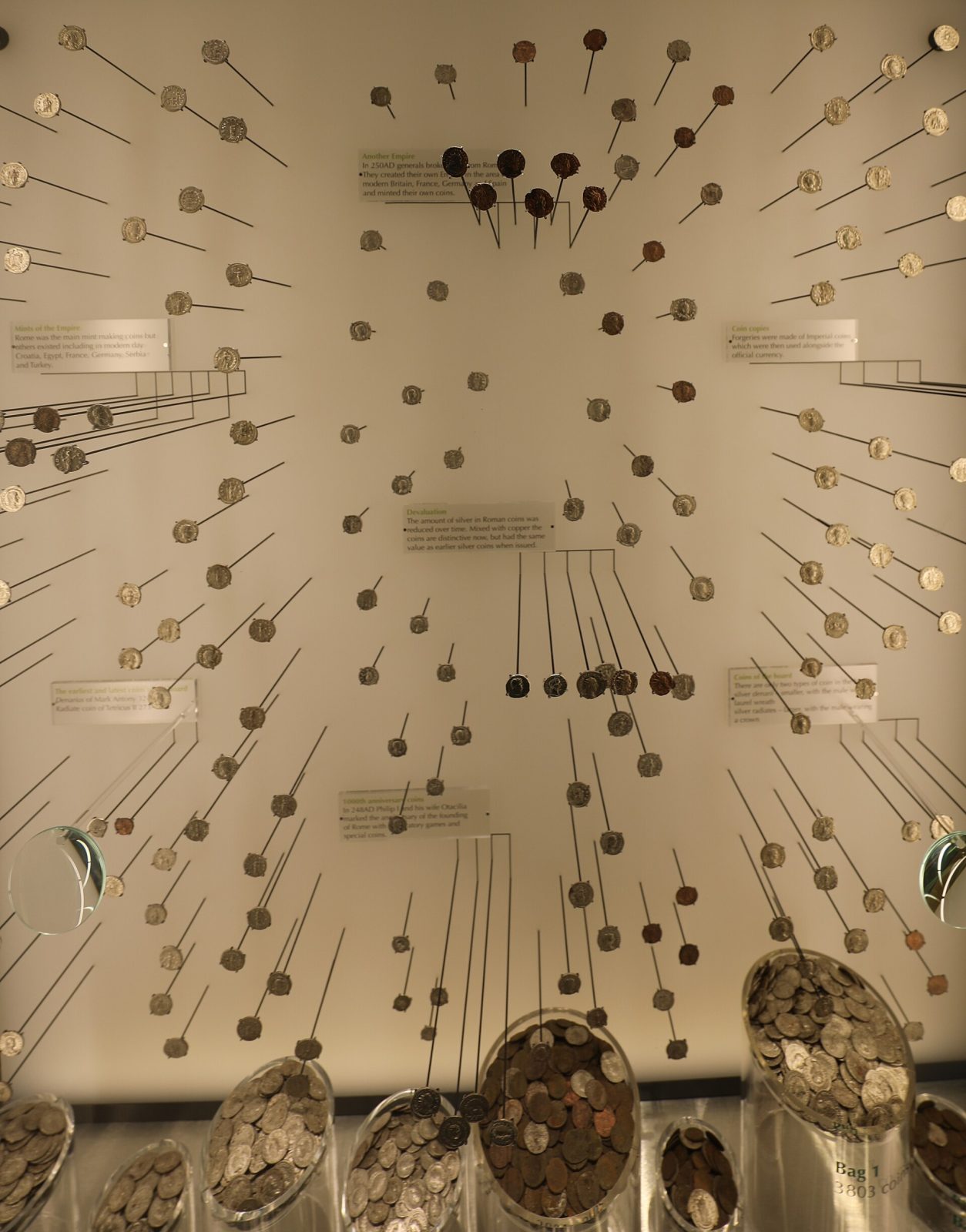
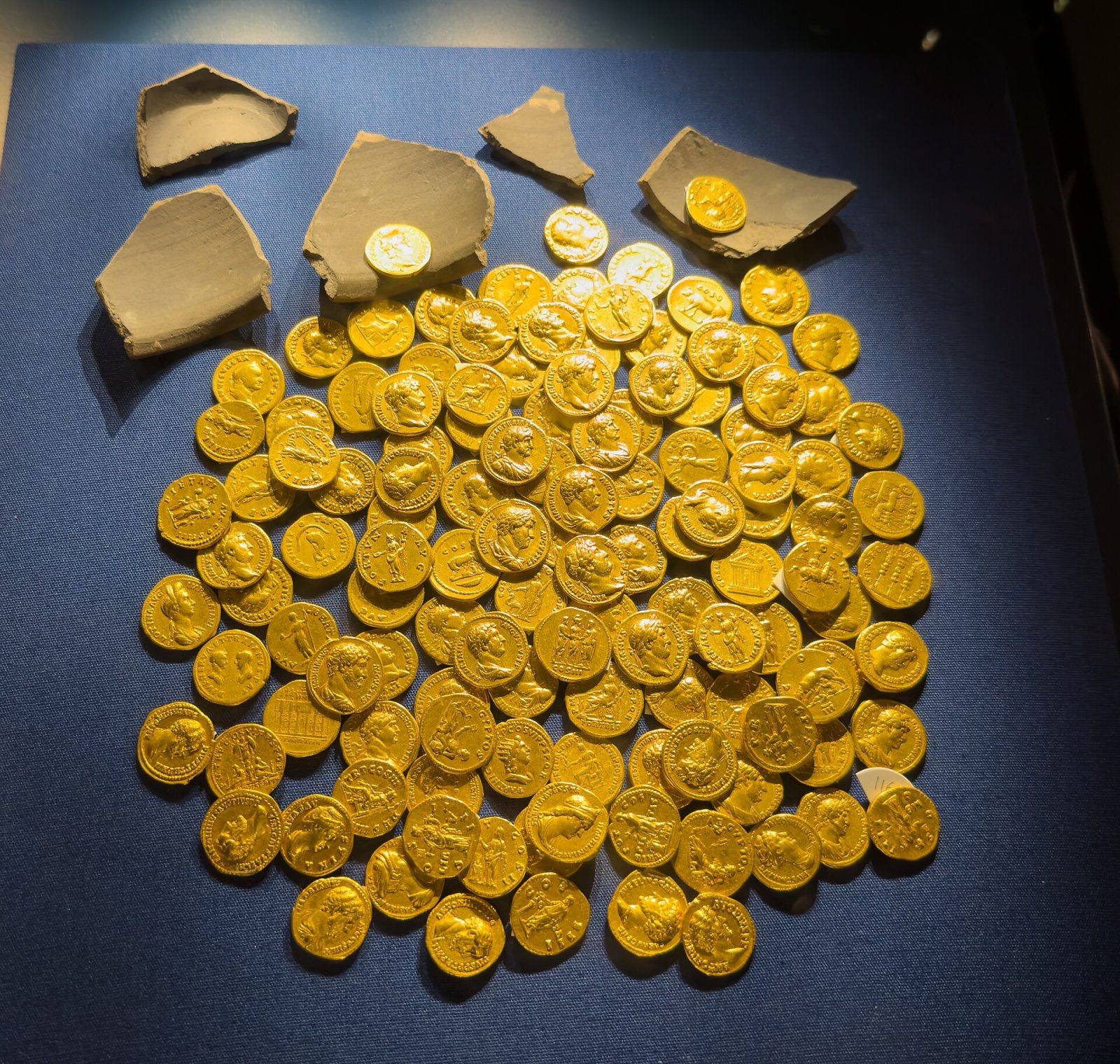
In 2007 archaeologists digging before a hotel was built in Bath found a block of Roman silver coins under a floor, 150 metres from the Roman Baths. It held 17,577 coins packed in eight leather bags.
In November 2007, archaeologists from Cotswold Archaeology were excavating on Beau Street in the centre of Bath, ahead of work on a new hotel, when they found a mass of corroded coins in a small pit under the floor of a Roman building, beside a wall. The site is only about 150 metres from the Roman Baths.
The coins had fused into a solid block weighing about 109 kilograms. Rather than dig them out on site, the archaeologists lifted the whole block, crated it and craned it out, so that it could be taken apart under laboratory conditions. Scans showed bags inside, and when conservators at the British Museum took the block apart they found that the coins had been packed in eight separate leather bags. Some of the leather had survived because copper in the coins had stopped it from rotting.
There were 17,577 silver coins in all, from a denarius struck for Mark Antony's legions around 32 BC to coins of about AD 274, when the hoard was buried. That was a time of crisis for the Roman Empire, when Britain was part of a breakaway state known as the Gallic Empire. It is the largest hoard ever found in a Roman town in Britain.
The hoard was declared Treasure, and the Roman Baths raised the money to buy it, with support from the Heritage Lottery Fund and donations from the public. The coins went on display at the Roman Baths in 2015, in the gallery about the people of Roman Bath, Aquae Sulis.
Written for Global Finds from the National Lottery Heritage Fund, Cotswold Archaeology, the BBC and other published accounts. Photo: the Beau Street Hoard on display at the Roman Baths, Geni, Wikimedia Commons, CC BY-SA 4.0.
Approximate location51.38, -2.36View on map
Source: National Lottery Heritage Fund