The Vix Grave: a Celtic princess, the largest bronze vessel of the ancient world, and a stolen torc
Famous find Buried around 500 BC · Found in 1953 See it on the timeline →
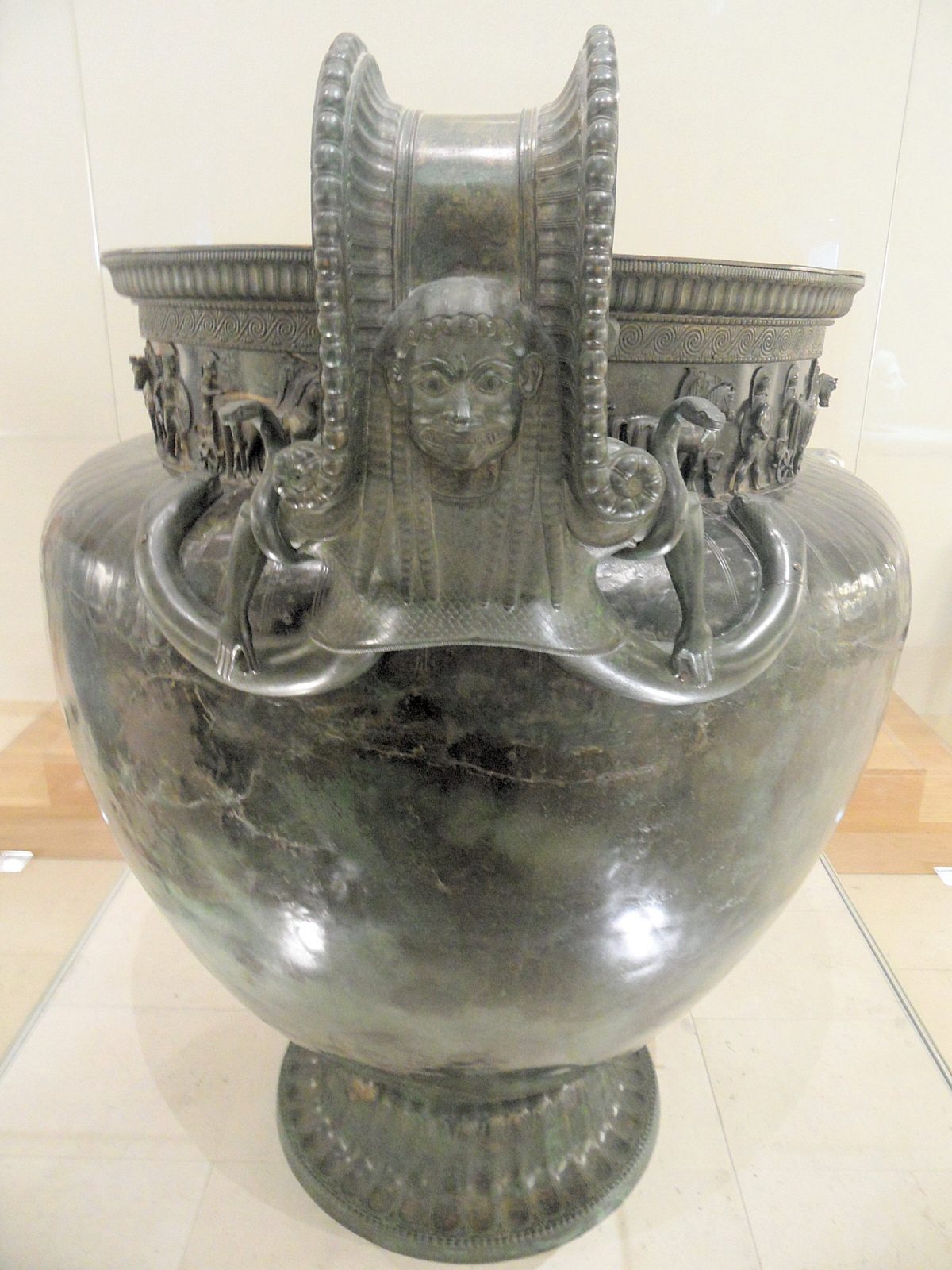
In 1953 archaeologists in Burgundy opened the grave of a Celtic woman buried around 500 BC with a wagon, a gold torc and a Greek bronze krater 1.64 metres tall. In July 2026 thieves stole the torc from the museum.
Between Christmas 1952 and the New Year, Maurice Moisson, a local farmer with an interest in archaeology, noticed the remains of a burial mound in the plain at the foot of Mont Lassois, near the village of Vix in Burgundy, about 6 kilometres north of Châtillon-sur-Seine. In January 1953 he and René Joffroy excavated its central chamber.
Inside lay a woman, buried around 500 BC on the body of a dismantled four-wheeled wagon decorated with bronze, its wheels set along the wall. She wore a gold torc, bracelets of lignite and amber, brooches and a necklace of amber and stone. Around her were vessels for serving wine: a silver bowl, two Athenian pottery cups, an Etruscan bronze jug and basins, and the largest of all, a bronze krater.
The Vix Krater is the largest known bronze vessel from the ancient world. It stands 1.64 metres high, holds 1,100 litres and weighs 208.6 kilograms, yet its body is a single sheet of hammered bronze only about 1.2 millimetres thick. Its handles carry Gorgon heads, and a frieze of warriors and four-horse chariots runs around its neck. It was made by Greek craftsmen in southern Italy around 530 BC, and its handles, foot and lid could be taken off, perhaps so it could be carried north. How it reached Burgundy is still debated; the hillfort on Mont Lassois is often linked to trade along the Seine.
For a time some experts doubted that the skeleton was a woman's, until a study in 1980 confirmed it. The grave was reopened in 2019, and nearly 2,000 small fragments missed in 1953 were recovered, including pieces of the wagon, more brooches and fragments of the krater.
The grave goods are displayed at the Musée du Pays Châtillonnais – Trésor de Vix in Châtillon-sur-Seine. On 24 July 2026, two men who had entered the museum as visitors smashed the case holding the gold torc, which weighs about 480 grams and ends in tiny winged horses, and escaped with it within minutes. One suspect has been arrested and charged, but in the latest reports we have seen, the torc had not been recovered. The krater was not taken.
Written for Global Finds from the Musée du Pays Châtillonnais, the French Ministry of Culture, the Gendarmerie nationale and other published accounts. Photo: the Vix Krater in the Musée du Pays Châtillonnais, Ivory, Wikimedia Commons, public domain.
Approximate location47.90, 4.54View on map