The Gjermundbu Helmet: the only Viking helmet ever found almost complete
Famous find Buried about AD 950 to 1000 · Found in 1943 See it on the timeline →
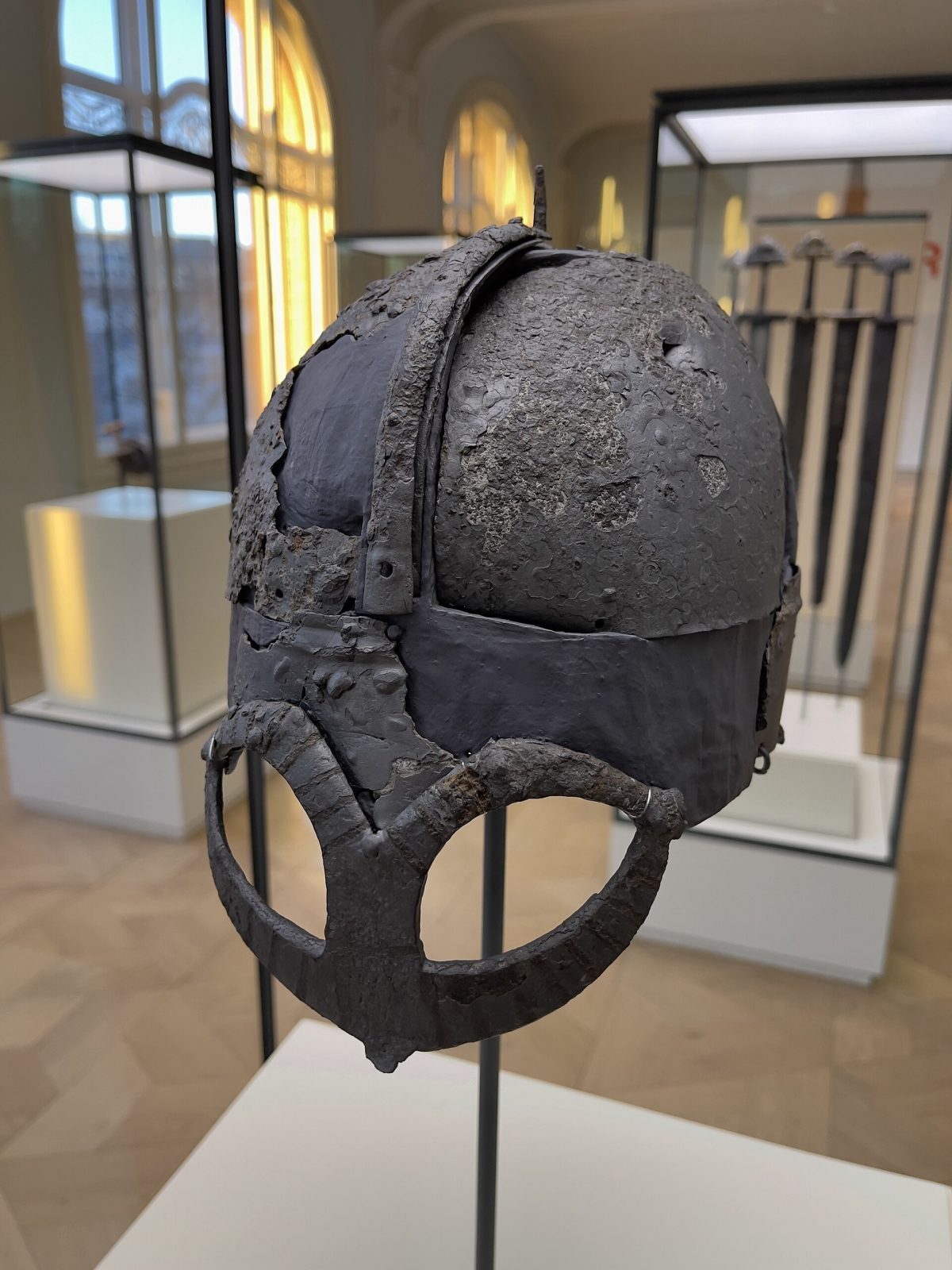
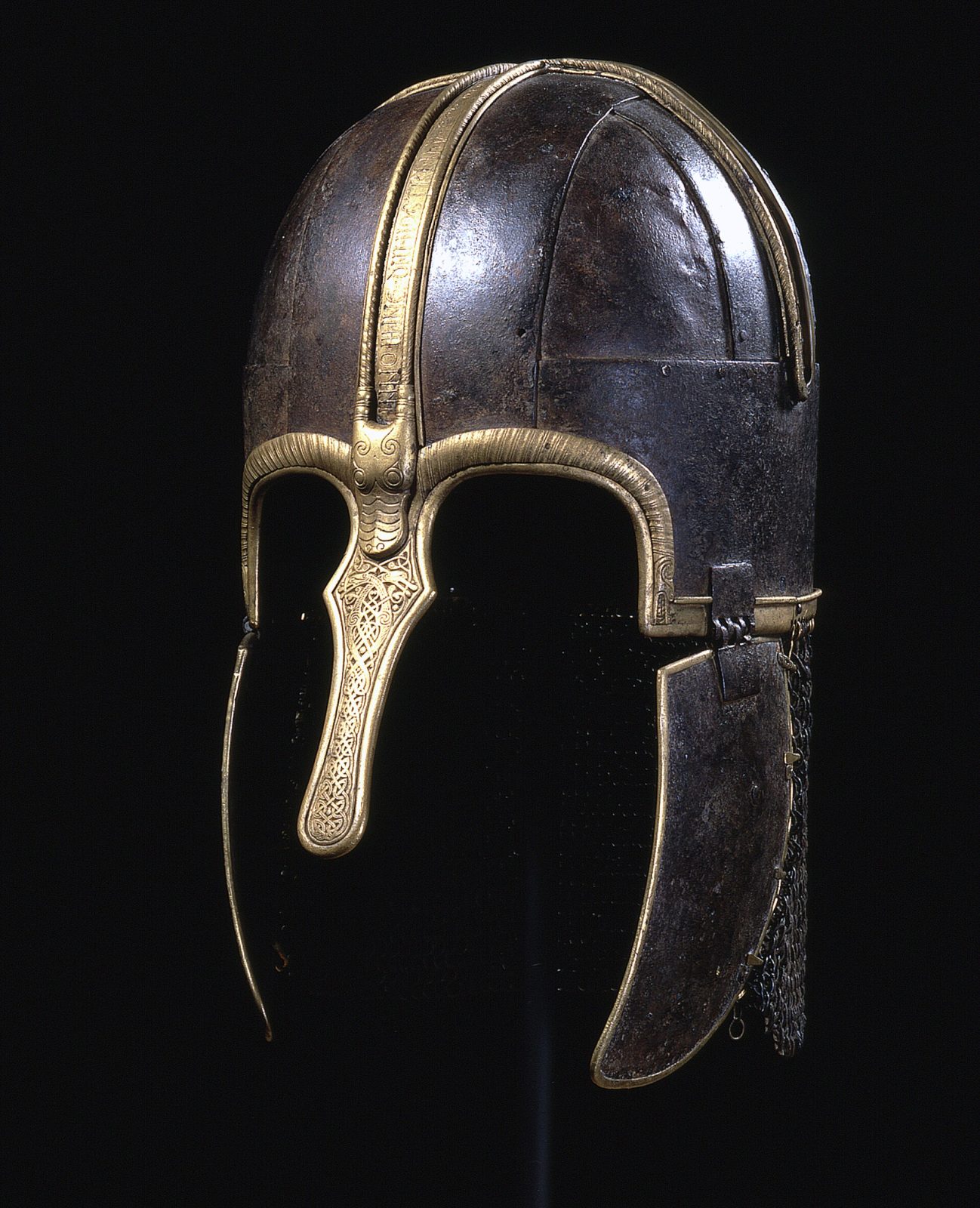
In March 1943 a young Norwegian clearing a mound on his family's farm to build a house found a Viking warrior's grave with a sword, mail shirt and an iron helmet. It is still the only nearly complete helmet known from the Viking Age.
On the afternoon of 29 March 1943, in the middle of the German occupation of Norway, Gunnar Gjermundbo was clearing a long mound at Gjermundbu farm in Haugsbygd, Ringerike, north-west of Oslo, to make room for a house for his parents. In the mound he found a mass of iron. A local historian telephoned the university's museum of antiquities in Oslo the next day, and two archaeologists, Sverre Marstrander and Charlotte Blindheim, came to investigate in early April. Wartime restrictions meant there was no full excavation; the finds were laid out on the floor of the family's living room, where they covered half of it.
It was the cremation grave of a Viking warrior and his horses. The grave goods had been heaped together and covered with an iron cauldron turned upside down. They included a sword with silver-decorated fittings, axes, spearheads, arrowheads, four shield bosses, stirrups, spurs and horse bits, sledge fittings, bone dice and gaming pieces, and a frying pan. There was also a mail shirt, and an iron helmet with a rounded cap and a guard for the eyes and nose. A local newspaper reported that "spectacles" had been found.
The helmet is the only Viking Age helmet ever found in a state close to complete. Despite the horned helmets of popular imagination, real Viking helmets are extraordinarily rare, and fragments of only a handful are known. Gjermundbu is also the only Viking grave in Scandinavia to contain both a helmet and a mail shirt. The museum dates the grave to about 950 to 1000.
The burial was long thought to contain two men, but a study published in 2021 found the remains of one robust adult, probably a man, and suggested that he was a local chieftain or petty king, with close links to the warrior graves of the Rus' in eastern Europe. The family received 250 kroner for the find.
The helmet was recently taken apart, X-rayed, scanned and remounted, and is on display in the Viking exhibition at the Museum of Cultural History in Oslo.
Written for Global Finds from F.-A. Stylegar and R. Børsheim's study of the Gjermundbu grave in the journal Viking (2021) and the Museum of Cultural History, University of Oslo. Photo: the Gjermundbu helmet in the Museum of Cultural History, Oslo, Wolfmann, Wikimedia Commons, CC BY-SA 4.0.
Approximate location60.18, 10.35View on map