The Benty Grange Helmet: the boar-crested helmet from a Peak District barrow
Famous find Made in the 7th century AD (about 650) · Found in 1848 See it on the timeline →
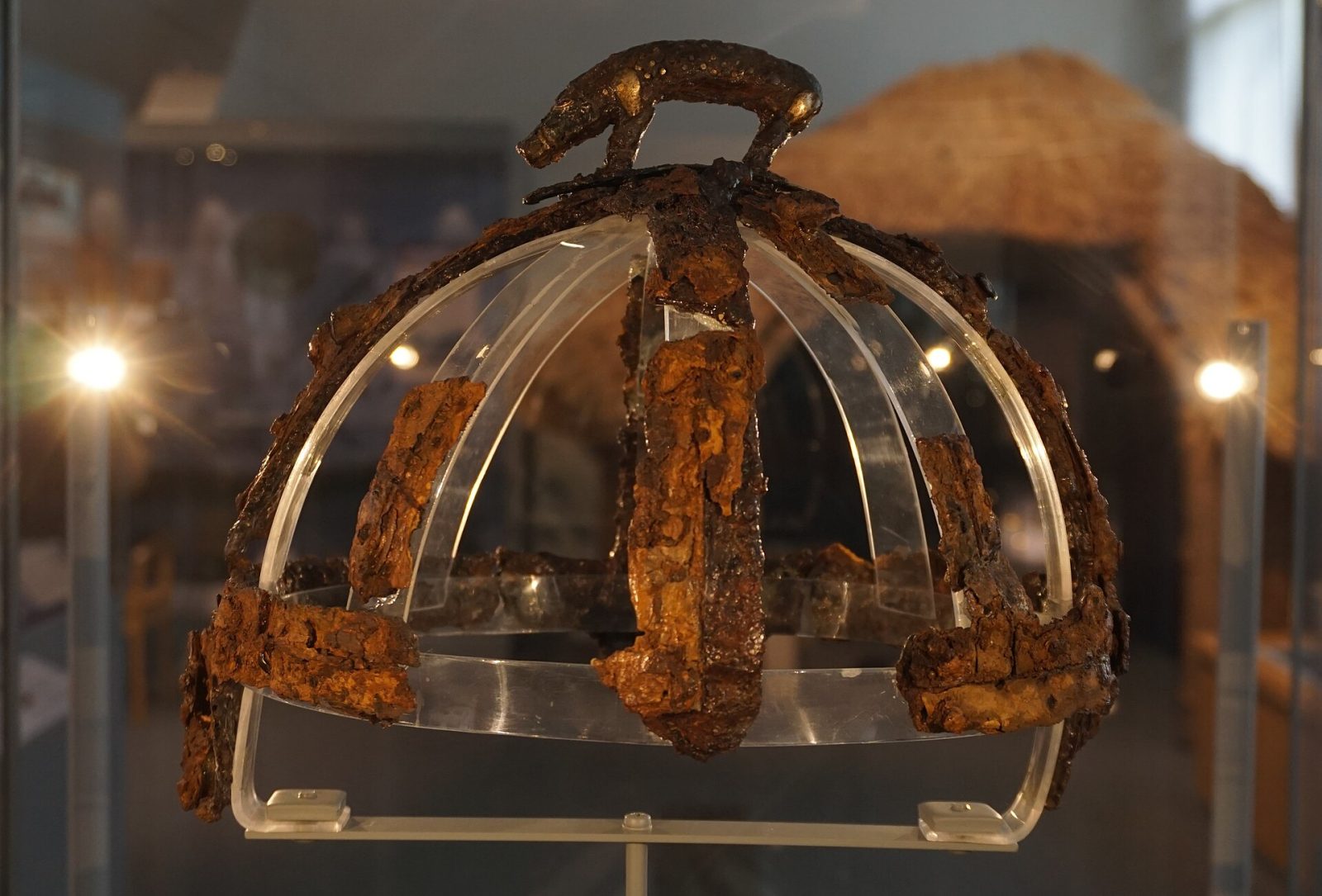
In 1848 the antiquary Thomas Bateman opened a burial mound on a Derbyshire farm and found the first Anglo-Saxon helmet ever discovered, topped with a bronze boar and bearing a silver Christian cross.
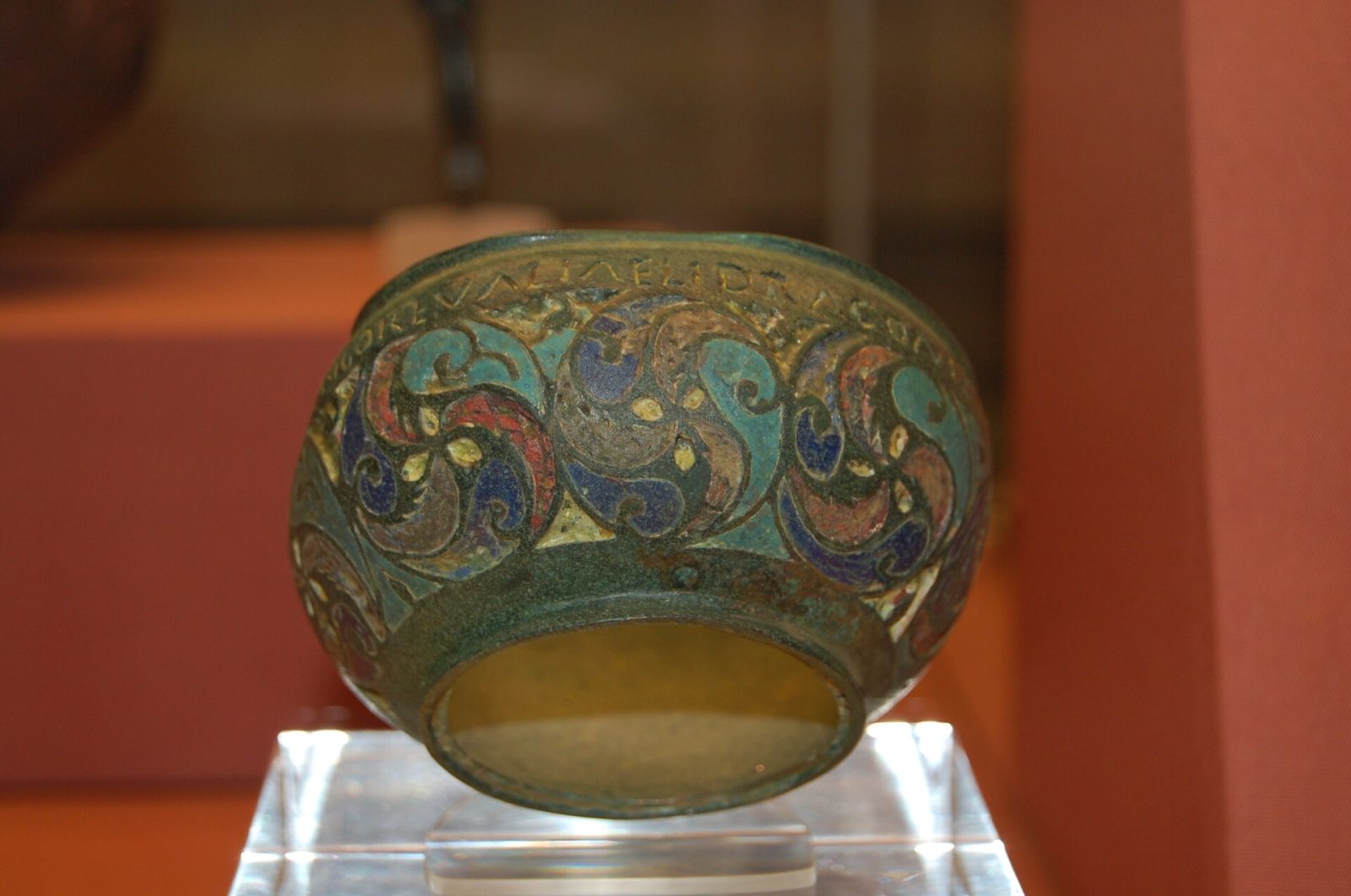
On 3 May 1848, the Derbyshire antiquary Thomas Bateman excavated a burial mound on Benty Grange farm, near Monyash in the Peak District. The eastern half of the mound had already been dug into by robbers, but in what remained he found the remains of a burial. No bones had survived, only some hair, together with a wooden cup with silver fittings, enamelled fittings from a hanging bowl, and an iron framework that turned out to be a helmet.
It was the first Anglo-Saxon helmet ever found. Its frame is made of iron bands, once covered with plates of horn, now lost, fixed with silver rivets. On its crown stands a bronze boar with garnet eyes set in gold, studded with silver, and on the nose guard is a small silver cross. A pagan symbol of protection and strength and a Christian one sit side by side on the same helmet. Boar-crested helmets are mentioned in the poem Beowulf. The helmet is dated to the 7th century AD, and Sheffield Museums gives about AD 650.
Bateman's collection was sold after his death, and in 1893 the helmet was bought by the museum in Sheffield. It was studied and conserved at the British Museum in the mid-20th century, and a full replica was made in 1986.
Only a handful of other Anglo-Saxon helmets have been found since, among them Sutton Hoo, Coppergate in York, Wollaston, Shorwell and the helmet from the Staffordshire Hoard. The Benty Grange Helmet is on display at Weston Park Museum in Sheffield, with the replica beside it showing how it would have looked when new.
Written for Global Finds from Sheffield Museums, the Derbyshire Historic Environment Record and other published accounts. Photo: the Benty Grange Helmet at Weston Park Museum, Ingwina, Wikimedia Commons, public domain.
Approximate location53.17, -1.78View on map
Source: Sheffield Museums