The Regolini-Galassi Fibula: an Etruscan princess's gold brooch, in the one tomb the robbers missed for 2,600 years
Famous find Made about 675 to 650 BC · Found in 1836 See it on the timeline →
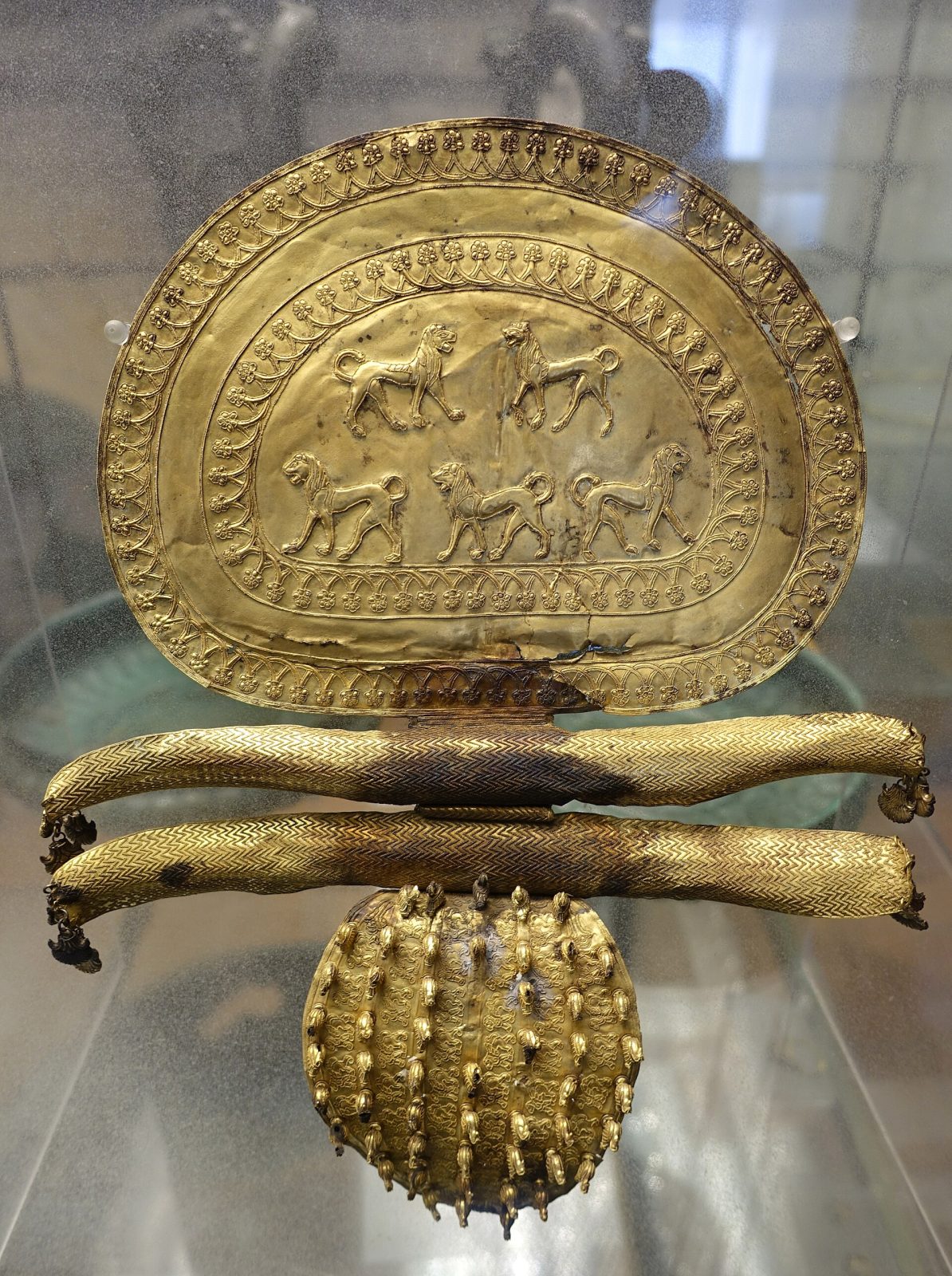
In April 1836 a village archpriest and a general digging in a great burial mound at Cerveteri, north of Rome, broke into an Etruscan tomb that had never been robbed. Among its treasures was a gold brooch over 30 centimetres long, covered in tiny gold ducks.
In April 1836, two men with a licence to dig were working in a huge burial mound in the Sorbo cemetery at Cerveteri, the ancient Etruscan city of Caere, about 45 kilometres north-west of Rome. One was the town's archpriest, Alessandro Regolini; the other was a general, Vincenzo Galassi. Later tombs cut into the edges of the mound had all been robbed long ago. But in the middle, between about 16 and 24 April, they broke into its oldest tomb and found it untouched. It had lain hidden, as the Vatican Museums put it, for 26 centuries.
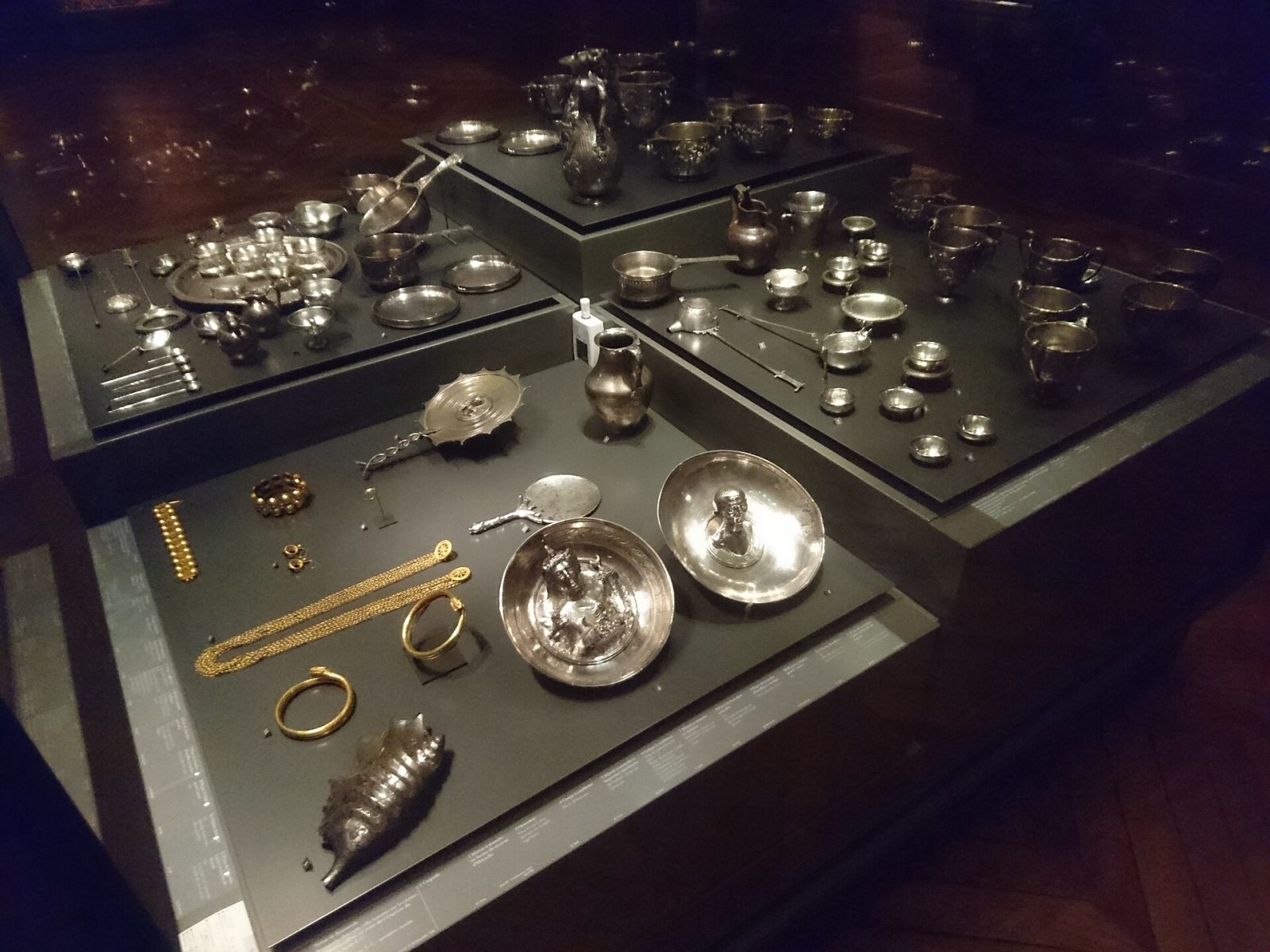
The dig was crude by modern standards. Nobody recorded properly where things lay, and the arrangement of the tomb has had to be reconstructed since. In the inner chamber lay a woman of royal rank, covered in gold. A cremated man lay in an urn in a side chamber. With them were silver vessels, bronze cauldrons, a chariot, a bed and weapons, and some of the finest gold jewellery ever found in Italy.
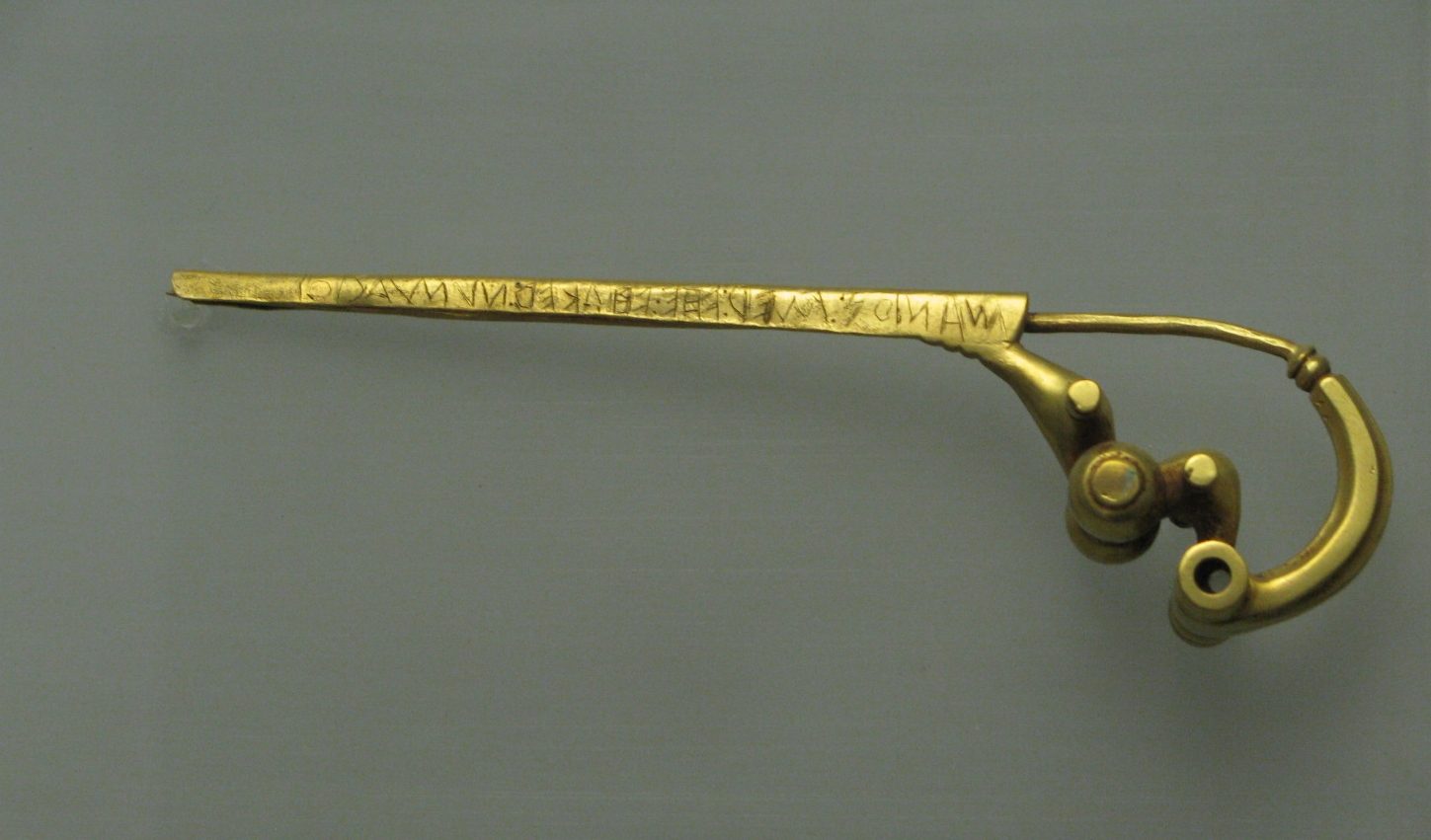
The most famous piece is a great gold fibula, a brooch built on the same principle as a safety pin but made for display. It is more than 30 centimetres long and weighs about 174 grams. A broad disc is decorated with lions cut from a separate gold sheet, and the arched part of the brooch is covered with dozens of tiny three-dimensional ducks, each made of two halves of embossed gold soldered together, standing in rows. The decoration combines repoussé, punched patterns and granulation, in which minute grains of gold are fused onto the surface, a technique the Etruscans mastered. It was made about 675 to 650 BC.
Who the woman was is uncertain. Some silver vessels in the tomb are inscribed mi larthia, which is often taken as her name, Larthia, though Italy's Ministry of Culture reads it as "I am of Larth" and links it to a man.
In 1838 Regolini and Galassi sold the finds to the papal government. They are displayed together in the Museo Gregoriano Etrusco in the Vatican Museums, and the tomb itself can still be visited at Cerveteri.
Written for Global Finds from the Vatican Museums' catalogue and M. Sannibale (2013), Italy's Ministry of Culture and the World History Encyclopedia. Photo: the Regolini-Galassi gold fibula in the Museo Gregoriano Etrusco, Vatican Museums, Daderot, Wikimedia Commons, public domain.
Source: Vatican Museums catalogue